
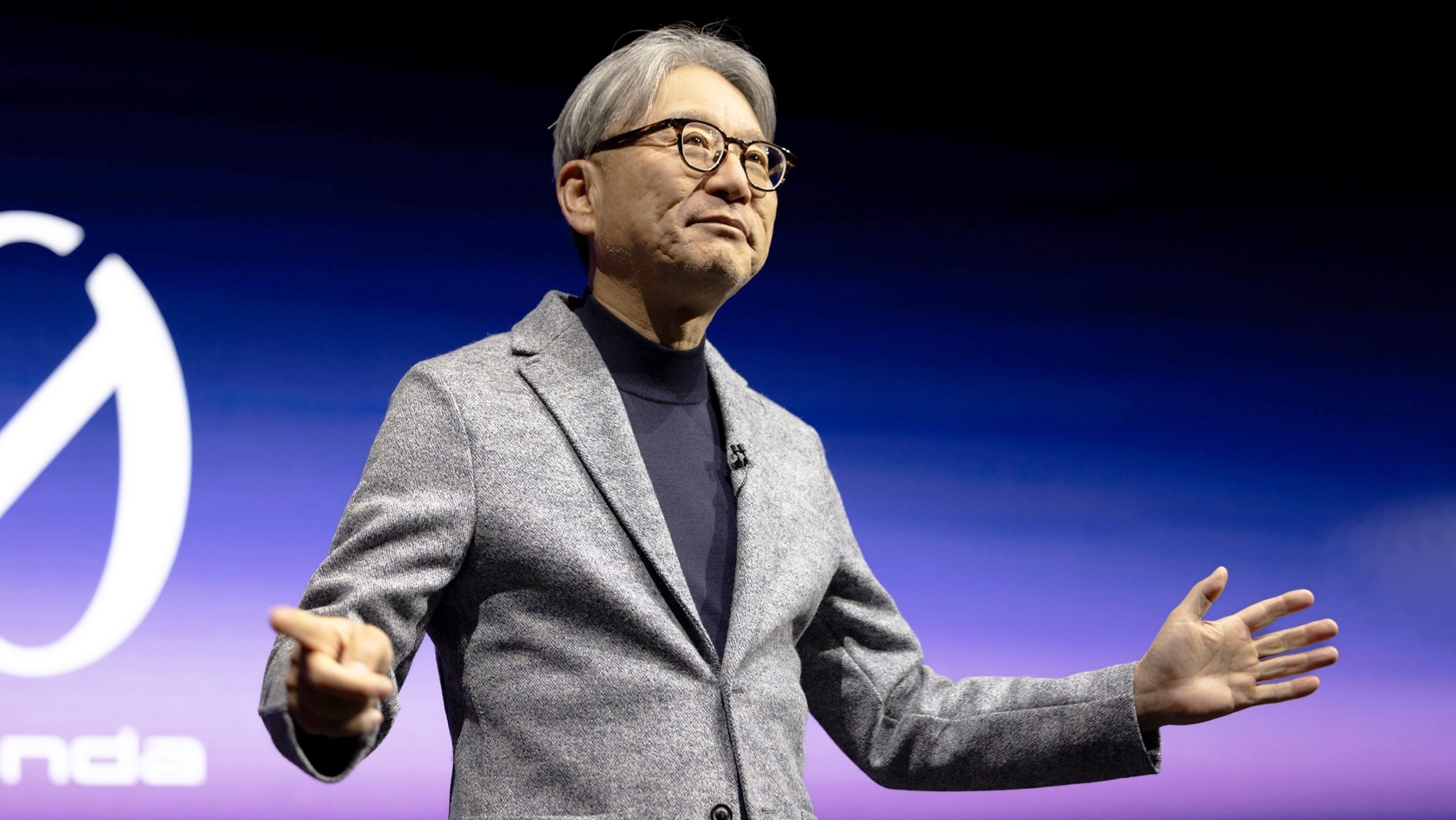
Honda is undergoing a strategic pivot to combat a severe decline in its Chinese market share, following a candid admission from leadership regarding the overwhelming efficiency of local competitors. After touring a highly automated supplier facility in Shanghai, Honda President and CEO Toshihiro Mibe delivered a stark assessment of the landscape, stating, “We have no chance against this.”
The executive’s reaction underscores the widening gap in production speed and cost-efficiency. While traditional automakers like Honda and Toyota often require longer development cycles, Chinese manufacturers are leveraging “China Speed” to bring brand-latest models to market in just 18 to 24 months—roughly half the time of their global rivals. This agility is supported by advanced automation; during his visit, Mibe observed production lines operating with virtually no human workers.
The operational crisis is reflected in Honda’s financial and sales data. In 2025, the company’s sales in China fell for the fifth year in a row, plummeting from a 2020 peak of 1.62 million units to just 640,000. This collapse has left Honda’s manufacturing footprint severely underutilized, with only about half of its capacity in use—well below the 70–80 percent threshold typically required for profitability in the automotive sector. Projections for 2026 suggest annual output will slide further, dropping below 600,000 units.
These challenges have led to significant setbacks in Honda’s electrification strategy. The company recently canceled its 0 SUV and 0 Sedan electric vehicles, as well as the revival of the Acura RSX. Two Afeela-badged EVs developed in partnership with Sony have been scrapped. These cancellations contribute to projected losses of up to $15.8 billion, highlighting the difficulty traditional OEMs face in establishing a profitable business case for EVs.
In response to these pressures, Mibe is implementing a major organizational restructure to restore the company’s innovative edge. Honda is reviving its independent R&D unit, a move that mirrors the successful engineering model established by founder Soichiro Honda in 1960. This independent arm previously produced breakthroughs such as the CVCC engine in the 1970s. Although the R&D division was folded back into the main company in 2020 to improve efficiency—a move Mibe himself supported at the time—the company is now reversing course.
Thousands of engineers are being reassigned to this newly independent R&D unit. The goal is to decouple engineering from corporate bureaucracy to foster creativity and accelerate development speeds, allowing Honda to better compete with the rapid iteration cycles seen in the Chinese market.
