
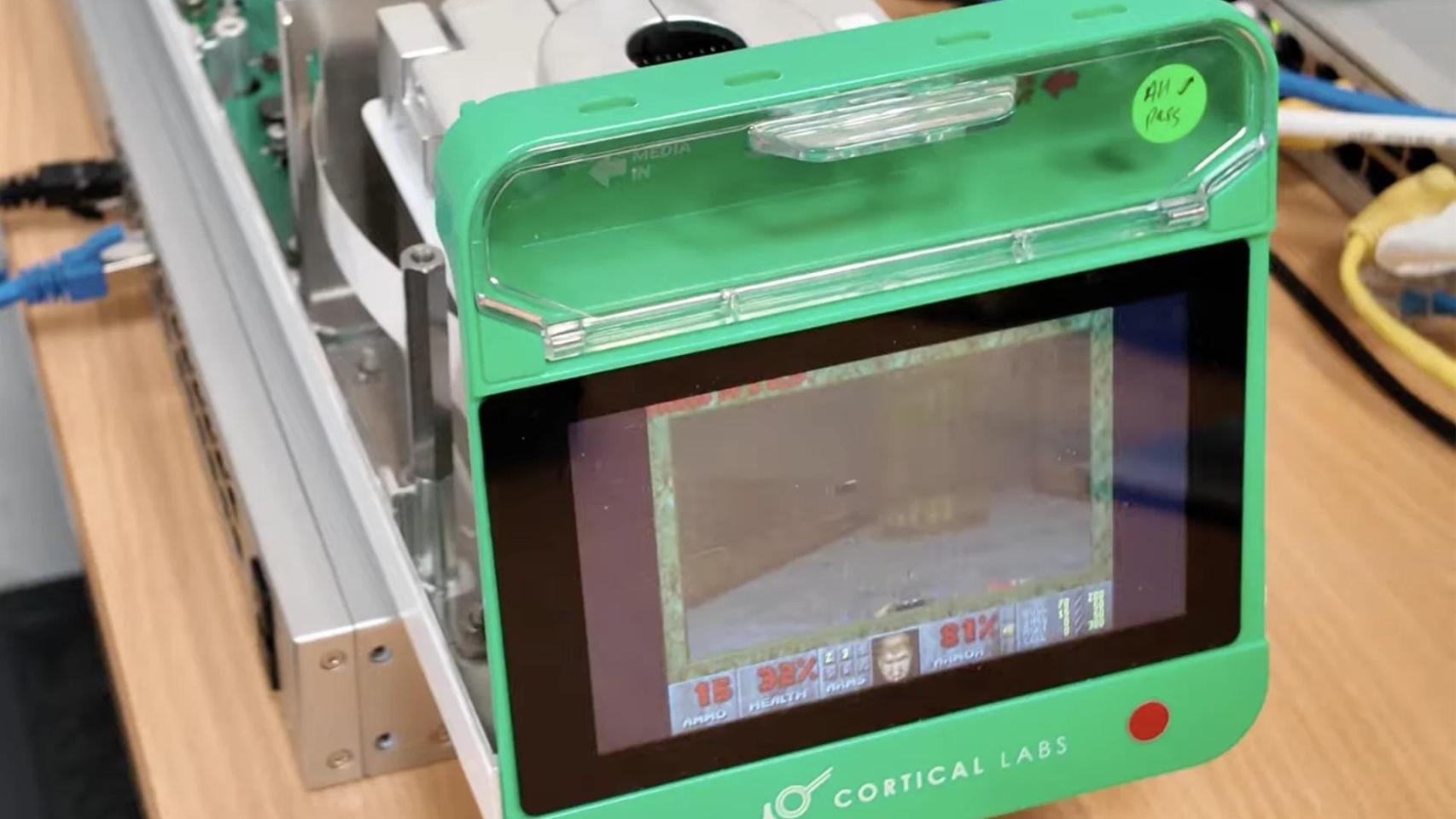
The idea of human brain cells learning to play a video game, specifically the classic Doom, might sound like hyperbole, but there’s a genuine advancement behind the headlines. The demonstration comes from Cortical Labs, the Australian company that in 2022 first taught cultivated neurons to play Pong.
The innovation is twofold. First, the system has moved from Pong to Doom, a significantly more complex, three-dimensional, and dynamic environment. Second, the company claims to have solved part of the interface problem: how to translate a modern video game into electrical signals understandable by a living neuron network on a chip.
The device used is the CL1, which Cortical Labs markets as the first “programmable biological computer.” Essentially, it combines human neurons grown in a nutrient-rich medium with a silicon chip capable of sending and receiving electrical impulses, keeping that cellular network active for months. This technology represents a novel approach to computing, potentially blurring the lines between traditional silicon-based systems and biological intelligence.
According to the company, this latest feat didn’t require years of painstaking work as the Pong demonstration did. Independent developer Sean Cole completed the transition to the 3D environment in approximately one week, using Python and the system’s public API, which Cortical Labs presents as evidence that the platform is beginning to be usable by third parties.
The number of neurons has also decreased compared to the previous experiment. While the classic Pong demonstration referenced over 800,000 cells, this new test cites around 200,000 human neurons integrated into the chip. The result exceeds random chance, but remains far from human-level performance.
Not a Gamer Brain
Although, it’s important to temper expectations of a fully autonomous mini-gamer brain. Both the architecture described by Cortical Labs and the repository created by Sean Cole make it clear that there’s a considerable amount of conventional software involved: the video game, the training logic, parts of the reward system, and various models run outside the biological tissue.
The system, specifically, is a hybrid circuit where a biological layer responds to electrical stimuli and those responses are then translated into actions within the game through a fairly conventional digital infrastructure.
But the ultimate goal of this finding isn’t video games. Cortical Labs sells the CL1 as a tool for biomedical research, studying neuronal learning, pharmacological testing, and potential future applications in controlling physical systems. New Scientist even mentions the example of robotic arms, a considerably more serious frontier than the meme of Doom.
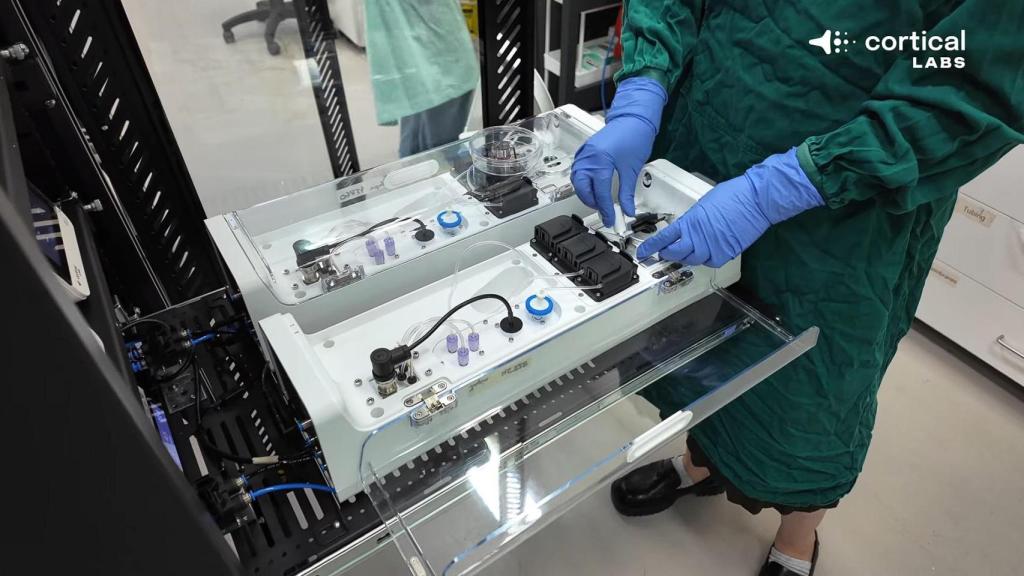
Part of the human cell system.
Ethical considerations also remain. Debates about consciousness, suffering, and the grandiose language of synthetic biological intelligence arose even with DishBrain, the 2022 system. With the CL1, these questions don’t disappear, although experts insist we are not dealing with anything resembling a conscious mind.
Human Brain Cells Play Doom: AI & Bio-Computing Advance
4
