
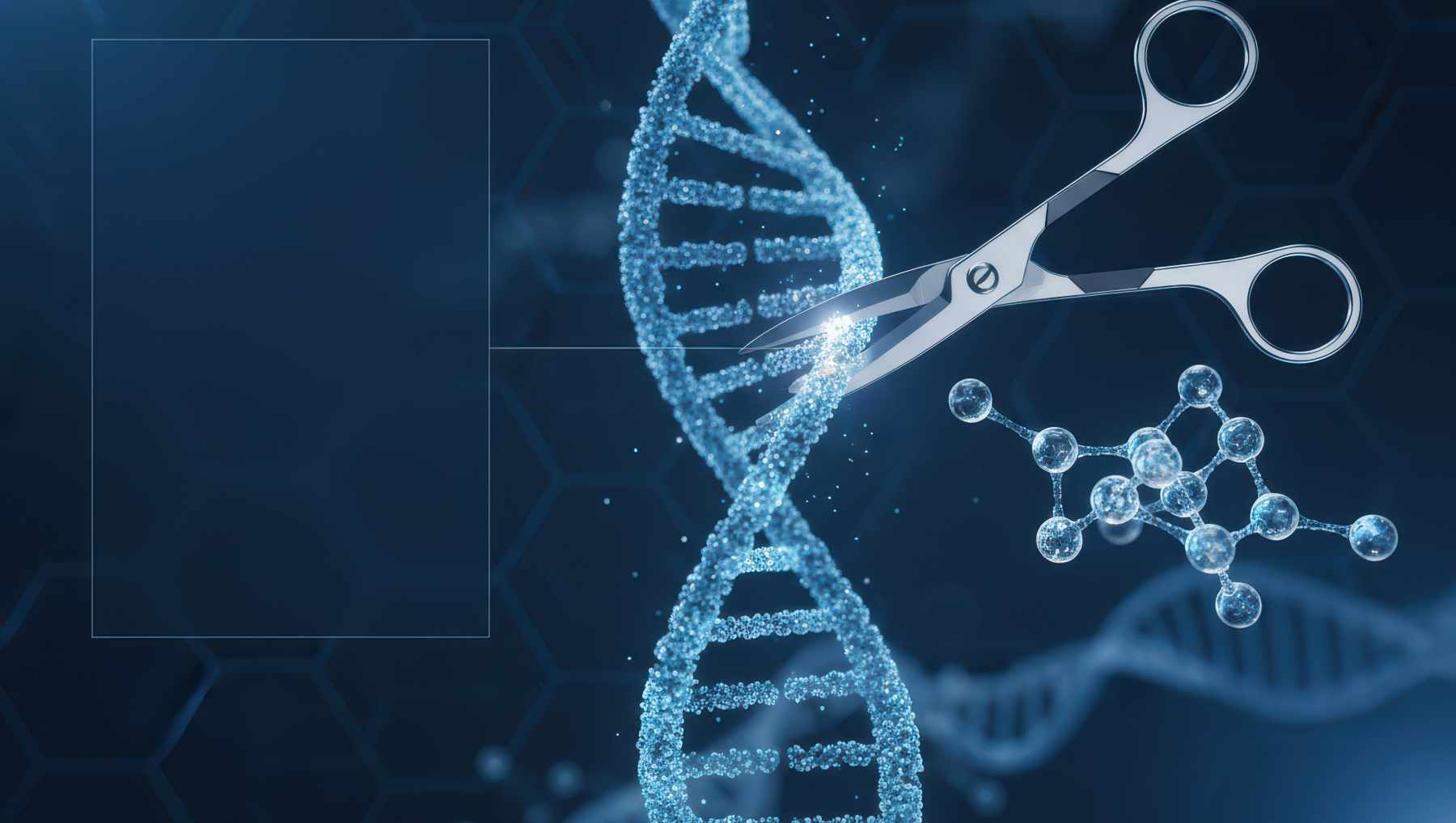
Gene editing in humans is no longer science fiction. It’s not a scene from a futuristic movie or an imaginary laboratory filled with blue lights—it’s a reality. As tools like CRISPR become more precise and accessible, modifying DNA has moved from fantasy to a concrete technical possibility, sparking serious debate.
The idea of eliminating inherited diseases is incredibly promising. Preventing a child from being born with a severe condition that would impact their entire life seems, at first glance, like an unquestionable advancement. However, a closer appear raises numerous questions.
Treatment or Enhancement: A Blurred Line
One of the major dilemmas is distinguishing between therapy and enhancement. Editing a gene to correct a mutation causing a devastating disease is widely considered ethically justifiable—a form of preventative medicine. But what happens when someone wants to modify genes to give their child increased height, greater cognitive ability, or specific physical characteristics? This represents where the ground becomes slippery. This development has significant implications for the future of healthcare and raises complex ethical considerations.
Who decides what constitutes an enhancement, and based on what criteria? What one person considers an undesirable trait, another may see as part of their identity. The line between disease and difference isn’t always clear.
Changes Passed Down Through Generations
Another sensitive point is editing the germline—modifying embryos in a way that the change is inherited by future generations. This elevates the debate to a new level, impacting not just an individual but their children, grandchildren, and descendants. The potential for long-term consequences requires careful consideration.
The issue of consent becomes particularly complex. Future individuals affected cannot offer their opinion or accept or reject the modification. These are decisions made today that will have an impact tomorrow.
And there’s the scientific uncertainty. Whereas the technology has advanced significantly, the human genome is extraordinarily complex. A small change can have unforeseen consequences. What if a side effect emerges thirty years down the line that no one predicted?
The Risk of New Inequalities
Another angle that cannot be ignored is access. These types of interventions won’t be cheap. If gene editing becomes a common tool, it’s likely to be initially available only to those who can afford it. This could lead to a new form of disparity, potentially exacerbating existing social inequalities.
This opens the door to a biological gap—not just economic or educational differences, but genetic ones. The possibility of some people being born with designed advantages while others are not could create a new form of structural inequality. History demonstrates that when technology is unevenly distributed, social tensions increase.
This is a critical point to consider as advancements in gene editing continue.
Human Diversity Under Pressure
There’s also an important cultural and social consideration. If certain conditions are systematically eliminated through gene editing, the implicit message may be that those characteristics are undesirable. Some communities view certain traits as part of their collective identity, and “correcting” them could be interpreted as stigmatization.
Human diversity is not just biological; it’s also social and cultural. Deciding which traits deserve to be modified involves profound value judgments. Human genetic diversity is a valuable asset, and its preservation is essential.

Safety and Prudence
Although gene editing is becoming increasingly precise, it’s not perfect. There are risks of off-target modifications. And when it comes to intervening in embryos, we’re dealing with irreversible changes. This technology, while promising, requires a cautious approach.
The precautionary principle is particularly important here. It’s not about halting science out of fear, but recognizing that some decisions are irreversible. Finding that balance is one of the great challenges today.
The temptation to move quickly can clash with the need to act cautiously.
Regulation in a Global World
Science doesn’t recognize borders, but laws do. Some countries are adopting more permissive stances, while others are much more restrictive. This difference can lead people to travel to places with more lenient regulations to undergo interventions prohibited in their home countries. This creates challenges for global governance.
International cooperation and shared ethical frameworks are needed—something that isn’t always easy to achieve when different cultural and religious perspectives are involved.
A Debate That’s Just Beginning
Human gene editing is not simply a technical question. It’s a conversation about what kind of society we want to build—how we understand health, normality, diversity, and justice. This is a conversation that requires broad public engagement.
It’s not all black and white. There are strong arguments for using this technology to prevent suffering, and there are also powerful reasons to act with extreme prudence.
What’s clear is that just because science *can* do something doesn’t mean it *should*. The fundamental question is whether we should proceed, under what conditions, and with what limits.
This debate belongs not just to laboratories and experts, but to everyone. Because, we’re talking about intervening in the biological foundation of who we are.
