
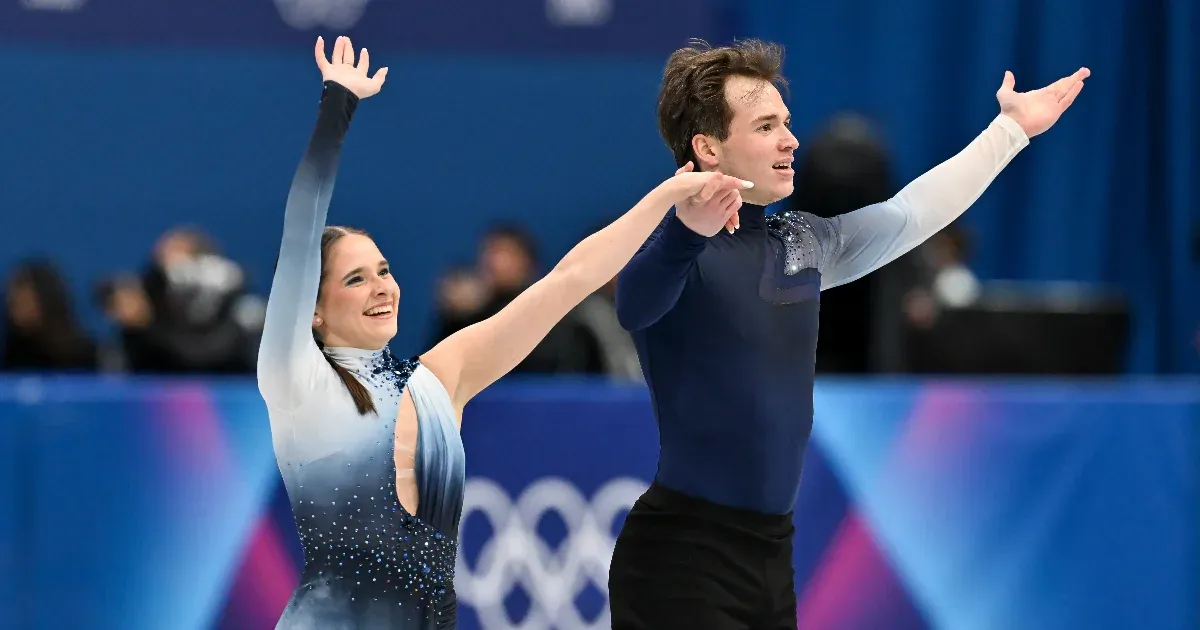
Maria Pavlova and Alexei Sviatchenko of Hungary delivered a historic performance at the Milan-Cortina d’Ampezzo Winter Olympics, finishing fourth in the figure skating pairs competition. Despite falling short of a medal, the duo achieved a personal best in their free skate, building on a strong showing in the short program.
The Hungarian pair surpassed Germany in the free skate, though the Germans held onto third place overall thanks to their advantage from the short program. Japan, starting fifth, ultimately claimed the gold medal with a dominant performance, followed by Georgia in second.
Pavlova and Sviatchenko set a recent personal record of 73.87 points in the short program on Sunday, placing them fourth. This surpassed their previous best of 73.32 points, which earned them a bronze medal at the European Championships in January. They had previously outperformed the German duo of Fabienne Hase and Nikita Volodin, who were the only team to exceed 80 points in the short program.
As the fourth of four teams to skate in the final group, the Hungarian pair knew a medal wouldn’t come easy. The Japanese team then delivered a stunning free skate, earning 158.13 points and extending their lead significantly after a less successful short program. They finished with a total score of 231.24, breaking the world record, though it remained to be seen if that would be enough for Olympic gold.
Undeterred by the Japanese performance, which brought the entire stadium to its feet and moved both skaters and their coach to tears, Pavlova and Sviatchenko delivered a flawless free skate. The Hungarian pair executed all elements cleanly, including throw jumps and solo jumps, and earned a score of 141.39 – another personal best, exceeding their previous high of 140 points. This moved them into second place, creating a scenario where a medal was within reach if they could outscore one of Canada, Georgia, or Germany.
If only one of the Canadian, Georgian, or German pairs were to surpass them, it would mark Hungary’s first medal at the Winter Olympics since 1956.
The Canadian team’s free skate was marred by errors, eliminating them from contention. All eyes then turned to Georgia and Germany. The Georgian team had a minor mistake, but still delivered a strong performance, scoring 146.29 points and moving ahead of Hungary. The German pair, Fabienne Hase and Nikita Volodin, entered the free skate with a considerable lead, but two errors from Hase threatened their chances of winning gold, and even securing a silver medal.
From a Hungarian perspective, the question was whether they could secure third place, and the technical score suggested it was possible. The German pair ultimately received 139.08 points, less than Hungary, but their lead from the short program was enough to secure the bronze medal. The Japanese team, starting from fifth place, achieved a decisive victory, finishing nearly ten points ahead of Georgia, while Germany took third with a total score of 219.09. The Hungarian pair finished fourth with 215.26 points.
Pavlova and Sviatchenko have consistently ranked among the world’s top pairs for years, but had not reached the podium at a major international competition until their bronze medal at the European Championships in January. Their success at the European Championships, ending a 22-year drought for Hungary in figure skating at the European Championships, and marking the first time a Hungarian pair had medaled since Marianne and László Nagy’s silver in 1957.
In recent years, an increasing number of skaters born in Russia have competed for Hungary, including Papp Vivien, who previously competed under the Hungarian flag.
