
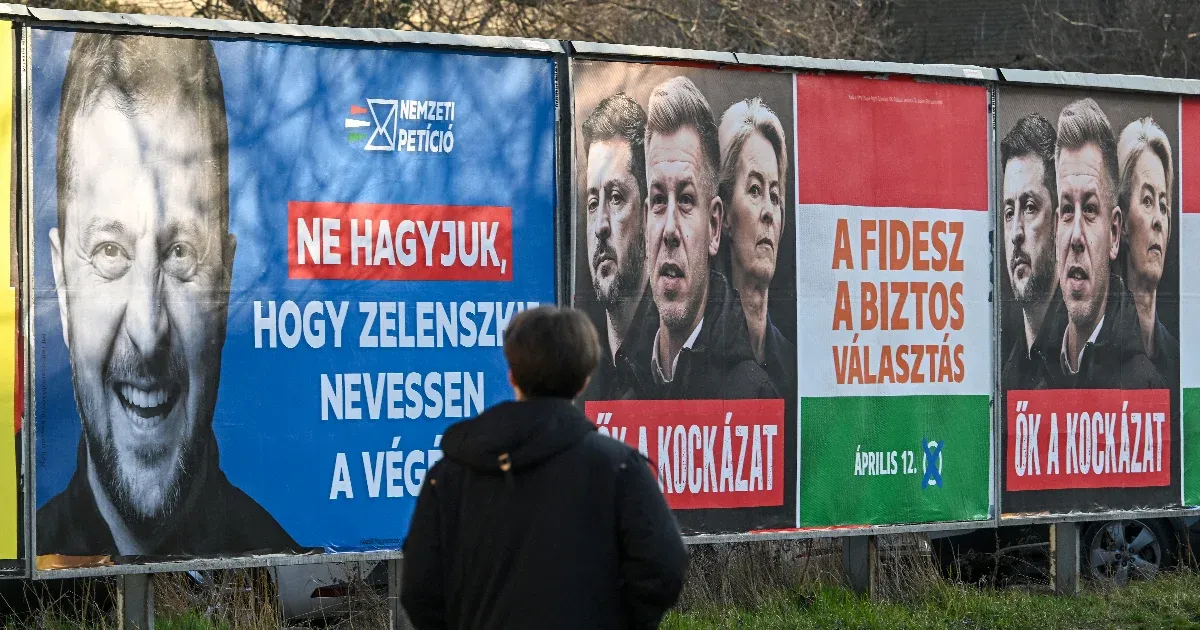
Budapest – As Hungary’s parliamentary elections approach, attention is shifting from the contest between incumbent Prime Minister Viktor Orbán and challenger Péter Magyar to a growing conflict between Hungary and Ukraine. The escalating tensions threaten to overshadow domestic policy debates and reshape the electoral landscape.
The friction intensified after Ukrainian President Volodymyr Zelenskyy issued a pointed statement suggesting a threat to Orbán if Hungary continues to block a 90 billion euro aid package for Ukraine. Zelenskyy stated that if Hungary obstructs the funding, he would provide the individual’s address to Ukrainian armed forces “so they can call and talk to him in their language,” according to reports on March 5. The statement has sparked widespread reaction within Hungary.
Even Péter Magyar, Orbán’s main political rival, responded by defending Orbán against the perceived threat, asserting that no foreign leader should threaten a Hungarian citizen. Magyar stated, “No foreign state leader can threaten a Hungarian person,” during a campaign stop in Szarvas on Thursday, March 5.
The situation is further complicated by recent actions taken by Ukraine, including the seizure of Hungarian-bound oil shipments, which Orbán has characterized as an “oil blockade.” Zelenskyy has indicated he will not repair the Druzhba oil pipeline, a move that reinforces Orbán’s claim that political, rather than technical, issues are preventing Russian oil from reaching Hungary.
The timing of the escalating conflict appears to benefit Orbán’s Fidesz party, at least in the short term. Zelenskyy’s remarks could reinforce the party’s long-standing narrative of an “aggressive” and “demanding” Ukrainian leadership, potentially bolstering support among voters. The situation could as well rally support around Orbán, presenting him as a leader defending Hungary’s interests against external pressure. This dynamic echoes Fidesz’s successful 2022 campaign, which warned voters that the opposition would lead the country into war.
However, analysts caution that Fidesz also risks alienating voters if it’s perceived as escalating the conflict for political gain. Some voters may feel the government is unable to protect them, particularly given the discussion of an “oil blockade” and potential Ukrainian actions. The perception of a tangible threat could lead voters to seek a change in leadership, believing a different approach is needed to resolve the tensions.
For the past 16 years, Fidesz has largely defined itself in opposition to figures like George Soros and the European Union. These were largely perceived as manufactured enemies. But a conflict with Ukraine presents a different kind of challenge – a more immediate and potentially destabilizing threat.
The outcome of the election, scheduled for less than a month and a half from now, remains uncertain. The Ukrainian-Hungarian dispute could prove decisive, particularly among undecided voters. If voters view the tensions as a direct threat to their security, they may favor a change in government, hoping for a more conciliatory approach to Ukraine. The situation is a delicate one for Fidesz, as attempting to capitalize on the escalating conflict carries the risk of further inflaming tensions and alienating voters.
