
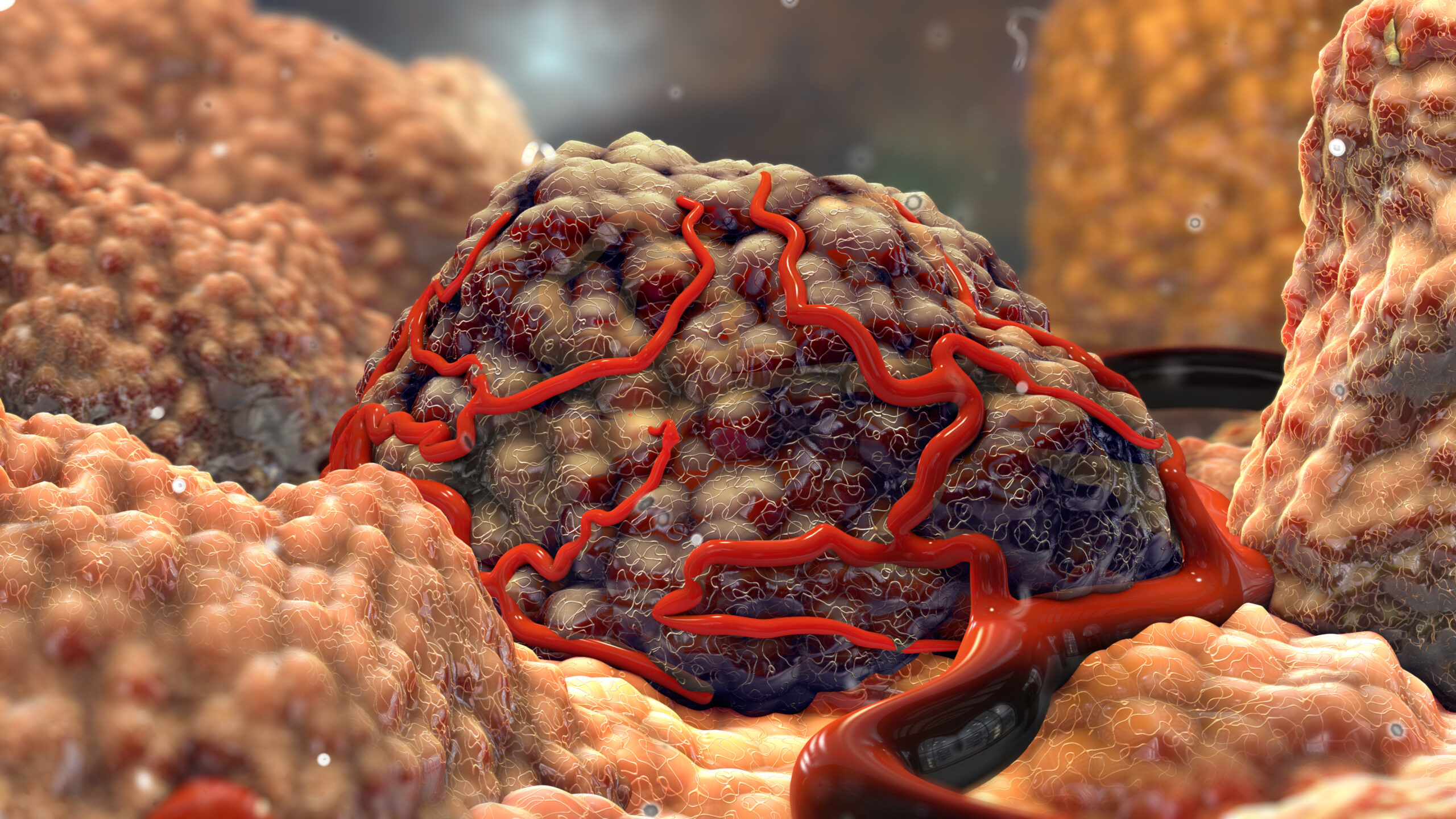
Advances in immunotherapies for solid tumors – including bispecific antibodies, CAR-T cell therapies, and cancer vaccines – were discussed at the German Cancer Congress 2026. While these treatments hold significant potential, substantial challenges remain.
Immunotherapies have become essential in oncology, but their effectiveness varies depending on the type of tumor. Bispecific antibodies and CAR-T cell therapies are now standard treatments for hematologic malignancies, but have lagged behind in solid tumors. Experts at the German Cancer Congress presented current research on immunotherapies for solid tumors and the obstacles that necessitate to be overcome.
Bispecific Antibodies: Versatile Tools in Cancer Treatment?
Bispecific antibodies (bsAbs) are gaining traction in the treatment of solid tumors, according to Dr. Maria-Elisabeth Goebler of the University Hospital Würzburg. In recent years, bsAbs have represented a growing proportion of clinical trials for solid tumors, and in some cases, more than 50 percent of newly approved antibody therapies.
Tarlatamab, a T-cell engager, is a prominent example, demonstrating promising response rates and durable remissions in small cell lung cancer (SCLC). However, results were less encouraging in neuroendocrine prostate cancer, highlighting the importance of careful patient selection. Cadonilimab, a dual checkpoint inhibitor that simultaneously targets PD-1 and CTLA-4, is currently approved only in China. Zanidatamab, which targets two HER2 epitopes, received approval from the European Medicines Agency (EMA) in July 2025. Zenocutuzumab inhibits both HER2 and HER3 receptors and is approved by the FDA for NRG1-fusion tumors.
Goebler explained that challenges in treating solid tumors include the immunosuppressive tumor microenvironment, tumor heterogeneity, potential antigen loss, toxicity, and physical barriers created by the stroma. She also pointed to opportunities to improve bsAbs, such as developing them as masked prodrugs or using nanocarrier systems, to enhance selectivity and therapeutic index.
CAR-T Cell Therapy: Boosting Effectiveness with Cytokines
The success of CAR-T cell therapy has been limited in solid tumors. Prof. Claudia Rössig of the University Hospital Münster emphasized the importance of persistence, strong expansion, and tissue penetration. Key hurdles include limited tumor infiltration, stromal barriers, and an immunosuppressive microenvironment.
Researchers are exploring ways to overcome these obstacles, including combining CARs with cytokine-stimulating secretion upon antigen contact. IL-15-enhanced CAR-T cells have shown improved expansion and initial clinical activity in studies. A construct combining a GD2-specific CAR with IL-18 (GD2IL18CART) is currently being tested at Münster. A Phase I study has enrolled 19 patients with recurrent or refractory neuroblastoma, osteosarcoma/Ewing syndrome, and breast cancer. Initial observations indicate solid manufacturability, moderate inflammatory toxicity at low doses, significant in vivo expansion, and initial complete remissions.
T-Cell Receptors Remain a Focus
T-cell receptor (TCR)-modified T cells (TCR-T) function similarly to CAR-T cells, but are not identical. Their strength lies in recognizing intracellular tumor antigens – a significant advantage in solid tumors. However, Prof. Martin Wermke of the University Hospital Dresden noted that this form of therapy is highly dependent on the HLA type.
PRAME (Preferentially Expressed Antigen in Melanoma) is a prominent target antigen for TCR-T. In the Phase I IMA203-101 study, patients with previously treated melanoma of the HLA-A*02:01 type were treated with Anzutresgene Autoleucel. The study showed a favorable safety profile without Grade 4 or 5 toxicities. More than 50 percent of melanoma patients achieved an objective response, often with durable remissions lasting several years. Cytokine release syndrome (CRS) was typically mild and early, and neurotoxicity was rarely observed. The therapy has received approval in the United States, but carries a six-figure price tag.
Another approach involves therapy with tumor-infiltrating lymphocytes (TILs). These are surgically removed from the tumor, expanded ex vivo, and then infused back into the patient. A key benefit of this therapy is that, because they are native T cells, the immune response can potentially target multiple antigens. The FDA has also granted approval for this approach (Lifileucel).
Cancer Vaccines Using Peptides
Peptide-based immunotherapy shows promise. The goal of this cancer vaccine is not prevention, but rather to induce tumor-specific T-cell responses in patients who already have the disease. Dr. Jens Bauer at the University Hospital Tübingen illustrated how suitable antigens can be identified using mass spectrometry through the direct analysis of naturally presented HLA peptides. In addition to mutated neoantigens, non-mutated tumor-associated antigens, cryptic peptides from non-coding regions, therapy-induced antigens, and soluble HLA ligands expand the spectrum of available targets.
Bauer also emphasized the importance of formulation with a potent adjuvant, such as XS15. The vaccine is administered subcutaneously, with minimal side effects. In the iVAC-XS15-CLL01 study, a robust T-cell response was induced in 90 to 95 percent of patients with CLL in minimal residual disease (MRD) stage. A significant MRD reduction correlated with the strength of the immune response.
Conclusion
newer immunotherapies appear to be achieving clinically relevant progress even in solid tumors. The data also underscore the continued need to optimize existing and develop new therapeutic approaches. Presenters agreed that, even in solid tumors, the future lies in combining different approaches. These advances offer hope for improved outcomes in cancer treatment, and ongoing research is crucial to refine these strategies and broaden their impact.
