
NASA’s Artemis II: Humanity Returns to the Moon’s Vicinity for the First Time in Over 50 Years
In a historic leap for deep space exploration, NASA successfully launched the Artemis II mission on April 1, 2026. The mission, which departed from Kennedy Space Center’s LC-39B, marks the first time humans have ventured beyond low Earth orbit since the Apollo 17 mission in December 1972. This ten-day crewed lunar flyby is designed to rigorously test the Space Launch System (SLS) rocket and the Orion spacecraft, establishing the critical infrastructure necessary for future lunar landings and eventual crewed missions to Mars.
As of April 3, 2026, the spacecraft is actively traversing the void toward the Moon. A pivotal milestone was achieved on Flight Day 2 with the successful completion of the translunar injection (TLI) burn. This five-minute engine firing was the mission’s final major propulsion event, locking the crew into a free-return trajectory. This specific orbital path serves as a vital safety mechanism, ensuring the crew will naturally be pulled back toward Earth for splashdown in the Pacific Ocean even without further engine maneuvers.
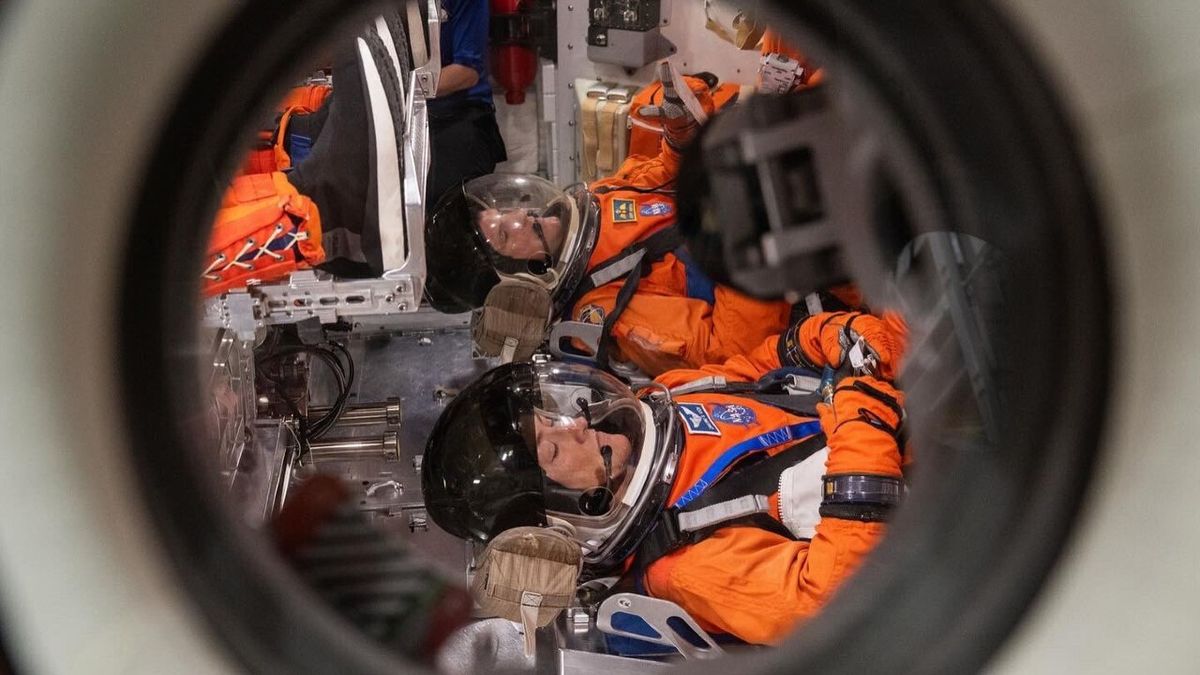
The mission is crewed by a diverse team of four astronauts: NASA’s Reid Wiseman, Victor Glover, and Christina Koch, alongside Canadian Space Agency astronaut Jeremy Hansen. Following the TLI burn, the crew expressed the gravity of the moment. “Humanity has once again shown what we are capable of, and it’s your hopes for the future that carry us now on this journey around the moon,” noted Hansen. Koch added a reflection on the mission’s connection to home, stating, “With this burn to the moon, we do not leave Earth. We choose it.”
Life aboard the Orion spacecraft—specifically the CM-003 Integrity and ESM-2 modules—combines high-stakes engineering with the mundane realities of space travel. The crew’s daily routine includes strict sleep cycles and physical maintenance; Reid Wiseman recently became the first crew member to use the on-board flywheel exercise device. The mission has not been without its technical hurdles, as ground teams and the crew recently collaborated to successfully troubleshoot the Orion’s toilet system. Even the diet is carefully curated for the ten-day journey, with a menu featuring items such as granola, couscous, and gratinated broccoli.
The technical complexity of the mission is matched by the psychological preparation of the crew, who reportedly engaged in card games shortly before launch to manage the tension of the ascent. This blend of human resilience and advanced technology is central to the Artemis program’s goal of establishing a long-term human presence on the Moon.
With proximity operations now complete, the mission is moving toward its next phase: the Perigee Raise Burn. This mission represents a significant investment in deep space capabilities, signaling a new era of lunar exploration that moves beyond the milestones of the 20th century toward a sustainable interplanetary future.
