
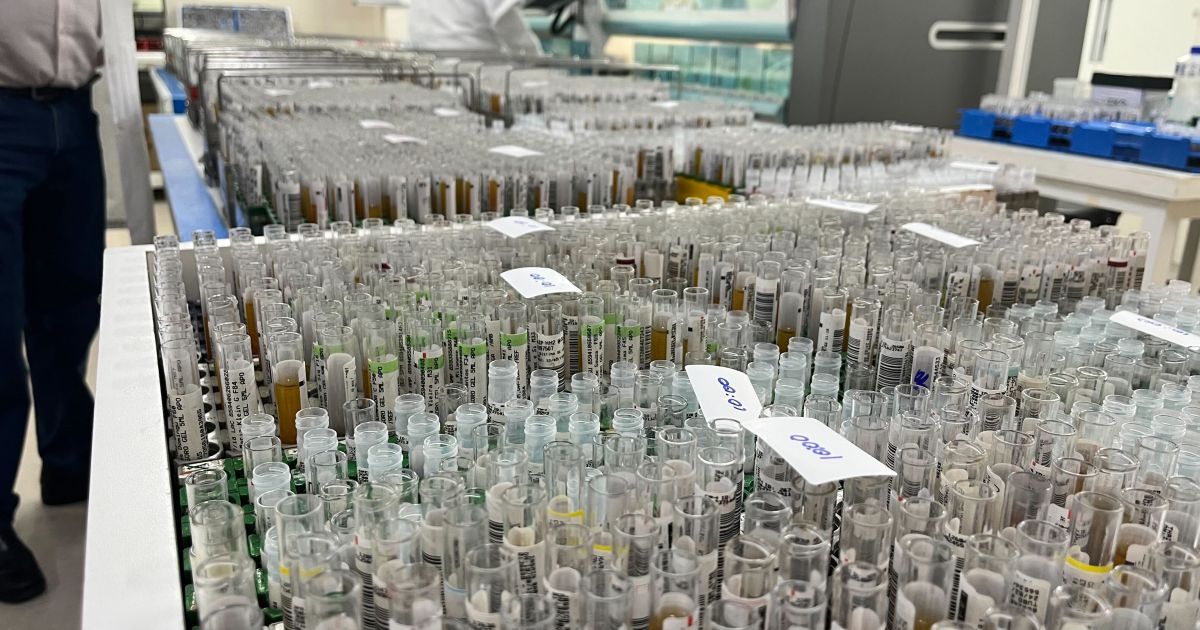
The journey of a blood sample from collection to result is a complex process, culminating in data displayed to the patient. This analysis takes place within a massive facility in São Paulo.
The entire process is automated, with hundreds of robotic machines handling approximately 400,000 samples each day. Human interaction is minimized from the moment the tube is opened until the process is complete.
Once collected at local laboratories, samples are transported to a Núcleo Técnico Operacional, or NTO. The samples are placed on automated shelves and distributed along a series of conveyor belts.
Learn about the Army’s new helicopter, famous in American films
As the tube moves along the system, machines read the barcode to identify its contents, ensuring it’s analyzed at the appropriate point corresponding to the initial exam request.
CNN Brasil toured the main hub of the Dasa laboratory network, which includes a total of 28 NTOs, serving over 20 million patients and processing 400 million tests annually. At the primary São Paulo complex alone, 400,000 tests are completed each day.
The entire process is overseen by Gianfranco Zampieri, Project Manager at Dasa.
The Blood’s Journey
After testing, blood tubes are stored for up to 15 days for potential follow-up verification before being discarded. Tubes testing positive for HIV may be retained for a longer period for further analysis. The disposal of all collected materials is the responsibility of the local municipal government.
The facility relies on machinery and supplies manufactured outside of Brazil, as the national equipment network cannot currently meet the demands of diagnostic medicine.
Comprehensive Testing
Toxicological evaluations are also conducted in partnership with the federal government, utilizing hair samples to detect illicit chemical substances.
In addition to blood sample analysis, the facility also processes tests using other types of biological materials. At least 250,000 allergy tests are examined at the complex.
