
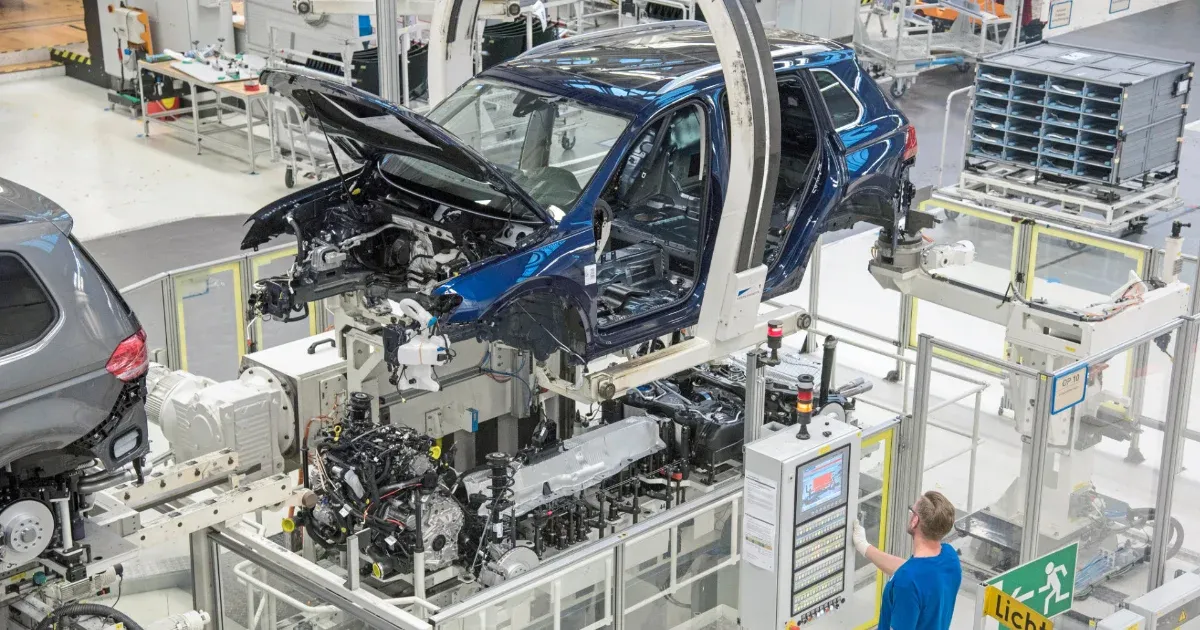
German Chancellor Friedrich Merz has signaled a shift in approach to the European Union’s plans to phase out gasoline-powered vehicles, suggesting a more flexible timeline and openness to hybrid technologies. The move comes as the automotive industry grapples with the transition to electric vehicles and the potential economic impact of strict emissions regulations.
During a recent meeting with industry stakeholders, Merz stated, “We have embarked on the path towards electromobility. We will continue on it, and it will likely be the central drive technology of the coming years.” However, his conditional phrasing indicates an expectation that other powertrain options will remain viable in the near future, according to reports.
The Chancellor and his party opposed a recently shelved EU proposal to ban the sale of fresh internal combustion engine (ICE) vehicles by 2035. The plan would have penalized manufacturers unable to reduce their vehicles’ carbon dioxide emissions to zero by that date. This stance underscores the importance of the automotive sector to the German economy, a key driver of the nation’s industrial output.
China Maintains a Different Approach
Unlike the EU’s proposed regulations, both China and the United States are pursuing alternative strategies to reduce emissions from road transportation, focusing on regulation rather than outright bans. In the U.S., only California has plans to restrict the sale of new ICE vehicles, beginning in 2035. In China, limitations are currently planned only for the Henan province.
China aims to achieve carbon neutrality by 2060 but has not announced a blanket ban on gasoline or diesel engines. While the Chinese government supports the adoption of electric vehicles, it recognizes the need for significant investment in public charging infrastructure, the limitations of current EV range, and the scarcity of fast-charging stations. During the transition, the country will continue to develop ICE technology to optimize hybrid powertrains.
These include plug-in hybrids and extended-range electric vehicles (EREV), where the internal combustion engine serves solely to generate electricity and does not directly power the wheels. Examples include the BMW i3 REx and the Mazda MX-30 R-EV. The BMW utilizes a 650cc, 34-horsepower engine, while the Mazda employs a 830cc, 74-horsepower rotary engine for power generation.
China’s state support system treats both fully electric and hybrid vehicles equally, categorizing them as New Energy Vehicles (NEV). In the first half of 2025, NEVs accounted for 44.97% of all new car registrations in China, with efficient ICE-equipped electric vehicles comprising 13% of the total.
Consumer Preference for Gasoline Remains
European car buyers continue to favor gasoline and hybrid vehicles, while the electric vehicle market expands and diesel sales decline. According to the European Automobile Manufacturers Association (ACEA), gasoline vehicles still held a market share of over 26% in 2025, with hybrids at 35% and electric vehicles exceeding 17%. Diesel vehicles accounted for less than one-tenth of all new car sales. Manufacturers are expected to gradually phase out diesel car development due to the increasing difficulty and cost of meeting current and future environmental regulations.
Mahle, a manufacturer of ICE components, recently unveiled a highly efficient range extender featuring a 42% thermal efficiency gasoline engine and generator, producing a continuous output of 85 kilowatts (approximately 114 horsepower). The system could potentially enable an EREV to achieve a range of up to 1350 kilometers. Chancellor Merz and Hildegard Müller, President of the German Association of the Automotive Industry (VDA), alluded to these range-extending gasoline engine solutions when discussing the need for technological openness.
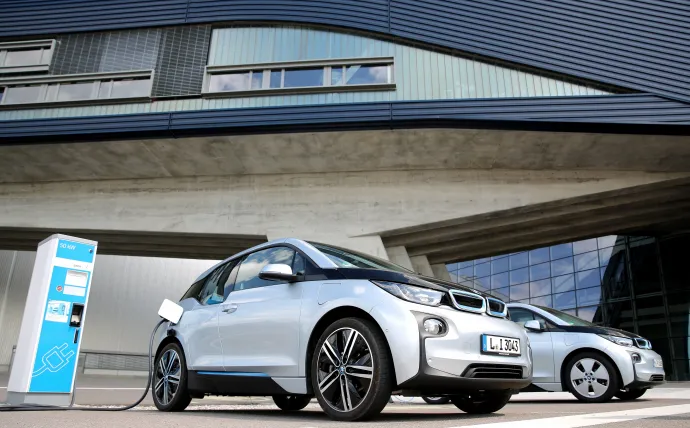
Mazda MX-30 R-EV a 2023-as barcelonai autószalonon és BMW i3 REx a töltőn a gyártó lipcsei üzeménél – Fotó: Adria Puig / Anadolu / AFP és Jan Woitas / dpa / AFP
The German automotive industry remains committed to the Paris climate goals and is determined to support the rollout of carbon-neutral drives, according to a VDA spokesperson. Companies are investing significant sums in the transformation – restructuring production, building new capacities, and training employees. Approximately €320 billion in investment is expected in research and development between 2025 and 2029, along with roughly €220 billion in capital expenditure, primarily in factories. Nearly half of all new cars produced in Germany last year were partially or fully electric.
The industry association also emphasized the need for a regulatory framework that enables investment in all climate-friendly technologies, including efficient ICEs powered by climate-neutral fuels – as previously detailed by – as well as hybrids and EREVs.
Mercedes-Benz argues that a flexible and technologically open approach is essential. The EU’s current carbon dioxide reduction plans for road traffic need to be reconsidered to meet EU climate goals while ensuring the industry’s competitiveness, social cohesion, and the strategic resilience of supply chains.
Andreas Radics, partner and managing director at Berylls by AlixPartners, added that easing the strategy for phasing out ICEs would primarily benefit suppliers, particularly those that have not yet ramped up the development and production of components for electric cars.
Developing both electric drives and ICEs will not be inexpensive, according to Christian Martin, global product director at Austrian AVL List, a development service provider. The expert believes that the dual path for drive technologies presents complex technological and organizational challenges for the automotive industry. Many companies, particularly in Germany, are currently undergoing an intensive period of strategic and structural transformation.
A Volkswagen Group spokesperson emphasized that the transition to electromobility also depends on factors beyond the control of automotive players, such as the availability of raw materials, electricity prices, and the development of charging infrastructure.
A Century-Long Shift
The transition primarily presents a significant task for the companies’ developers. But are the engineers developing gasoline engines still on board, or have many been prematurely retired or laid off? The AVL List expert says the picture is mixed, as some automakers have progressed more quickly and consistently with the transition to electromobility than others. Companies that have already reduced their knowledge base and capacity in ICE technology are increasingly relying on external engineering services.
Markus Lienkamp, a professor at the Technical University of Munich’s Department of Vehicle Technology, confirms this. He stated that several thousand engine developers are currently employed by automakers and service providers, capable of continuing their work. Europe has sufficient engineers to further develop ICEs, similar to Chinese manufacturers.
However, these developers need a suitable regulatory environment that defines their scope. Lutz Eckstein, Managing Director of the RWTH Aachen Automotive Institute and President of the VDI (German Engineering Association), argues that regulations must ensure Europe regains global competitiveness.
He believes this is currently not the case, evidenced by companies relocating and shifting parts of their production and research and development to third countries. Eckstein argues that the EU’s regulations aimed at mitigating climate change are inconsistent, focusing on emissions from engines while overlooking the fact that a significant portion of carbon dioxide emissions from vehicle operation depend on the production and transportation of energy carriers – electricity, gas, or liquid fuels.
The average age of cars has been steadily increasing in Germany and across the EU in recent years. Diesel and gasoline cars are now nearly eleven years old on average in Germany, sixteen years in Hungary, and 12.7 years across the EU. Many continue to employ and purchase used cars due to the soaring prices of new vehicles.
ICE Remains a Viable Option
Lutz Eckstein suggests that without climate-neutral fuels, car buyers may struggle to contribute to climate change mitigation. However, newer plug-in hybrid cars with a range of around 100 kilometers have increased the acceptance of combined powertrains. Users are now more likely to regularly charge the batteries of these cars compared to earlier plug-in hybrids, which offered only 20-30 kilometers of electric range before the battery depleted.
Experts consider ICEs to remain a viable intermediate solution on the path to climate neutrality. Some car enthusiasts often choose gasoline technology for emotional reasons, such as the six-cylinder engine in the Porsche 911 or the five-cylinder engine in the Cupra Formentor VZ 5.
The latter was slated for discontinuation but was reintroduced due to high demand, albeit in limited numbers. The fluidity of the situation is further illustrated by reports from Automotive News Europe that Porsche is considering halting development of previously promised electric Boxster and Cayman sports cars due to lower-than-expected demand and higher development costs.
