
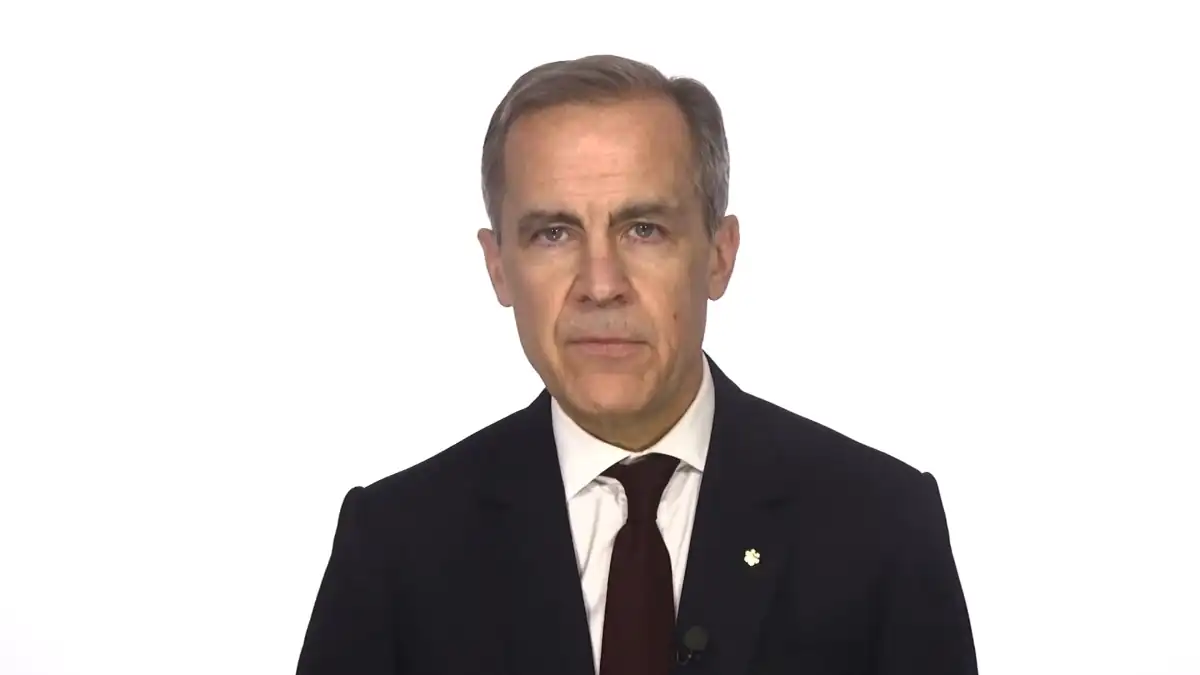
Canadian Prime Minister Mark Carney warned on Thursday, March 12, from the Northwest Territories, that the conflict between Israel and the U.S. In Iran, triggered on February 28, directly threatens the wallets of Canadians – and global economic stability. The escalating tensions are impacting essential goods like gasoline, fertilizer, and food.
Gasoline Prices Witness Immediate Impact for Canadian Households
According to CAA-Québec, the average price of a liter of gasoline in Canada has risen from $1.27 to $1.41 in two weeks. Some remote regions, such as the Magdalen Islands, are now seeing prices as high as $1.77 per liter. In Montreal, stations are approaching $1.65 for regular gasoline and $2.13 for diesel – its highest level since 2023.
This surge is directly linked to the blockage of the Strait of Hormuz, now designated a war zone, through which approximately 20% of the world’s oil and 20% of liquefied natural gas typically transit. According to UNCTAD, maritime traffic has fallen by 97% since the strikes on February 28, dropping to 4 to 6 ships per day compared to an average of 141 before the conflict. Brent crude oil surpassed $100 per barrel on March 12.
Fertilizer and Food: A Silent Threat
“We are seeing the implications for fertilizers, for example. All along the chain, everywhere in the world, that can have repercussions on fertilizers, the price of foodstuffs,” Carney stated during his press conference.
This risk is well-documented. A report from UNCTAD, published on March 10, indicates that about one-third of the world’s fertilizer trade transported by sea – approximately 16 million tonnes – passes through the Strait of Hormuz. Major suppliers Qatar, Saudi Arabia, and Oman are currently unable to deliver. Orders for spring 2027 planting fertilizers are scheduled to begin at the end of March, potentially jeopardizing future harvests. Even before the conflict, Desjardins Movement anticipated a 2.1% increase in food inflation in Canada in 2026; the current crisis is expected to revise this forecast upwards.
Canada, a Net Exporter, in a Less Exposed Position
Carney qualified his remarks by pointing out that Canada’s status as a net exporter of oil and gas places the country in a “somewhat more enviable position than others.” Alberta, where oil and gas royalties represent 18% of provincial revenue, could benefit from rising prices. Canadian Energy Minister Tim Hodgson confirmed he has received several calls from trading partners seeking to secure their supply of Canadian oil and LNG.
The most vulnerable countries remain developing economies that are net importers of energy and agricultural inputs. UNCTAD warns that a prolonged blockage of Hormuz could trigger an agricultural crisis in states such as Sudan (54% of its fertilizer imports transited through this route), Tanzania (31%), and Sri Lanka (36%).
According to Goldman Sachs, five weeks of prolonged disruption would push the barrel to $100 sustainably – a threshold already crossed on March 12. Carney is scheduled to travel to Norway on Friday, where he will attend the NATO Arctic military exercise Cold Response, and then to London, with no Canadian measures to stabilize consumer prices yet confirmed.
