
Fuente de la imagen, Getty Images
-
- Autor, Amir Azimi
- Título del autor, BBC News
-
Tiempo de lectura: 6 min
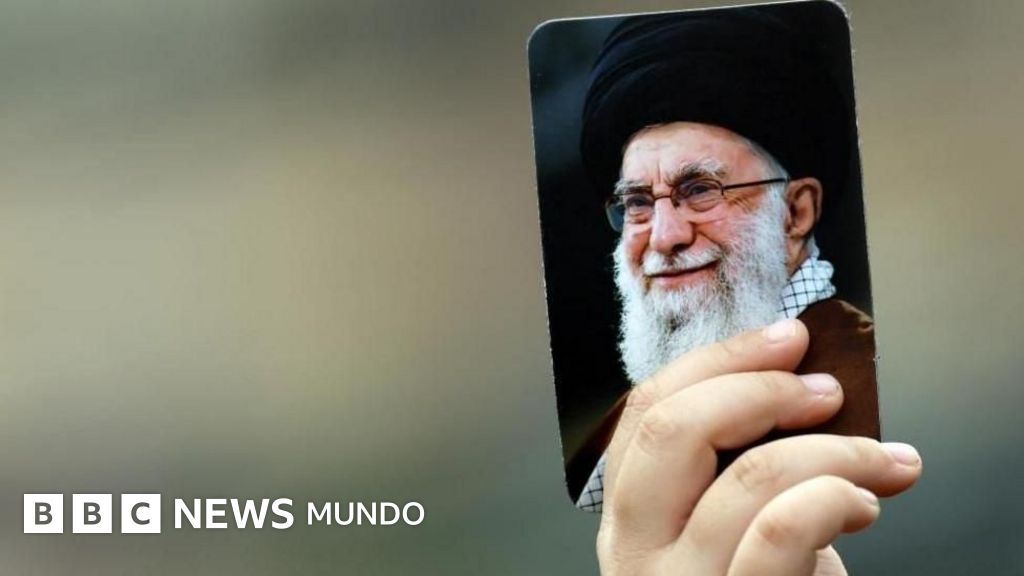
The death of Iran’s Supreme Leader, Ayatollah Ali Khamenei, in a joint Israeli-U.S. Operation this weekend has plunged the Islamic Republic into a period of unprecedented instability since 1979.
The operation, dubbed “Epic Fury,” targeted high-ranking military and political leaders, as Washington described it as a decisive effort to dismantle Iran’s leadership structure. This event has the potential to significantly reshape the geopolitical landscape of the Middle East.
Reports of Khamenei’s death in the strikes circulated widely Saturday night, an outcome that had seemed improbable just days prior.
Videos surfaced showing celebrations in major Iranian cities, and footage also emerged of people abroad rejoicing at the news of Khamenei’s death.
For many, the removal of the Supreme Leader represents a historic break – an opening that decades of civil resistance had failed to achieve.
Both U.S. President Donald Trump and Israeli Prime Minister Benjamin Netanyahu used direct language in public statements regarding the attacks.
President Trump urged Iranians to “take power,” while Netanyahu called for a regime change, stating it was both desirable and possible.
While the military phase of Operation Epic Fury appears well-coordinated and under U.S. Control, whether the message effectively reached the Iranian people remains to be seen.

Iran’s state television confirmed Khamenei’s death on Sunday, before announcing the formation of a three-man interim council to assume the country’s executive authority.
Experts and Guardians
Under the Iranian Constitution, the election of a new Supreme Leader falls to the Assembly of Experts, a body of 88 members elected by popular vote for an eight-year term.
However, the electoral process includes a significant limitation.
All candidates for the Assembly must be vetted and approved by a body known as the Guardian Council.
This 12-member entity is itself deeply intertwined with the leadership structure: six of its members are directly appointed by the Supreme Leader, and the other six are nominated by the Judiciary and approved by Parliament.
In effect, Khamenei wielded considerable influence over the institution tasked with choosing his successor.
And the regime has moved quickly to project continuity and stability.
By invoking constitutional mechanisms and activating the temporary government, authorities aim to signal that the system remains intact despite losing its top leader.

Fuente de la imagen, Getty Images
This has led, of course, to a search for a potential successor.
It’s uncommon in Iran for potential candidates to be publicly identified before their appointment, as the process is conducted behind closed doors.
Within the Assembly of Experts, however, a small committee is known to be responsible for reviewing names and presenting a shortlist to the full body for voting.
Voting sessions are held internally, and the details of the vote are not made public, limiting public scrutiny.
In recent years, speculation has arisen that Khamenei’s eldest son, Mojtaba, could be his successor. But with the deaths of the closest commanders to the Supreme Leader in the Revolutionary Guard in Saturday’s attacks, the internal balance of power may have shifted.
The precedent of June 1989, when Khamenei became Supreme Leader against all expectations, can be seen as evidence that the final outcome may defy all predictions.
The selection process could move quickly and conclude within days.
Military Casualties
However, in the military sphere, it is undeniable that the Islamic Republic has suffered a severe blow.
Reports indicate that several high-ranking commanders were killed in the initial strikes. Surviving officers remain threatened as air operations continue.
A sense of vulnerability is palpable: command centers damaged, leaders decapitated, and decision-making compressed in a state of crisis.
Yet, Iran has demonstrated a capacity for counterattack.
In the first two days of the attacks, Iranian forces struck U.S. Bases in several Arab countries, as well as targets in Israel.
For the first time, missiles impacted non-military facilities in Dubai and a civilian airport in Kuwait, dramatically expanding the geographic scope of the conflict.
The escalation indicates that, despite the loss of leadership, Iran retains operational capabilities and is willing to use them.
The prospect of further regional escalation now looms over the crisis.
From the perspective of Iranian leaders, if the conflict expands and their allied militant groups in the Middle East join the fight, Tehran could gain leverage to push for a ceasefire or, at least, avoid total surrender on terms dictated by the United States and Israel.

Fuente de la imagen, Getty Images
Y recuerda que puedes recibir notificaciones en nuestra app. Descarga la última versión y actívalas.
