
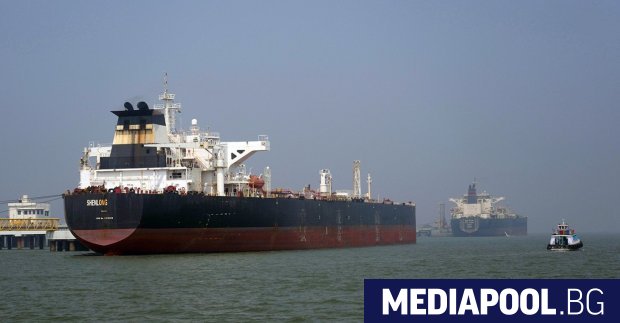
Iran is now charging commercial vessels a “fee” to transit the Strait of Hormuz, a critical maritime route through which approximately one-fifth of the world’s oil supply and up to 30% of liquefied natural gas shipments pass, according to informed sources at Lloyd’s List. The move comes as tensions in the region remain high, potentially impacting global energy markets.
The Islamic Revolutionary Guard Corps (IRGC) is reportedly establishing a registration system for vessels, allowing “approved” tankers safe passage through the strait. Under the new regulations, ships must pass through Iranian territorial waters near the Iranian-controlled island of Larak, where the IRGC and port authorities will visually inspect them.
So far, only one vessel has reportedly paid the fee for “safe passage” – an estimated $2 million, sources say. The method of payment, given existing sanctions against Iran, remains unclear.
India, Pakistan, Iraq, Malaysia and China are reportedly in negotiations with Iran and coordinating their ship transits through the new mechanism. At least eight vessels have used the “alternative” route through Larak this week, Financial Times reported, citing data from MarineTraffic.
These include oil tankers and bulk cargo ships from India, Pakistan, and Greece, as well as Iran’s own oil fleet. Many of these vessels have previously visited Iranian ports, the publication noted. Lloyd’s List sources report nine ships have transited the new route through Larak, including two Indian liquefied natural gas carriers — Shivalik and Nanda Devi.
The IRGC is expected to establish a clear approval procedure for transits in the coming days, though currently, each case is being considered individually. Captains planning to use the new route are required to provide detailed information about the ship’s ownership and the cargo’s final destination through contacts linked to Iran operating outside the country.
Despite Tehran’s “approval,” analysts warn that ships remain at risk, as separate units within the IRGC could detain transits or even seize vessels that other factions have cleared. Control Risks stated that the U.S. Is “likely to deliberately target specific individuals, entities, or maritime assets of the IRGC involved in this scheme.”
On March 20, 2026, the Iranian Foreign Ministry stated that ships from some countries not involved in actions against Iran had passed through the Strait of Hormuz with Iranian military permission. The maritime route is not closed, the ministry emphasized, but shipping is only occurring under certain conditions.
According to data from S&P Global, approximately 3,200 ships are currently blocked in the Persian Gulf following the start of the conflict involving Iran, and the number of transits through the strait has decreased by 96%. At least 22 ships have been attacked since February 28, some directly.
U.S. Initiates Military Operation to Clear Strait of Hormuz
The United States and some of its allies have begun using attack aircraft to strike Iranian naval vessels, as well as Apache helicopters to counter unmanned aerial vehicles, in an effort to clear the Strait of Hormuz. This marks the first phase of an operation intended to allow U.S. Navy ships to enter the strait and provide escort and accompaniment for commercial vessels to and from the Persian Gulf, The Wall Street Journal reported. Clearing the strait and its coastline, though, could capture weeks.
General Dan Kane, Chairman of the Joint Chiefs of Staff, announced the operation at a press conference at the Pentagon on Thursday. He stated that heavily armed A-10 Warthog aircraft and Apache attack helicopters are flying over the strait and the southern Iranian coastline, searching for and attacking Iranian rapid boats. Some of the U.S.’s allies, whom Kane did not name, are using helicopters to “combat one-way attack drones.”
The operation is part of a multi-stage Pentagon plan to reduce the threat from Iranian armed boats, mines, cruise missiles, and drones that have disrupted shipping since the beginning of March. A-10 aircraft and Apache helicopters have been pursuing boats harassing commercial vessels for several days, an American official told the publication. Fighters stationed in the region may also join them.
Iran has attacked dozens of ships attempting to transit the Strait of Hormuz, using both maritime and aerial drones, as well as missiles, including against ships in the Gulf of Oman and the Persian Gulf.
The Strait of Hormuz is only 38 kilometers wide at its narrowest point, so simply clearing it will not be enough, according to Michael Connell, an Iran analyst at the Center for Naval Analyses (CNA) in Washington: “Cruise missiles can be launched from hundreds of kilometers away and still hit ships passing through the strait.”
Despite nearly three weeks of heavy bombardment by the U.S. And Israel, Iran still possesses vast stockpiles of mines, cruise missiles on mobile launchers, and hundreds of boats stored secretly in hidden facilities with tunnels along the coast and on islands, warned Farzin Nadimi, an Iranian defense expert at the Washington Institute for Near East Policy:
“I think it will take weeks to restore safe shipping in the strait. But even then, Iran will retain a significant portion of [its] combat resources.”
