
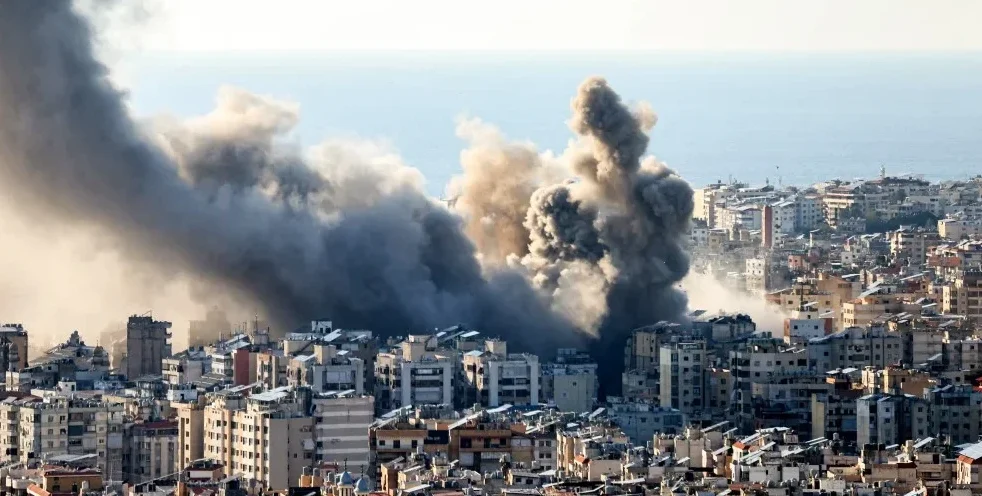
Escalating tensions in the Middle East have entered a fifth day, disrupting global energy routes and supply chains as the conflict intensifies. The developments underscore growing regional instability with potentially far-reaching economic consequences.
On Wednesday, March 4, 2026, the Turkish Ministry of Defense announced it intercepted an Iranian ballistic missile headed toward Turkish airspace using a NATO defense system.
“A ballistic missile launched from Iran and detected heading towards Turkish airspace after crossing Iraqi and Syrian airspace was intercepted and neutralized in a timely manner by NATO air and missile defense elements stationed in the Eastern Mediterranean,” a statement from Ankara read.
Authorities determined that debris that fell in the Dörtyol district of Hatay province belonged to air defense ammunition used to intercept the threat. No casualties or injuries were reported.
The Turkish government affirmed its commitment to defending its territory and airspace “with determination and without hesitation.” “We reiterate that we reserve the right to respond to any hostile attitude against our country,” officials added.
“We urge all parties to refrain from actions that could further escalate the conflict in the region. We will continue to consult with NATO and our other allies,” the statement concluded.
The involvement of a NATO system comes as the United Kingdom and France are increasing their naval forces in Cyprus, a European Union member nation that has been targeted due to the presence of a British military base.
Shortly after the incident, NATO “condemned” the Iranian attack. NATO spokesperson Allison Hart stated, “NATO stands in firm solidarity with all of its allies, including Türkiye, as Iran continues its indiscriminate attacks throughout the region.”
“Our posture of deterrence and defense remains strong across all domains, including air and missile defense,” Hart added.
Meanwhile, the United States and Israel expanded their attacks across Iranian territory Wednesday night, while Tehran retaliated by launching over 40 missiles and 230 drones against American and Israeli targets throughout the region.
According to a report by the U.S.-based Human Rights Activists News Agency (HRANA), 1,097 civilians have been killed in Iran since February 28. Of those, 181 were children under the age of 10. The number of injured civilians reached 5,402.
The agency also reported at least 104 attacks in the last 24 hours, targeting military bases, medical centers, and residential areas.
The U.S. Government indicated the operation now involves more than 50,000 soldiers and 200 jets, marking what officials are calling the largest operation in the Middle East in recent history. Former President Trump claimed to have destroyed 17 Iranian ships and completed 2,000 strikes in just five days.
Israel says new Iranian leader is a legitimate target for assassination
As attacks continue, the Iranian Assembly of Experts began what could be the selection of a successor to the late Ali Khamenei, the country’s supreme leader.
Due to attacks targeting the buildings where the election is being held, the Iranian government indicated that meetings are taking place virtually among the more than 80 religious figures eligible to vote for the new ayatollah.
The selection process is occurring as the country prepares for three days of mourning in honor of Khamenei, who died on Saturday.
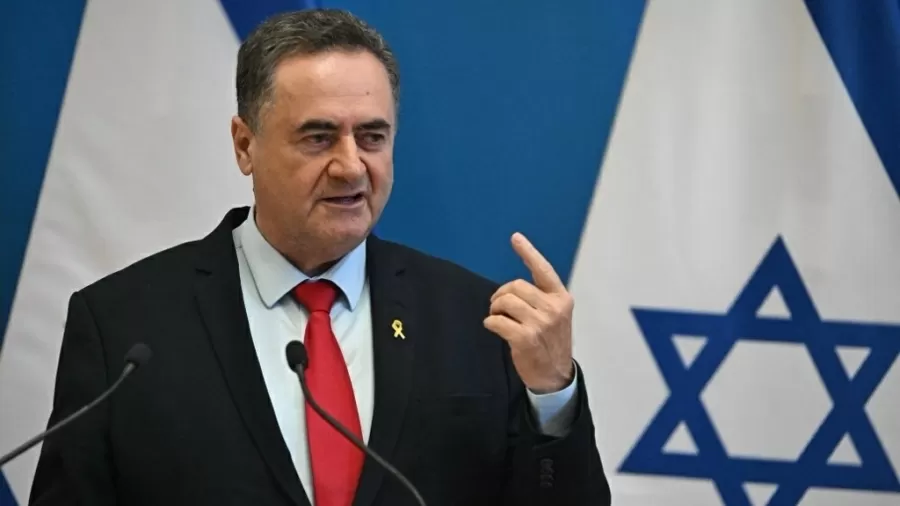
Although, Israeli Defense Minister Israel Katz threatened on Wednesday to assassinate any Iranian leader chosen to succeed the supreme leader. “Any leader chosen by the Iranian terrorist regime to continue leading the plan to destroy Israel, threatening the United States, the free world and the countries of the region, and suppressing the Iranian people, will be a certain target for assassination, no matter their name or where they hide,” he said.
In a statement released Wednesday morning, Israel claimed to have struck dozens of military targets in Iran and initiated “a broad wave of attacks” against government targets in Tehran, including the presidential office.
Avichay Adraee, the Arabic-language spokesperson for the Israel Defense Forces, explained that the attacks targeted the headquarters of the Basij – a paramilitary force linked to Iran’s Revolutionary Guard – as well as missile launch platforms and defense systems, and “the supply and logistics directorate affiliated with the regime’s ground forces.”
He added that Israel will continue to “intensify its attacks” on Iranian regime infrastructure.
In addition to the attacks against Iran, the Israeli government announced a new phase of its offensive against Hezbollah in Lebanon.
The Israeli army stated it has launched attacks against Hezbollah infrastructure in Beirut. Deaths have been reported in various cities across the country in recent hours, and more than 80 localities have been ordered to evacuate.
Iran’s response continues, dismissing Trump’s claim that “everything” has been destroyed in the country. Tehran maintains it will not negotiate with the Americans at this time.
Iranian Foreign Minister Abbas Araghchi stated that Trump “betrayed diplomacy” by launching attacks during negotiations.
“When complex nuclear negotiations are treated as a real estate deal, and when big lies obscure reality, unrealistic expectations will never be met. The result? Bombing the negotiating table out of sheer spite. Mr. Trump betrayed diplomacy and the Americans who elected him,” he said.
The Revolutionary Guard stated on Wednesday it had launched approximately 40 missiles against American and Israeli targets on the fifth day of war in the Middle East. “A few hours ago, the 17th wave of Operation Honest Promise 4 was carried out with the launch of 40 missiles by the aerospace forces of the Islamic Revolutionary Guard Corps, towards American and Zionist targets,” a statement released by state television read.
The missiles launched from Iran early Wednesday morning triggered air raid sirens across much of Israel, with the military stating it was “working to intercept the threat.” The shelter-in-place order covered Jerusalem, Tel Aviv, and other areas of the country.
The Islamic Revolutionary Guard also claims to have fired 230 drones against various installations housing American troops in the Middle East, including a base in Erbil, Iraq, and Ali Al Salem Air Base and Arifjan Camp in Kuwait.
The Guard declared that the attacks are among its “first decisive steps” in the war.
The Saudi Arabian government confirmed it intercepted two attacks from Iran Wednesday night, while Kuwait confirmed the death of an eleven-year-old girl.
A U.S. Consulate in Dubai was hit, and images of flames revealed the difficulty of the Trump administration in maintaining its narrative that it controls Iranian airspace.
Qatar confirmed it was targeted by two Iranian ballistic missiles. One of the missiles was intercepted by Qatar’s air defense systems, and the other hit the Al Udeid American air base, the largest American base in the region. Qatar reported no casualties.
Global Impact
While there are doubts about Iran’s claim to have closed the Strait of Hormuz, markets are warning that the war threatens to destabilize global routes and the supply of dozens of sectors.
Approximately 3,200 ships, or about 4% of global tonnage, are reportedly stalled in the Persian Gulf. Another 500 ships, or 1% of global tonnage, are currently “waiting” outside the Gulf, in ports off the coasts of the United Arab Emirates, and Oman.
Another finding is that, on its fifth day, the war is shaking the global market. Stocks in Asian exchanges plummeted.
Asia relies heavily on energy imports transported through the Strait of Hormuz. The largest losses were recorded in Seoul, where the session closed with the market plummeting 12%, the largest drop ever recorded.
In two days, the benchmark index lost more than 18% of its value, while the currency fell to a 17-year low. Japan’s Nikkei fell 3.9% and Taiwan’s stocks retreated 4.3%.
