
The death of Iran’s Supreme Leader Ayatollah Ali Khamenei has created a power vacuum within the country, and the future direction of the Islamic Republic remains uncertain. While the regime will select a new leader, U.S. President Donald Trump has signaled his disapproval of a continued theocracy and instead called on opposition groups to prepare for a potential shift in power.
However, experts suggest a third possibility is gaining traction: a military government led by the Islamic Revolutionary Guard Corps (IRGC).
Amidst the confusion following U.S. Strikes, a military takeover by the IRGC – already one of the most powerful organizations in Iran, independent of the regular army – is increasingly seen as plausible. The IRGC is heavily armed, controls the nuclear and missile programs, and wields significant economic influence.
“We could be witnessing the rise of a military dictatorship instead of the current theocracy,” noted Břetislav Tureček, head of the Center for the Study of the Middle East at Metropolitan University Prague.
Washington, however, is attempting to prevent such a scenario, given the IRGC’s long-standing hostility towards the West and Israel.
Trump Calls for Disarmament
“To the members of the Islamic Revolutionary Guard, the armed forces, and all police, I say tonight you must lay down your weapons and you will have full immunity,” President Trump declared after the U.S. And Israeli forces launched strikes against Iran.
“Or alternatively face certain death. So lay down your weapons. You will be treated fairly and have full immunity, or you will face certain death,” he added, according to reports.
Interview:
Instead of retreating, Iran retaliated with attacks throughout the Middle East, targeting countries with U.S. Bases or allied to the U.S. Trump’s call to action, however, was aimed at the core of the regime.
“This is not only justice for the people of Iran, but for all Great Americans,” Trump wrote on his Truth Social platform. “He [Khamenei] was unable to avoid our Intelligence and Highly Sophisticated Tracking Systems and, working closely with Israel, there was not a thing he, or the other leaders that have been killed along with him, could do.”
Trump also warned that “the heavy and pinpoint bombing, however, will continue, uninterrupted throughout the week or, as long as necessary to achieve our objective.”
Initially, Iranian state media denied Khamenei’s death, with the Tasnim and Mehr news agencies stating he was “steadfast and firm in commanding the field.” However, his death was later confirmed in an address by a tearful presenter, who announced a 40-day period of mourning.
A Potential Military Government
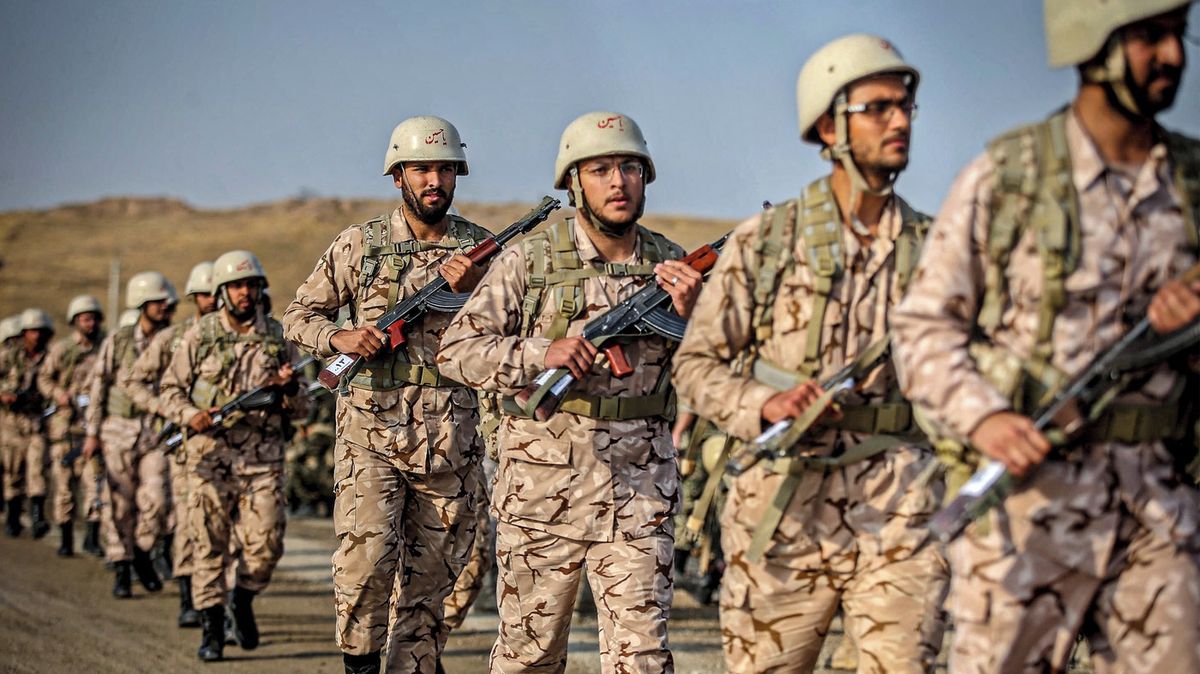
The possibility of a military government emerging from the chaos following the U.S. Strikes is considered highly likely by some analysts. The IRGC, already a powerful force independent of the army, is well-equipped and controls key sectors including the nuclear and missile programs, as well as having a substantial influence on the economy.
“We may notice the emergence of a military dictatorship instead of the current theocracy,” said Alia Awadallahová, a former advisor to the Pentagon and White House for the Middle East, according to reports.
Washington is attempting to prevent this outcome, as the IRGC has consistently taken a hardline stance against the West and Israel.
U.S. And Israeli Strikes on Iran 2026
Israel and the U.S. Are continuing extensive attacks on military and political targets in Iran, which began on February 28, 2026. The U.S. States the goal is to destroy Iran’s missiles, navy, and security infrastructure. Several Iranian leaders, including Supreme Leader Khamenei, have reportedly been killed. Tehran is responding with attacks across the Middle East. Follow developments online >>>
Trump has long pressured Iran, and in June 2025, the U.S. And Israel launched Operation Midnight Hammer targeting Iranian nuclear facilities.
The IRGC is now undergoing a leadership transition, with Mohammad Pakpúr, the head of the IRGC, also killed during the recent U.S.-Israeli strikes. He succeeded a previous leader who died in similar attacks last year.

Photo: Reuters
Who are the Islamic Revolutionary Guard Corps?
The IRGC was founded by Ayatollah Ruhollah Khomeini, Iran’s first supreme leader, after the 1979 Islamic Revolution. The IRGC reports directly to the country’s most essential political, religious, and military authority.
Since 1979, the IRGC has gained power in many areas, operating in sectors such as construction, telecommunications, and the automotive and energy industries.
Its primary mission is to protect the theocratic regime. It demonstrated this function during the bloody suppression of anti-regime protests, most recently in January.
Videos from the protests show members of the Basij, a volunteer force within the IRGC, with weapons and batons, beating protesters and chasing them through the streets. One known Basij commander even warned parents on state television to preserve their children home and called on security forces to gather and suppress the demonstrations.
The brutal crackdown on protesters in January sparked international outrage, leading the European Union and other organizations to condemn the group and designate the IRGC as a terrorist organization.

The IRGC also has foreign units, particularly the Quds Force, which played a key role in building what Iran calls its “axis of resistance” against Israel and the United States.
It has supported former Syrian President Bashar al-Assad, the Lebanese militant group Hezbollah, the Houthi rebels in Yemen, and other groups in the region whose power has grown since the U.S.-led invasion of Iraq in 2003, as described by the Council on Foreign Relations.
U.S. Officials claim the IRGC taught Iraqi militants how to manufacture and use particularly deadly roadside bombs against American troops in the area. The IRGC also supports militant groups in the Palestinian territories, including Hamas.
The Islamic Revolutionary Guard Corps also has its own navy and air force, separate from the regular Iranian armed forces.
It oversees Iran’s ballistic missile program, which was once considered the largest in the Middle East. However, much of this program was destroyed during Israeli attacks on Iran last year, and further strikes have targeted it during the current conflict.
IRGC Holds More Power Than the Army
The IRGC functions separately from the traditional Iranian army – and often in conflict with it. However, a scenario in which the two forces clash in a power struggle is unlikely, as the army would likely not stand a chance, according to a report by the Washington-based think tank Middle East Institute.
The Revolutionary Guard holds overall greater power. The army is less ideological and lacks the same reach in other areas, although it has more personnel on paper. According to the respected Global Firepower 2026 ranking, the army has approximately 350,000 soldiers, while the Islamic Revolutionary Guard Corps has about 190,000 members.
“In terms of taking power, the Revolutionary Guard is the stronger player. They are well-armed and control a large part of the Iranian economy,” said orientalist Lenka Hrabalová.
IRGC Influence on the Iranian Economy:

“They control ports, are involved in smuggling, and oversee so-called bonyads – Islamic religious foundations with enormous sums of money. They control services, cement plants, road construction, and other projects. The Islamic Revolutionary Guard Corps is essentially the deep state, controlling Iran,” she added.
