
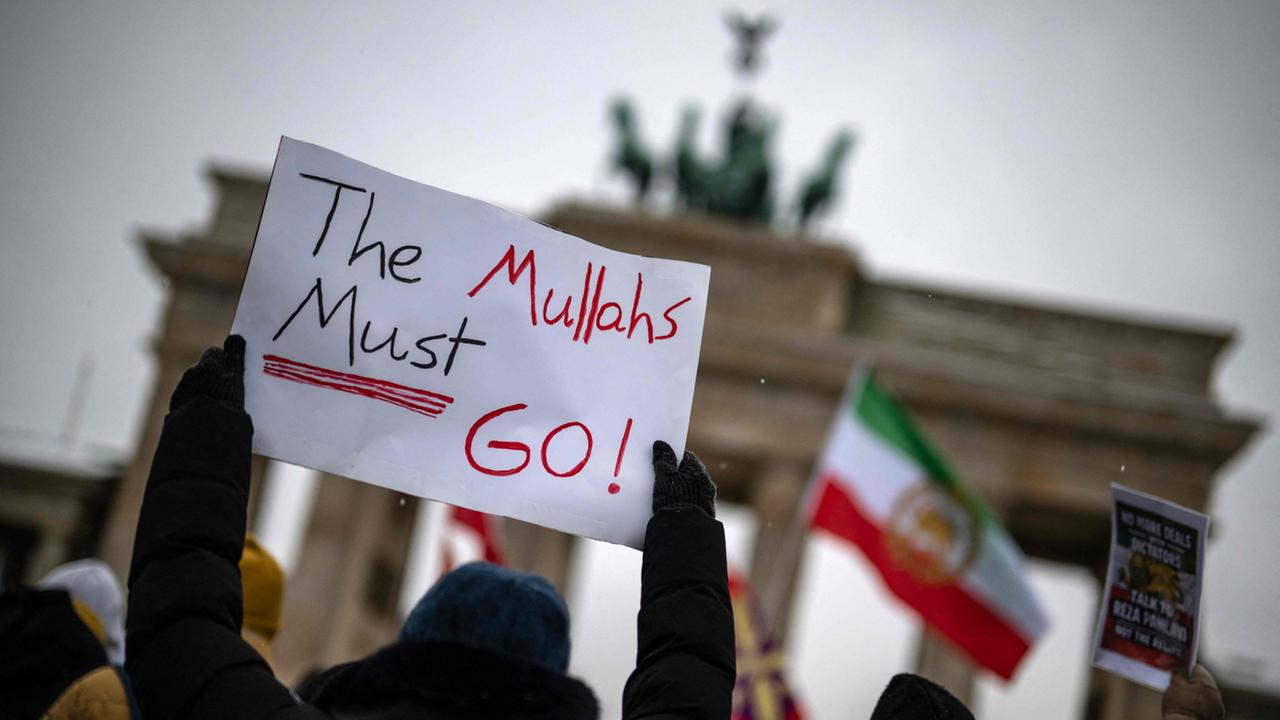
Iranian exile groups have called for a large demonstration in Berlin today, expressing solidarity with protests in Iran and demanding a realignment of German policy toward the country.

Organizers have registered 20,000 participants with police, but the actual turnout could be significantly higher. A broad spectrum of Iranian associations and organizations from the exile opposition, active in Germany and other European countries, have been invited. They are united in their outrage over the violent suppression of protests in Iran and their desire for a change in government driven by the Iranian people, hoping for support from Western nations.
Javad Dabiran of the National Council of Resistance of Iran, one of the demonstration’s co-organizers, says that for decades, Germany has hoped the Iranian regime would change its behavior. He argues that this has proven to be an illusion.
“End to a Policy of Appeasement”
Calls are growing to end a policy of attempting to influence Iranian leadership through diplomatic means and economic projects. This sentiment is also echoed by CDU Bundestag member Reza Asghari. When he addressed the German parliament in mid-January, it was clear how deeply affected he was by the images and news coming from Iran.
Asghari has personally experienced the brutality of the system, having spent two and a half years in an Iranian prison as a young man. He asserts that Europe can no longer be a passive observer. The question now is where the German government and the EU can take further action.
Call for Severing Ties
The exile opposition is demanding the regime’s collapse and calls for disregarding potential negotiations regarding Iran’s nuclear program and economic interests. They want Tehran’s embassies closed throughout the European Union.
This step is viewed critically by the German government, which believes a minimum of diplomatic relations is crucial, not least to provide consular support to citizens. However, Iranian consulates in Germany were already closed in October 2024 as a reaction to the execution of German-Iranian citizen Djamshid Sharmahd.
What has already changed is the tone of the German government toward the Iranian leadership. Chancellor Friedrich Merz has questioned the legitimacy of the Iranian government in light of the violence against its own people, and Foreign Minister Johann Wadephul has ceased direct communication with his Iranian counterpart, requiring communication through other channels.
Tougher Action Against the Revolutionary Guard
EU countries have agreed to list the Islamic Revolutionary Guard as a terrorist organization, considering them the military backbone of the mullah regime and a significant player in the economic system. The National Council of Resistance of Iran believes more pressure is needed to prevent funds from reaching the Iranian regime through indirect routes.
The organization is familiar with being on terror lists, considered by some to be the political arm of the People’s Mujahedin, who have previously engaged in violent opposition to the Iranian regime. While some view them as terrorists and a cult, others witness them as a source of hope for voicing opposition from abroad.
More Sanctions
SPD lawmaker Parsa Marvi is also considering what Germany could do to increase pressure on the regime, calling for more consistent action against networks helping to circumvent sanctions and further trade restrictions. Germany is currently the largest EU trade partner with Iran.
Although trade volume has significantly decreased since the reintroduction of sanctions, reaching around one billion euros last year, activists like Javad Dabiran see room for further action.
He dismisses the argument that goods delivered are primarily essential for the Iranian people, such as medicine and medical equipment, claiming that humanitarian reasons are often used as a pretext, with the money actually funding terror and repression.
Pressure on Exiled Iranians
Marvi believes the German government should also take tougher action against the Iranian regime’s agent network in Germany, where opposition figures, human rights activists, and journalists are being threatened and pressured. The German Office for the Protection of the Constitution identifies Iran as a key actor in so-called transnational repression.
Members of the SPD, the Left Party, and the Greens in the Bundestag are therefore calling for more protection, as well as a halt to deportations and humanitarian visas for regime critics in Iran. Foreign Minister Wadephul hopes that attention will remain focused on what is happening in Iran.
