
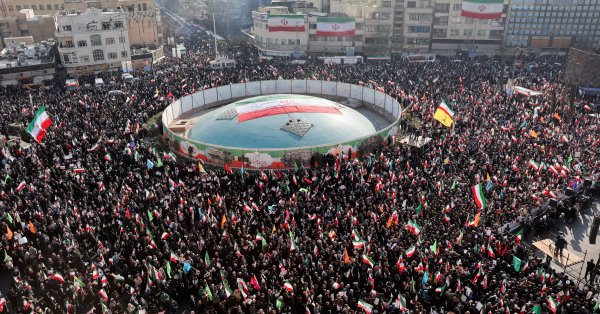
As protests continue to grip Iran – wiht reports indicating at least 2,000 fatalities sence the unrest began [[2]] – a notable shift is occurring in the response from neighboring Arab states. Unlike the widespread support seen for the 2022 demonstrations, regional governments are now largely silent, reflecting both a weakened iran and growing concerns over potential instability spilling across borders. This report examines the changing geopolitical dynamics at play as the Iranian regime faces its most notable challenge in years.
The recent wave of protests in Iran has sparked a muted response from much of the Arab world, a stark contrast to the widespread support seen during the 2022 demonstrations. This shift in tone reflects a changing geopolitical landscape, where Iran’s diminished influence and growing regional anxieties about instability are reshaping dynamics. The situation underscores the complex interplay between domestic unrest in Iran and the strategic calculations of its neighbors.
During the 2022 protests, pan-Arab news outlets, often funded by Gulf monarchies, provided extensive coverage, fueling the movement with sympathetic reporting. While Arab diplomats publicly remained cautious, they reportedly expressed enthusiasm privately. Hossein Salami, then commander of Iran’s Islamic Revolutionary Guard Corps, accused Saudi Arabia-backed media of inciting unrest and warned the kingdom to curtail its coverage, threatening repercussions if they did not.
Analysts suggest the current protests pose an even greater threat to the Iranian regime than those two years ago, yet the reaction across the Arab world has been surprisingly subdued. News broadcasts this month have largely focused on other regional issues, and officials have been hesitant to comment when pressed. Two key factors explain this change: a weakened Iran and increasing fears of chaos within the Gulf states.
Israel’s military operations following the October 7, 2023 attacks have significantly degraded Iran’s network of proxies. Hezbollah, once a powerful ally in Lebanon, has been severely weakened and continues to face near-daily Israeli airstrikes. The pro-Iranian regime of Bashar al-Assad in Syria is also diminished. Iran itself sustained damage from 12 days of Israeli and American airstrikes in June. Salami, who previously issued threats, was killed in an Israeli airstrike earlier in the conflict.
This decline in Iran’s regional power has lessened the urgency surrounding its potential collapse. While Syrians may harbor resentment towards the regime, they no longer live in fear of its militias. A visit by Iranian Foreign Minister Abbas Araghchi to Beirut in October 2024, during the height of the Israel-Hezbollah conflict, was initially viewed with anger as a show of support for the militia. However, his subsequent trip on January 8th elicited more amusement than outrage.
Araghchi arrived in Lebanon as Iranians took to the streets to protest their government’s failing economic policies. In a seemingly tone-deaf move, he led an economic delegation to discuss limited trade ties and signed copies of his new book, “The Power of Negotiation” – a title that drew irony given his unsuccessful attempts to negotiate with the United States last year, which culminated in an attack on the Fordow uranium enrichment facility by B-2 bombers.
In a recent interview, Israeli Prime Minister Benjamin Netanyahu described Iran as being “reduced to a second-tier power,” a sentiment echoed by many Arab officials. The most prominent news stories in the Arab world over the past two weeks have centered on tensions between Saudi Arabia and the United Arab Emirates, and clashes between the central government and Kurdish militias in northern Syria – neither of which directly involved Iran.
Despite its diminished status, Iran remains a force to be reckoned with.
This is another reason for the cautious response from Gulf states. For the second time in seven months, authorities are nervously watching for a potential American attack on Iran. Donald Trump has threatened action if the regime continues to kill protestors, and hundreds have already died. A meeting is scheduled for January 13th where the American president will discuss options ranging from military strikes to cyberattacks and increased economic sanctions. Trump has also urged Iranians to continue protesting and “take back” their institutions, promising that “help is on the way.”
Even with Israel damaging Iran’s long-range ballistic missile arsenal during the June conflict, the regime still possesses thousands of short-range missiles capable of hitting targets in the Persian Gulf. Following a potential American strike on Iranian nuclear facilities, officials warn, the regime could launch a barrage of these missiles at Al-Udeid Air Base in Qatar, home to the U.S. Central Command headquarters. While Iran reportedly warned both America and Qatar beforehand, and most of the missiles were intercepted, the symbolic impact would be significant.
Iranian representatives have warned their Gulf counterparts that they would expand their targets if attacked again, potentially including Bahrain, home to the U.S. Fifth Fleet. These threats may be bluster, but a real attack causing damage in the Gulf would likely trigger a substantial American response.
Regional leaders are also concerned about the broader consequences of instability. They have spent years dealing with the fallout from state collapse in Iraq following the U.S.-led invasion, and more recently in Syria during its prolonged civil war. The resulting chaos unleashed a flow of everything from jihadists to amphetamines into Jordan and the Gulf. Saudi Arabia is also grappling with a civil war in neighboring Yemen, and another across the Red Sea in Sudan.
The last thing they want is state collapse in Iran, a country of 92 million people located just 200 kilometers across the Gulf. The potential influx of refugees is one concern, but the loss of control over Iran’s missile and drone arsenal, not to mention the fate of its remaining uranium stockpile, is a far greater worry.
There is little affection between Arab regimes and the Islamic Republic, but many would welcome a new Iranian government willing to curb its nuclear program and support for regional militias. However, after two years of regional conflict, many Middle Eastern governments now fear that unrest in Iran will lead to more chaos than calm.
This happened Dnes, for the important news of the day follow us on Google News Showcase.
