
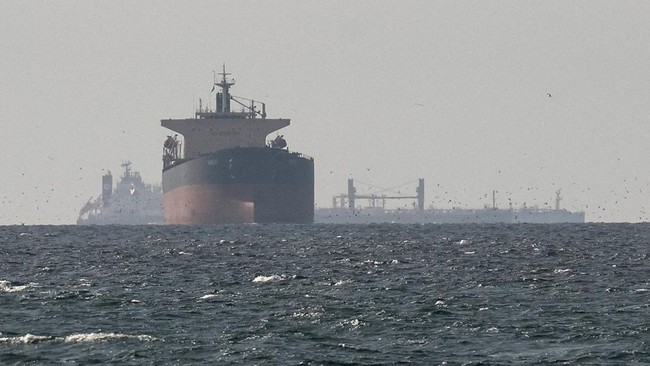
Jakarta, CNBC Indonesia – Iranian Foreign Minister Abbas Araghchi stated that the Strait of Hormuz remains open to vessels not belonging to the United States, Israel, or their allies.
“The Strait of Hormuz is closed only to tankers and ships belonging to Iran’s enemies – those who attack Iran and its allies. Others are welcome to pass,” he said in an interview with MS Now.
Despite this, Araghchi acknowledged that many nations are choosing to avoid the crucial waterway due to safety concerns, a situation he attributes not to Iranian actions.
“Of course, many of them prefer not to pass because of security issues. This has nothing to do with us.”
Abbas Araghchi also noted that numerous tankers and other ships continue to transit the Strait of Hormuz.
At least two countries – India and China – have seen vessels safely pass through the Strait, according to reports.
The Strait of Hormuz is a vital artery of the global economy, with approximately 20% of the world’s crude oil supply passing through the narrow waters in the Middle East, an area heavily influenced by Iran.
Disruptions in the Strait have prompted the U.S. And its allies to release 400 million barrels of strategic oil reserves in an effort to stabilize the market and curb rising crude oil prices. West Texas Intermediate (WTI) crude is currently trading at $98 per barrel, while Brent crude has reached $103 per barrel.
Previously, Iran claimed responsibility for several attacks on ships in and around the vital oil route, including an incident involving a Thai vessel on Wednesday. The Islamic Revolutionary Guard Corps had stated that any ship wishing to pass through the strait must obtain permission from Iran.
(fsd/fsd) Add as a preferred
source on Google [Gambas:Video CNBC]
Iran’s foreign minister has declared that the Strait of Hormuz will remain open to most international shipping, despite heightened regional tensions. The statement comes as concerns grow over potential disruptions to global oil supplies.
According to Abbas Araghchi, the critical waterway will be accessible to all vessels except those belonging to the United States, Israel, and their respective allies. He specified that the restriction applies to ships associated with nations “who attack Iran and its allies.”
While asserting Iran’s control, Araghchi also noted that some countries are voluntarily avoiding the Strait due to security concerns, a decision he said is independent of any Iranian actions. “Of course, many of them prefer not to pass because of security issues. This has nothing to do with us,” he stated.
Despite these concerns, Araghchi confirmed that numerous tankers and other ships are continuing to utilize the Strait of Hormuz for transit. Vessels from India and China have reportedly passed through the waterway safely.
The Strait of Hormuz is a strategically vital chokepoint for global energy markets, facilitating the passage of around 20% of the world’s crude oil. Recent tensions have prompted the U.S. And its allies to release strategic oil reserves to mitigate potential price spikes, with WTI crude currently at $98 a barrel and Brent at $103 a barrel.
The development underscores growing regional tensions and could influence future diplomatic talks. Iran has previously claimed responsibility for attacks on ships in the area and has demanded that all vessels obtain permission from Tehran to transit the Strait.
(fsd/fsd)
