
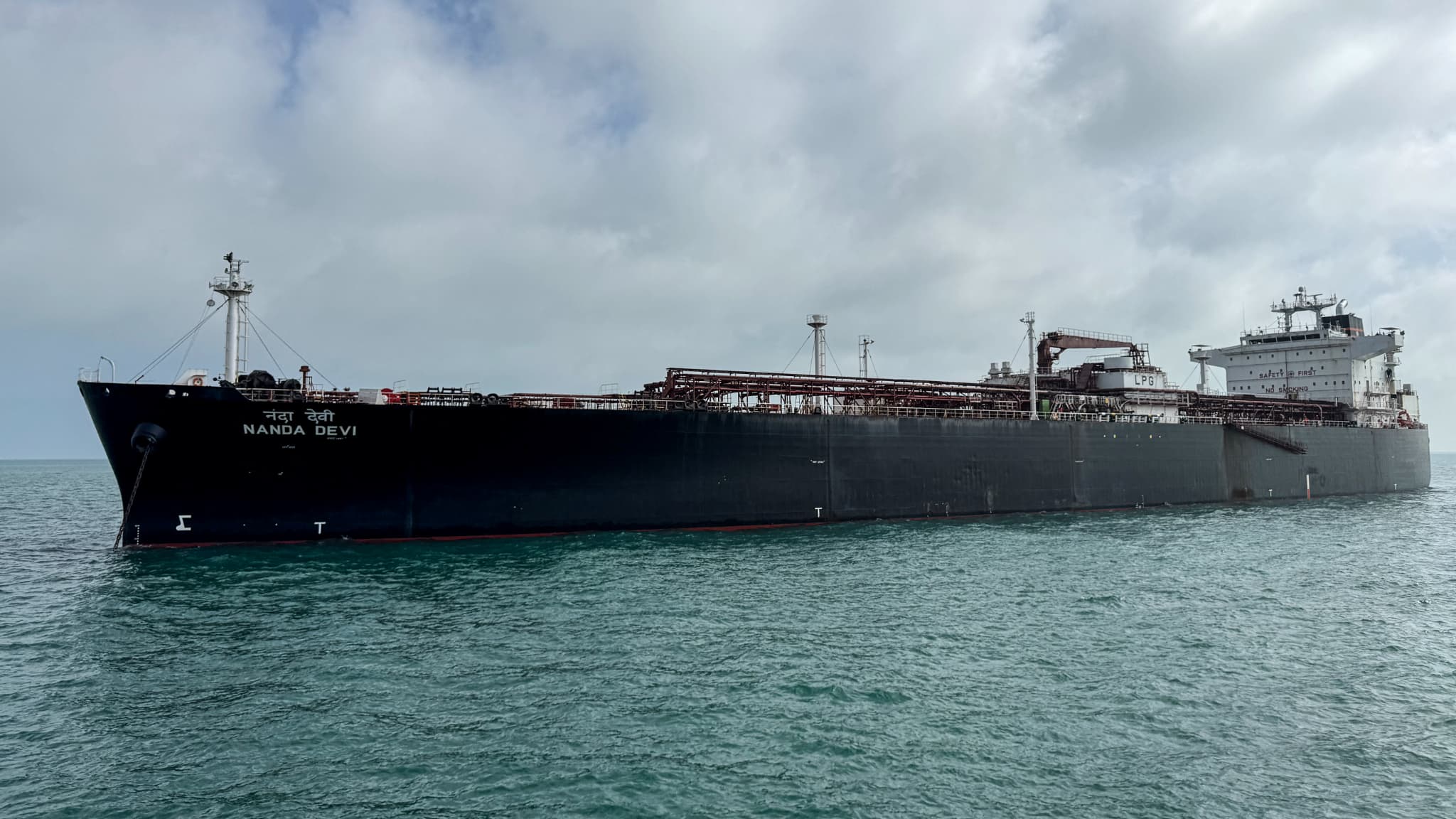
Several vessels have successfully navigated the Strait of Hormuz in recent days, with some apparently receiving clearance from Iran, as tensions in the region remain high. The selective passage of ships raises questions about which countries are being permitted access and which are being targeted by Tehran.
Maritime tracking data indicates Iran appears to be authorizing ships from “allied” nations to transit the critical waterway. Since the start of the conflict in the Middle East, the flow of vessels through the strait – a passage that normally handles approximately 20% of the world’s crude oil and liquefied natural gas – has been drastically reduced, with Iranian authorities threatening to intercept those attempting to pass.
However, exceptions are being made. According to a report from maritime intelligence company Windward, at least five ships departed the waterway between March 15 and March 16, traveling through Iranian waters.
“This new route illustrates how Iran’s selective blockade has evolved to allow transit for its allies and supporters,”
JPMorgan analyst Natasha Kaneva noted in a report that at least four vessels exited the Strait of Hormuz via the Larak-Qeshm channel, near the Iranian coast, over the preceding two days.
“This is not a standard route for ships,” Kaneva told the Associated Press. “It could reflect a procedure to confirm the ownership of the vessel and the nature of the cargo, allowing passage for ships not affiliated with the United States or its allies.”
Pakistan, Turkey, India…
Among the vessels was a Pakistani-flagged oil tanker that transited the strait with its automatic identification system activated, according to MarineTraffic, while most ships deactivate it to avoid being targeted.
Last week, two Indian-flagged vessels carrying liquefied petroleum gas (LPG) similarly passed through the Strait of Hormuz following diplomatic discussions between New Delhi and Tehran.
Turkish Transport Minister Abdulkadir Uraloglu stated on Friday that a ship with Turkish interests also received Iranian authorization to transit the strait.
The situation remains unclear regarding China, but analysts at Windward have observed a notable trend. Many vessels in the strait are conspicuously displaying their Chinese affiliation. “This pattern suggests the possibility of an informal access filter, where vessels signaling Chinese ownership or crew may attempt to demonstrate neutrality or avoid being targeted in the current conflict context,” they explained to CNBC.
Between March 1 and March 15, eleven ships linked to China transited the Strait of Hormuz, according to Lloyd’s List Intelligence. However, these were primarily cargo ships, while tankers continued to avoid the waterway.
Random Attacks Fuel Confusion
Conversely, ships from other nations have been targeted, with Tehran continuing attacks on vessels without specifically focusing on any one country. Analysts at Windward say these seemingly “random” strikes are intended to create confusion and disruption.
The International Maritime Organization reports that at least 16 ships have been struck in waters near the port of Fujairah in the United Arab Emirates, the port of Khor Al Zubair in Iraq, and the Gulf of Oman. Several of the targeted vessels had connections to Western countries or Gulf states, through ownership or registration, according to Windward.
Other ships impacted came from Thailand, Vietnam, and Brazil, indicating “a broad targeting of dense commercial shipping lanes rather than a narrow focus on nationality or operator category,” Windward added.
The attacks have followed no predictable pattern, Bridget Diakun, principal risk and compliance analyst at Lloyd’s List Intelligence, told CNBC, which “complicates the task for those attempting to plan a transit, as they cannot understand the logic behind one ship being attacked rather than another.”
