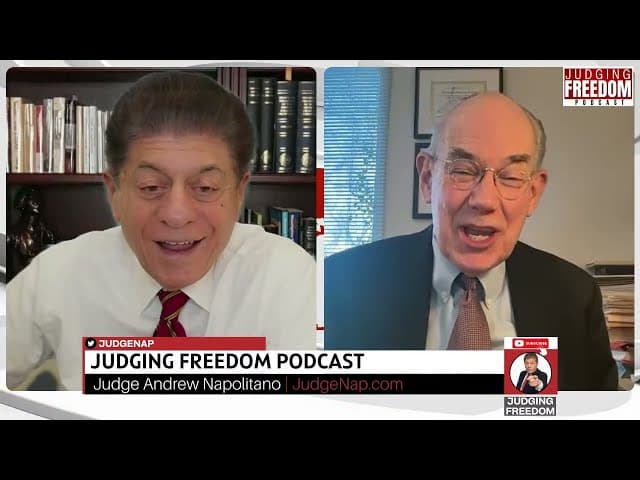
Tensions remain high in the Middle East as a new interview reveals the extent of recent discussions regarding potential military action against Iran. University of Chicago Professor John Mearsheimer details a candid conversation exploring the Trump administration’s approach to Iran, its willingness to skirt international law, adn ultimately, a reportedly averted plan to destabilize the regime in Tehran. The wide-ranging interview, originally conducted for the Judging Freedom podcast and translated from Slovak, offers a stark assessment of recent foreign policy decisions and their potential consequences.
A war with Iran would have a devastating impact on the global economy, according to Professor John Mearsheimer.
Foreign AffairsTrumpUSAIsraelIran
.jpg&w=1200&q=75)
The foreign policy of the Trump administration marked a radical departure from previous administrations, according to University of Chicago Professor John Mearsheimer. The shift, he argues, is evident not only in rhetoric but also in actual policy.
“If you look at how he talks about international law, about his ability to use power whenever he sees fit, none of his predecessors would ever make such statements,” Mearsheimer explained. “And furthermore, when you look at the actual policies, it’s a significant departure from his predecessors.”
Mearsheimer pointed to a dramatic reversal in policy toward Europe, particularly regarding Ukraine, Russia, and NATO. He also noted Trump’s willingness to use military force, albeit cautiously, employing limited strikes followed by claims of victory. “He has no interest in nation-building and social engineering, which his predecessors were deeply interested in,” he added. The professor also highlighted Trump’s use of tariffs as a key difference from previous administrations.
What characterized the presidency of Donald Trump in the area of foreign policy?
“What you see with Donald Trump is very different from what you’ve certainly seen with Joe Biden, but also with his predecessors.”
I was struck when he said that the only thing restraining him on the world stage is his own reason and morality. I thought to myself, what morality? What president who murders people on motorboats and fishing boats would call that his own morality?
“First, when you talk about morality and Donald Trump, he is an accomplice to genocide, which is considered the worst of all possible crimes. And that, for me, is far worse than what he’s doing in connection with those murders on motorboats in the Caribbean.”
“Second, that cannot be justified by any sense of morality that you or I know. To argue that genocide is moral or that shooting people in the Caribbean who may be innocent is moral is not an argument that any serious person would use.”
“Third – no president has ever said things like President Trump has said. It’s quite remarkable that he would say something like that in public – that he rejects international law. There’s no doubt that his predecessors occasionally violated international law. But in each of those cases, they did everything they could to make it clear that they weren’t actually violating international law because they understood that international law is important. Trump doesn’t think international law is important. And as for his behavior, he feels he can do whatever he wants.”
So international maritime law, the laws of war, treaties ratified by the Senate, the Constitution – all of that is secondary in his presidency compared to “his own reason and morality.”
“At this point, it’s clear that’s how he thinks about the world, about relationships with other countries, about how he can behave at home. The evidence is quite clear.”
One of these young thugs in a mask, without a badge, number, or name tag murdered a woman who was driving her car, even though she was trying to avoid him. Trump’s people demonized that woman. She was in a same-sex relationship with another woman. Four high-ranking prosecutors would rather resign than investigate the background of the survivor, because you can’t investigate anyone you want according to the law. There has to be some evidence of a crime. Do you see a connection between foreign authoritarianism and domestic authoritarianism?
“Not really. I see a connection between his willingness to completely disregard the law in foreign policy and in domestic policy. He simply doesn’t think the law applies to him. I don’t think he favors authoritarianism, although that fits with what he does at home. He favors authoritarian regimes abroad because he doesn’t want to get involved in nation-building. And he’s willing to live with an authoritarian leader who can maintain stability.”
“Venezuela is a perfect example of that. Most of his predecessors would probably have invaded Venezuela and put a lot of effort into making Venezuela a liberal democracy. He has no interest in that at all. He’s perfectly happy with the current regime, which is authoritarian, simply because he thinks it will maintain order. For Trump, the main criterion for judging what he thinks about a foreign leader isn’t whether that leader is a democrat or democratically elected, or whether they are authoritarian. The only thing he cares about is whether that leader can maintain stability and serve our goals.”
But I was asking about authoritarianism because his oath is to preserve, protect, and defend the Constitution. He doesn’t seem to feel he has to pay attention to the Constitution. He himself introduced tariffs. He calls them duties. American consumers have paid billions in tariffs that were never approved by Congress. He used billions to military means to kidnap the president of Venezuela. He has been unable to stop the war in Ukraine. And worst of all, he continues to finance the massacre in Gaza. He doesn’t care about laws, morality, the Constitution. He is more of a monarch than a president.
“If I didn’t make myself clear, I agree with you. In terms of foreign policy and domestic affairs, he has little respect for the law. He does what he thinks is right for the United States and for himself, and he doesn’t care if he’s bound by rules. He does what he wants.”
How has the life of the average American been improved by the kidnapping of Nicolás Maduro?
(Laughter.) That’s a serious question?
Excellent answer.
“Look, there was no threat from Venezuela. That’s all you need to know. You remember we talked about narco-terrorism? That’s no longer being addressed because there was no narco-terrorist threat. Then they talked about the Monroe Doctrine, and the idea was that Russia and especially China might be encroaching on the Western Hemisphere and threatening the security of the United States. That argument is ridiculous. And what did it lead to?”
“To the theft of Venezuelan oil. Okay, but that’s not a threat to the United States. There simply isn’t a threat to the United States. So regardless of how well you think that operation went, it didn’t eliminate a threat and it didn’t improve our situation. Maybe someone would argue – I wouldn’t – that the oil in Venezuela would help the American economy. I don’t know anyone serious who would make that argument.”
“No serious economist can make such an argument. I don’t think the president understands oil affairs on the international stage. He certainly doesn’t understand Venezuelan oil. He recently said that Venezuela sold us 500 million barrels of oil. They didn’t sell us anything. Maybe we stole it. And if it’s Venezuelan oil, it’s as thick as tar. It’s not the oil we’re used to importing.”
“Everyone who knows anything about Venezuelan oil says it will take a good ten years and a huge investment to get that oil to market in sufficient quantities to have any significant impact on the American economy or the international economy.”
What are the likely consequences of a U.S. and Israeli invasion of Iran, whether it’s to eliminate Iranian leadership, destroy Iranian air defenses, or a full-scale invasion?
“An invasion won’t happen. Neither Israelis nor Americans will undertake an invasion. They will deploy small numbers of troops in various places and place there agents from the United States and from Israel, agents from Mossad, agents from the CIA, to help incite protests and ultimately a revolution. But the basic plan is quite simple. Let me explain it to you. But before I do that, I emphasize that the plan has failed. And that’s the main reason why I don’t think Trump is interested in using air power against Iran at the moment.”
“The plan is to destroy the Iranian economy, to inflict huge damage through sanctions. And that will eventually create an explosive situation, a situation that is ripe for explosion because people are so desperate because of the economic situation. Then, at some point, and I think we did that at the end of December last year, you fan and support protests and send a small number of Mossad and CIA agents into Iran who work with local groups to incite violent protests.”
“Then, in the third step, you start spreading a narrative, you start promoting it in a way that portrays the protesters as noble and the government as bad. And that, of course, has two effects. One is that it generates support in the West for the protests and against the government. And the same thing happens in Iran. And you do everything you can to spread the narrative that it is inevitable that the regime will fall and the protesters will win. And then, when things start to get out of control, the American and Israeli armies come in with guided missiles, fighters, bombers, and so on. And it’s air power and missiles that will hit the government.”
“What happened in Iran is that the protests fizzled out. And without protests that really shake the government, there’s no point in using military force and bringing in the American army to bomb Iran. Moreover, you start to realize that if you call in the American army, you risk creating a rallying effect among the protesters, and they will rally under the flag. Of course, the Iranian government realized this, and that’s why we backed down.”
Mike Pompeo, a former Secretary of State in Trump’s first term who previously served as Director of the CIA, posted on X:
“The Iranian regime is in trouble. Calling in mercenaries is its last hope. Riots have erupted in dozens of cities. (…)”
And he concluded:
“Happy New Year to all the Iranian patriots in the streets… and to all the Mossad agents walking alongside them…”
Can you imagine someone making such a statement? Why would he make such a statement? It’s largely true, but he’s not in a position to tell the truth.
“Actually, it’s very foolish to say something like that. And by the way, there was an article in the Jerusalem Post on December 29th that is now famous, in which it said that the Israelis themselves tweeted that they had agents from Mossad in Iran.”
As if Mossad wanted to brag about being able to disrupt the sovereignty of another country?
“That’s how it looks. And again, it was foolish. Mossad, the CIA, Mike Pompeo, they all had to make a great effort to remain silent for their own selfish interests. But they clearly revealed what was happening.”
“By the way, it’s not surprising that the Iranian government claims to have enough evidence of communication between Mossad and the CIA on one side and Iranian protesters on the other side. The Iranian government is fully aware of what is happening. The Iranian government has good reason to publicize what the involvement of these external elements means, because that will help fuel the rallying effect around the flag, which, of course, is in the interest of the regime in Tehran.”
Is it your assessment that American and Israeli intelligence officials thought they could replicate the 1953 coup, when the popularly elected President Mohammad Mosaddegh was overthrown largely by MI6 and the CIA?
“Yes. Since December, we’ve been stepping on the gas and pushing the pedal to the metal. We’ve been supporting protests, plus what we just talked about regarding the role of Mossad and the CIA, what Mike Pompeo said, what Trump said about deploying the American army against Iran – all of that indicates that they thought the time was right to overthrow the regime in Tehran.”
“Very important are the economic sanctions. These economic sanctions were designed to destroy the Iranian economy. They didn’t quite succeed in doing so, but they damaged it significantly. The result is that there’s a lot of people in Iran who are desperate, angry, and easy to incite to protest. So there’s plenty of kindling there. And the United States and Israel then tried to ignite it. They thought that when the protests got out of control, we could step in with air power. No ground troops. It would be a cheap coup. And we could help finish it. But it didn’t work out.”
What are the geopolitical consequences of a war, whether it’s removing the regime or destroying defenses? I assume destroying defenses would come first, in order to then apply a mechanism for regime removal, whether it’s missiles or something else. What happens in the Middle East? What happens in the Strait of Hormuz? What happens to oil sales?
“If the United States and Israel were to attack Iran, Iran would do three things. First, they would fire ballistic missiles, guided missiles, and drones at Israel. And I believe they would really bomb Israel, as they did in the 12-day war last June. Second, the Iranians would attack American military bases in the region. We are fully aware of that. And third, and this is very important, they would try to close the Strait of Hormuz. Most people I talk to believe they have the ability to close the Strait of Hormuz.”
What does that mean economically, what’s the overall picture if they close the Strait of Hormuz?
“A huge amount of oil comes from the Persian Gulf. And to get oil from the Persian Gulf to the Arabian Sea, it has to go through the Strait of Hormuz. If the Strait of Hormuz were closed, the oil from the Persian Gulf would have to stay in the Gulf. It couldn’t get out. Almost everyone agrees that this would have a devastating impact on the world economy. And this is not a time when any country wants to see shocks in the international economy.”
“According to reports from June, when we were pushing for a ceasefire, and remember the war lasted only 12 days, one of the reasons why the Trump administration was so eager to end that war was that we had a premonition that the Iranians were preparing to close the Strait of Hormuz. And that scared us.”
“Of course, another reason was that the Iranians were becoming increasingly sophisticated in overcoming Israeli and American defenses with their ballistic and guided missiles. And they were starting to have real success in bombing Israel. The Israelis were interested in ending the war after 12 days because they didn’t have enough missiles to repel all the ballistic and guided missiles coming from the Iranians.”
Do you think Trump cares more about the protesters in Tehran than those in Minneapolis:
Trump: “And by the way, to all Iranian patriots: continue your protests, if you can, take control of your institutions and write down the names of the murderers and tyrants who are tormenting you. I’ve heard five different sets of numbers, if the numbers are correct. One death is too many, but I’ve heard much lower numbers and then much higher numbers. But I’m saying, write down their names, because they will pay a very high price. I canceled all meetings with Iranian officials until the senseless killing of protesters stops. And everything I’m telling them is that help is on the way. You’ve seen that I’ve imposed tariffs on everyone who does business with Iran. They took effect today (January 13th, ed.). And I’m saying, let’s make Iran great again. It was a great country until these monsters came along and took it over.”
You can’t write down the names of murderers in Minneapolis, because they don’t wear badges, numbers, and masks.
“A few notes on what President Trump said. First, what he just said is clear evidence that he is committed to regime change in Iran. Such statements are not made unless you have an interest in eliminating the regime, supporting protesters, and then announcing that we’re coming to finish it. That’s the scenario. But it didn’t work out. And now he’s talking about the situation in Iran differently. He’s saying that the government is likely not going to execute protest leaders, and therefore American military action isn’t necessary. That’s all an acknowledgment that the strategy failed.”
“Regarding the protesters in Minneapolis, we have a very interesting situation here – Trump, when it comes to Iran, loves the protesters and hates the government. But here in the United States, he hates the protesters and loves the government. And that, of course, is because he considers himself king and genius and that anyone who protests against him is fundamentally wrong and poses a threat to the United States, and therefore must be treated as harshly as possible.”
This is a tweet on X from one of my podcast colleagues, a Lebanese man broadcasting from Australia, Mario Nawfal, who has a huge audience:
“The US attack on Iran was reportedly called off at the last minute. President Trump apparently came very close to approving an attack on Iran late last night (January 14th, ed.) but then called it off minutes before it was carried out. Iranian airspace has been reopened and units from Al-Udeid have been ordered to stand down. Sources say Trump halted the attack because advisors couldn’t promise a decisive strike that would topple the regime and warned that Iran could retaliate hard and the US wouldn’t have sufficient regional assets to deal with it. Tensions remain high, but war didn’t start tonight. Iran remains on the brink of war, but hasn’t crossed that line yet.”
I don’t know if that’s true, but I’m sure the reporter who wrote it believes it. Combine that with a report from The Guardian that Iran and Israel agreed not to strike first, and that Russia brokered it. First, who in their right mind would believe any agreement made by Netanyahu? Second, is it reasonable to say that Trump was minutes away from ordering a strike to decapitate the regime?
“I don’t know if it was just minutes away, but he was clearly heading in that direction. He was convinced that the protests would continue to get out of control and that the time would soon come for the American army to intervene against Iran. The evidence clearly shows that’s what he was thinking. Then it quickly became apparent that the protests weren’t working. And using American military force, as I said, would only create a rallying effect among the population. That’s why his advisors told him they couldn’t come up with a strategy that would guarantee success. And that’s why he started to back down, because he would strike Iran and the final result would be counterproductive.”
“The development underscores growing regional tensions as the potential for direct conflict between the U.S. and Iran remains a significant concern.”
Do you think American and Israeli intelligence officials thought they could replicate the 1953 coup, when the popularly elected President Mohammad Mosaddegh was overthrown largely by MI6 and the CIA?
“Yes. Since December, we’ve been stepping on the gas and pushing the pedal to the metal. We’ve been supporting protests, plus what we just talked about regarding the role of Mossad and the CIA, what Mike Pompeo said, what Trump said about deploying the American army against Iran – all of that indicates that they thought the time was right to overthrow the regime in Tehran.”
“Very important are the economic sanctions. These economic sanctions were designed to destroy the Iranian economy. They didn’t quite succeed in doing so, but they damaged it significantly. The result is that there’s a lot of people in Iran who are desperate, angry, and easy to incite to protest. So there’s plenty of kindling there. And the United States and Israel then tried to ignite it. They thought that when the protests got out of control, we could step in with air power. No ground troops. It would be a cheap coup. And we could help finish it. But it didn’t work out.”
The interview is an editorially adjusted transcript of the Judging Freedom podcast, translated by Timotej Dunaj.