
Tokyo – A recent statement by Japanese Prime Minister Sanae Takaiichi regarding Taiwan has triggered a meaningful diplomatic rift with China, prompting economic repercussions and raising concerns about regional stability. The comments, made November 7th, alluded to a potential Japanese defense response in the event of a crisis involving Taiwan, a position vehemently opposed by Beijing. As detailed in reporting from Yonhap News Agency, the fallout includes a Chinese travel advisory discouraging citizens from visiting Japan and the postponement of key bilateral events.
中 ‘여행 자제·한일령’ 등 공세에도 보수층 반발·안보 영향 탓에 철회 못해
‘대화 통한 해법’ 전망 불투명…中, G20 계기 만남 거부에 갈등 장기화할 수도
중국인 방일 급감시 日GDP 0.36% 감소 전망…日백화점·화장품 등 주가 ‘뚝’
이미지 확대
[로이터 연합뉴스 자료사진. 재판매 및 DB 금지]
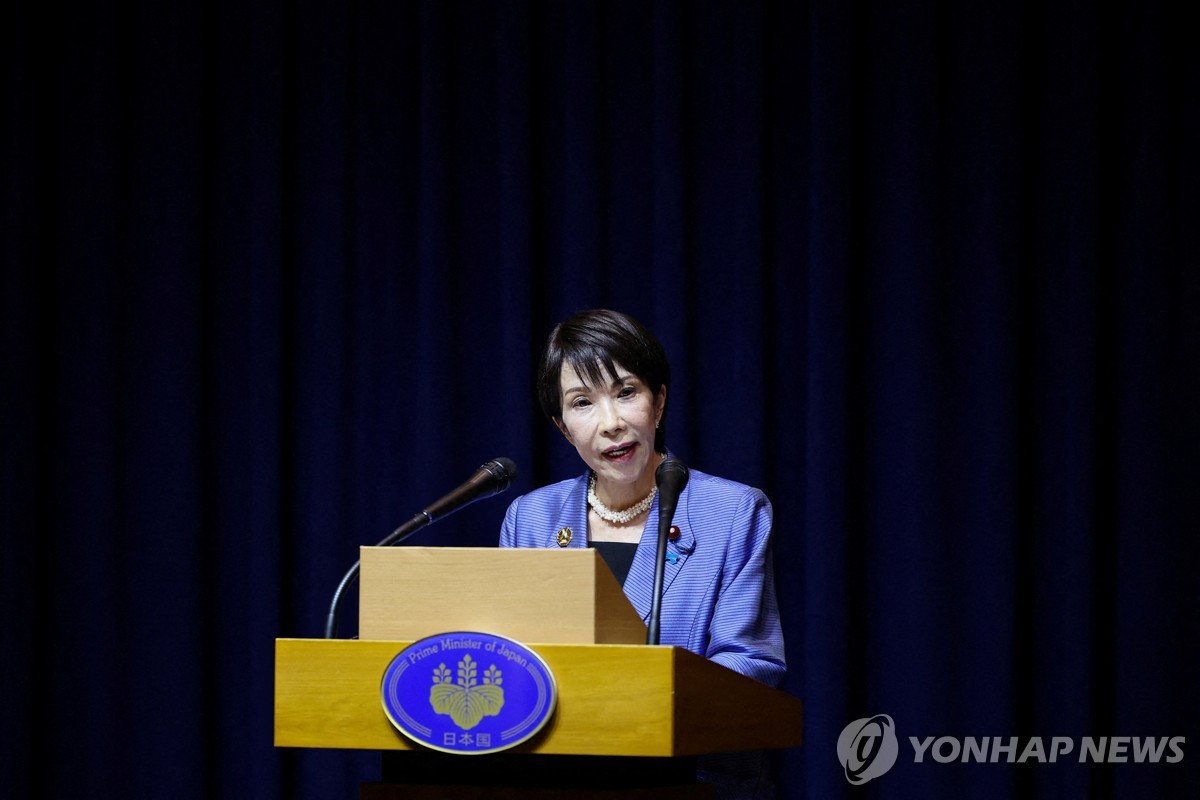
(Tokyo) — Japanese Prime Minister Sanae Takaiichi is facing her first major crisis just one month into her term, as remarks concerning Taiwan have triggered a strong backlash from China and put her administration on the defensive. The escalating tensions highlight the delicate balance Japan must maintain between its key alliance with the United States and its vital economic relationship with Beijing.
The dispute began on November 7, when Prime Minister Takaiichi stated that a potential contingency involving Taiwan could fall under the category of an “existential crisis” allowing Japan to exercise its right to collective self-defense. This was the first time a sitting Japanese prime minister had publicly made such a suggestion.
China, which views Taiwan as a renegade province, swiftly condemned the statement, increasing its criticism and eventually issuing a travel advisory urging its citizens to refrain from travel to Japan. Beijing has also threatened further sanctions and a suspension of diplomatic exchanges, demanding a retraction of the comments.
Despite the mounting pressure, Prime Minister Takaiichi appears reluctant to fully retract her statement, balancing the need to appease conservative factions within her own party and concerns about the potential security implications. This situation presents a significant test of her political and diplomatic skills.
이미지 확대
[지지 AFP 연합뉴스 자료사진. 재판매 및 DB 금지]
◇ Japan Maintains Position on Taiwan, China Signals Further Disruption
Prime Minister Takaiichi quickly embarked on a series of diplomatic engagements following her inauguration on October 21, including meetings with President Lee Jae-myung of South Korea and President Donald Trump of the United States. These meetings were largely cordial and focused on strengthening cooperation.
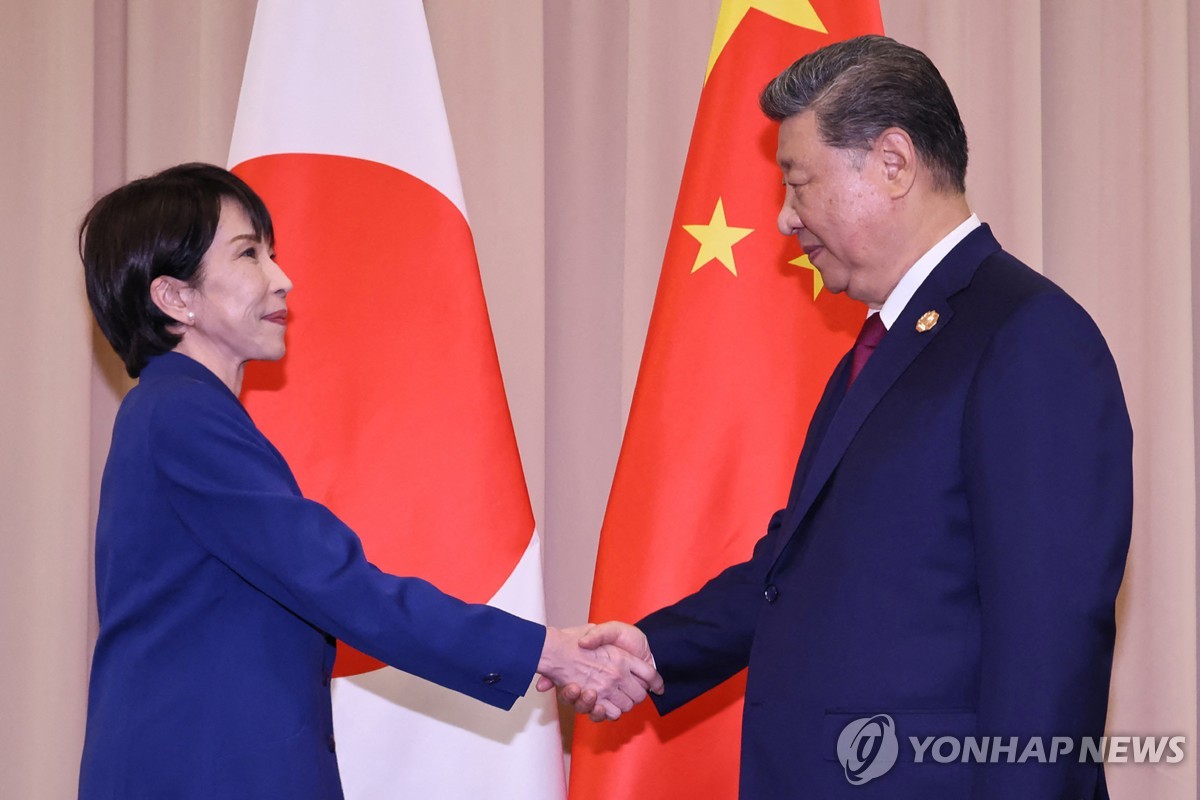
However, her meeting with Chinese President Xi Jinping on October 31 in Gyeongju proved more tense, with the Prime Minister raising concerns about human rights issues in China.
Despite the strained atmosphere, both leaders acknowledged the importance of dialogue and exchange, and China subsequently lifted its ban on Japanese seafood imports on November 5, a measure implemented over a year ago following the release of treated water from the Fukushima Daiichi nuclear power plant.
The recent escalation followed Prime Minister Takaiichi’s November 7 comments, rapidly cooling relations that had shown signs of improvement. The situation has deteriorated to the point where some observers are calling it the worst state of affairs between the two countries in 53 years, since the normalization of diplomatic ties in 1972.
China dispatched four coast guard vessels to waters near the Senkaku Islands – claimed by China as the Diaoyu Islands – on November 16. Additionally, China announced the postponement of the “Tokyo-Beijing Forum,” a long-running event that brings together political and business leaders from both countries.
A planned joint public opinion survey between Japan and China, organized by the Genron NPO think tank, was also postponed.
While the Japanese government has criticized China’s response, particularly a social media post by Chinese Consul General Xue Zhen, which contained inflammatory language, it remains committed to resolving the issue through dialogue. Officials have repeatedly clarified to China that Prime Minister Takaiichi’s remarks were intended as a hypothetical scenario and do not represent a change in Japan’s overall policy towards Taiwan.
Kanai Masahiro, Director-General of the Asian and Oceanian Affairs Bureau at Japan’s Foreign Ministry, traveled to Beijing on November 17 to reiterate this position to Chinese officials.
However, it remains uncertain whether China will respond positively, particularly given the perceived affront to President Xi Jinping’s authority following the Prime Minister’s comments.
In a significant sign of continued tension, China announced on November 17 that Premier Li Qiang will not meet with Prime Minister Takaiichi during the upcoming G20 summit in South Africa on November 22.
“It is unusual for China to announce in advance that a meeting between leaders will not take place,” the Asahi Shimbun reported.
A retraction by Prime Minister Takaiichi would limit Japan’s options for collective self-defense and potentially weaken the U.S.-Japan alliance, according to the Nikkei newspaper.
Furthermore, conservative political figures are calling for the expulsion of Consul General Xue, adding to the Prime Minister’s difficult position.
The Nikkei noted that, from China’s perspective, the Taiwan issue is an internal matter and any military intervention in the Taiwan Strait could be considered an act of aggression. The newspaper also pointed out that the Prime Minister’s comments have sparked debate within Japan itself.
A former Japanese government official involved in security policy told the Nikkei that while Taiwan could be considered a “country with close ties,” scenarios involving Japanese collective self-defense without U.S. intervention had not been previously considered.
이미지 확대

[AFP 연합뉴스 자료사진. 재판매 및 DB 금지]
◇ Economic Impact: Potential ¥2.08 Trillion Loss from Reduced Chinese Tourism
The economic consequences of China’s actions are already becoming apparent, particularly in the tourism sector.
Chinese airlines quickly responded to the government’s travel advisory by offering free cancellations for flights to Japan through the end of the year, while major travel agencies began suspending sales of travel packages to the country.
The Tokyo Imperial Hotel reported some cancellations of corporate events and reservations from Chinese companies, and other lodging facilities are also experiencing cancellations from Chinese tourists, according to Kyodo News.
According to the Japan National Tourism Organization (JNTO), Chinese tourists accounted for the largest number of visitors to Japan from January to September of this year, with 7.48 million arrivals – a 42.7% increase compared to the same period last year.
Kiuchi Takahide, Executive Economist at Nomura Research Institute, estimates that a sharp decline in Chinese visitors could reduce Japan’s gross domestic product (GDP) by 0.36%, representing an economic loss of ¥2.2 trillion (approximately $20.8 billion).
Kiuchi noted that when China issued a similar travel advisory to Japan in 2012, following the Japanese government’s nationalization of the Senkaku Islands, the number of Chinese visitors to Japan decreased by 25.1% over the following year.
He suggests that the decline in Chinese tourists could reduce Japan’s annual GDP growth rate, which is currently around 0.6%, by half.
Government Spokesman Kihara Minoru told reporters on November 17 that discouraging people-to-people exchanges was regrettable.
“This is not compatible with the big direction of promoting strategic reciprocal relations confirmed by both leaders and building a constructive and stable relationship,” Kihara said, adding that the government would strongly demand a response from the Chinese side.
However, the Japanese stock market has already begun to reflect the impact, with shares of companies related to China falling sharply.
Shares of department store operator Mitsukoshi Isetan Holdings fell 11.3% on November 17, while Takashimaya dropped 6.2%. Cosmetics company Shiseido fell 9%, and Fast Retailing, the parent company of Uniqlo, fell more than 5%.
“There is a sense of caution that the performance of inbound-related companies will be affected,” a Japanese securities industry source told the Nikkei.
Analysts suggest that if China expands its economic countermeasures to include restrictions on rare earth exports or a ban on Japanese content, Japan could face even greater pressure.
The JiJi Press reported that the release of the Japanese animated film “Crayon Shin-chan” in China, scheduled for next month, has been postponed.
제보는 카카오톡 okjebo
<저작권자(c) 연합뉴스,
무단 전재-재배포, AI 학습 및 활용 금지>
2025년11월17일 19시51분 송고
