
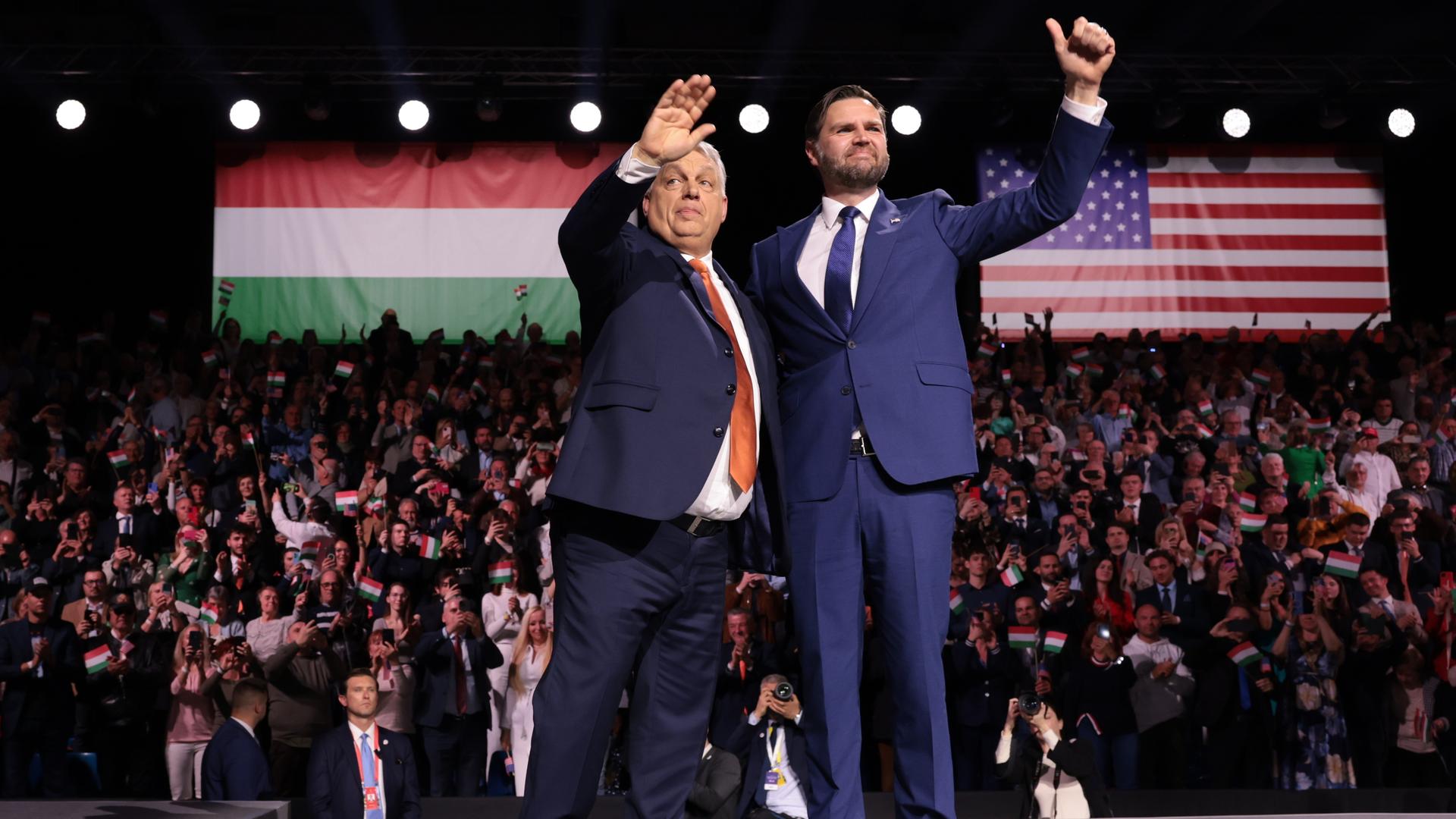
JD Vance Arrives in Budapest to Support Viktor Orbán Amid Explosive Putin Leak
U.S. Vice President JD Vance arrived in Budapest on April 7, 2026, to bolster the re-election campaign of Prime Minister Viktor Orbán, just as leaked transcripts revealed the Hungarian leader offering total subservience to Russian President Vladimir Putin. The visit comes at a critical juncture for Orbán, who is facing his most significant electoral challenge in over 16 years.

The diplomatic mission has been overshadowed by revelations first reported by Bloomberg regarding a phone call on October 17, 2025. According to the leaked transcript of the call, Orbán explicitly told Putin, “In any matter where I can be of assistance, I am at your service,” adding that he was prepared to support Moscow “in any way” to secure victory in the war in Ukraine. In a moment that reportedly drew laughter from both leaders, Orbán compared himself to a mouse rescuing a trapped lion, referencing a European fable.
The Vice President and his wife, Usha Vance, touched down in Budapest on Tuesday morning via Air Force Two, where they were greeted by Hungarian Foreign Minister Péter Szijjártó. The two-day visit is a clear signal of the Trump administration’s support for the nationalist Prime Minister. While in the capital, Vance is scheduled to join Orbán at a campaign rally and has called for the Premier’s re-election, while simultaneously criticizing foreign interference in the process.
The timing of the visit is critical, as Hungarians are set to vote in parliamentary elections on Sunday, April 12, 2026. Orbán and his Fidesz party are currently facing their steepest challenge since 2010. Independent polling suggests that opposition leader Peter Magyar and his centre-right Tisza party hold a double-digit lead among decided voters, putting Orbán’s 16-year grip on power at risk.
Orbán’s close relationship with the Kremlin—including a failed plan to hold a Budapest summit to show support for Russia—combined with a struggling domestic economy, have become central themes of the campaign. The alignment between the current U.S. Administration and the Hungarian government underscores a shift in diplomatic priorities, even as Orbán remains one of Putin’s most prominent allies within NATO and the European Union.
This development highlights the growing tension between traditional Western alliances and the emerging nationalist axis, potentially influencing future diplomatic relations between the U.S., the EU, and Russia.
