
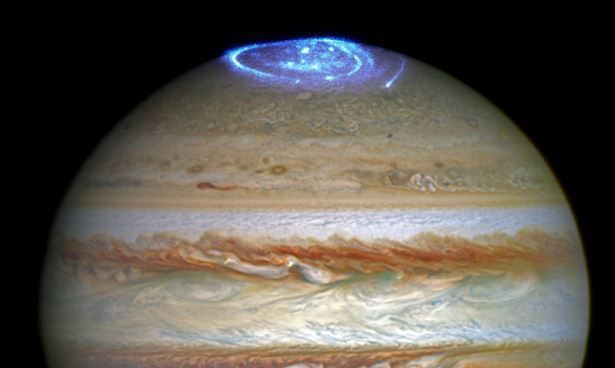
Jupiter’s powerful storms generate lightning flashes at least 100 times more energetic than those observed on Earth, according to new research from scientists at the University of California, Berkeley.
The findings, published March 20 in the journal AGU Advances, are based on data collected by NASA’s Juno spacecraft, which has been orbiting the planet since 2016. Juno monitors Jupiter’s atmosphere using a radiometer capable of detecting radio emissions generated by lightning.
Understanding storm dynamics on other planets can provide valuable insights into atmospheric phenomena that are not yet fully understood on Earth, including different types of luminous events associated with storms, explained lead author Michael Wong. This research underscores the importance of planetary exploration for advancing our understanding of fundamental atmospheric processes.
Jupiter’s atmosphere is dominated by hydrogen, which makes humid air heavier and more challenging to rise. This requires more energy to form storms, but also results in significantly more intense discharges when they reach the upper layers of the atmosphere.
Mission data indicates that some storms on the planet can last for centuries and generate extremely powerful lightning. The spacecraft’s radiometer allowed for measurement of the intensity of the discharges without cloud interference, revealing that certain flashes are far stronger than those observed on Earth.
Key Astronomical Discoveries of 2026
Researchers specifically analyzed large storms recorded between 2021 and 2022, known as “stealth superstorms,” which occur in broad bands of the planet’s atmosphere and can generate lightning between clouds with enormous energy release.
