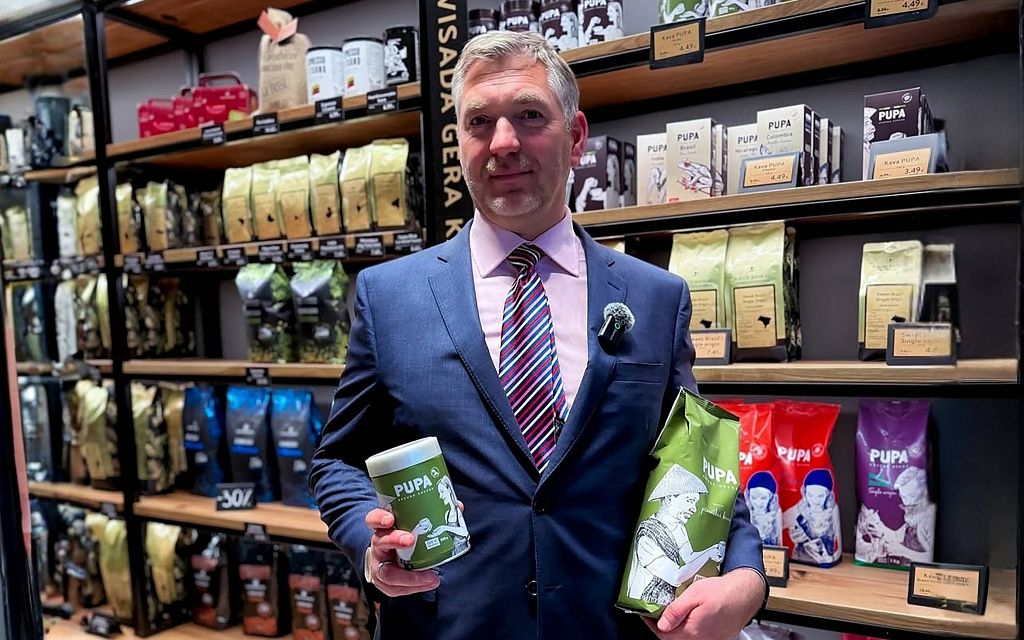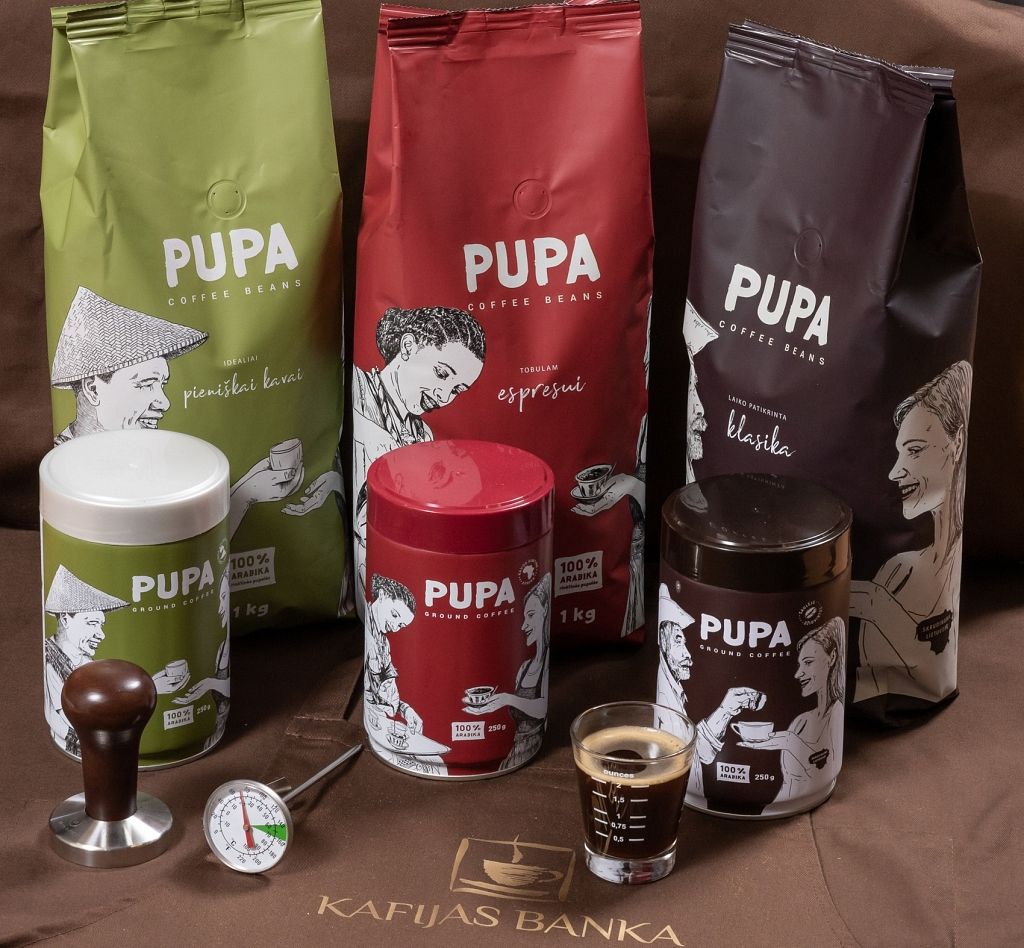
Thirteen years ago, the founders of Kafijas Banka set out with a simple yet ambitious goal – to offer more than just a beverage. Their vision was to create a genuine coffee experience. Today, Kafijas Banka is one of the most modern and developed coffee producers in the Baltic region, roasting more than 3 million kilograms of coffee annually. Despite its industrial scale, the company remains committed to the values it was founded on: quality, precision, and a focus on the perfect taste.
From a Passion for Flavor to a Baltic-Scale Roastery
Kafijas Banka’s story began with in-depth knowledge of the coffee market and a desire to introduce innovation. By building direct relationships with coffee growers and investing in the latest roasting technologies, a shared passion transformed into a powerful manufacturing enterprise.
“Kafijas Banka was created as a place where quality and innovation meet. We wanted to ensure that every cup of coffee delivers the best possible experience,” says Artis Grigo, founder of Kafijas Banka.
“We don’t just purchase coffee beans – we select them based on sustainability, reliability, and ethical production. Each batch is carefully tested and tasted to meet our standards.”
This approach has yielded results. In 2025 alone, the roastery processed an impressive 3,168,000 kilograms of coffee. The company’s leading brands – the widely recognized PUPA and the Kafijas Banka Gold series – have grow synonymous with trust and high-quality taste throughout the region. The success of Kafijas Banka reflects a growing consumer demand for specialty coffee and traceable sourcing.
Rapid Growth and the Challenges of Diverse Markets
However, success comes with challenges. As demand grew, Kafijas Banka needed to simultaneously serve large retail chains such as Maxima and DEPO, develop a private label portfolio, and export products to 16 different countries.
“One of the biggest challenges is maintaining consistently high quality and stable supply while growing rapidly,” Grigo acknowledges.
“Success lies in combining high standards with flexibility, responding to market demands. It’s the attention to detail that allows us to maintain customer trust – whether it’s an international retailer or a compact local office.”
The company’s operations are now broader than ever. While the B2B and HoReCa (hotel, restaurant, and café) segment remains the foundation, approximately 35–40% of sales already occur online – and this trend continues to grow, as customers increasingly value convenience and speed.
When Coffee Becomes a Race Against Time
In the coffee world, freshness is critical. For Kafijas Banka, logistics means ensuring that the aroma of freshly roasted coffee reaches the customer without delay. This is where collaboration with Venipak becomes essential.
“We were looking for a partner with a high level of customer service and reliable order fulfillment. Venipak stood out with convenient IT integration and fast express deliveries,” Grigo explains.
For a company that ships approximately 8,000 kg of coffee annually through Venipak, delivery speed was a decisive factor. In a time when customers expect maximum speed in receiving orders, a reliable logistics chain is a crucial competitive advantage.
“Flexible delivery solutions allow us to plan our work with peace of mind. If something doesn’t proceed according to plan, a solution can be found quickly, without losing time and money. Simply put – less stress, more trust, and better relationships with customers, especially during intensive periods, such as Christmas,” the expert adds.
Looking Ahead: Coffee Studios, Exports, and the PUPA Brand
Looking towards 2026, Kafijas Banka is focusing on building closer ties with its community. Plans are underway to strengthen the PUPA brand’s position in the B2B segment and open new “coffee studios” – interactive spaces where coffee enthusiasts can learn more about brewing methods and experience the brand firsthand.
“Along with growth in the local market, our ambitions remain international. The goal is to expand export volumes and strengthen our presence in foreign markets. We believe that by combining technical precision with a high-quality product, we can successfully compete on a global scale,” Grigo clarifies.
And for those looking to follow their example, the key lesson is clear – success arises at the intersection of quality and reliability. Whether it’s the chosen coffee bean or the delivery partner, every link in the chain is important.