
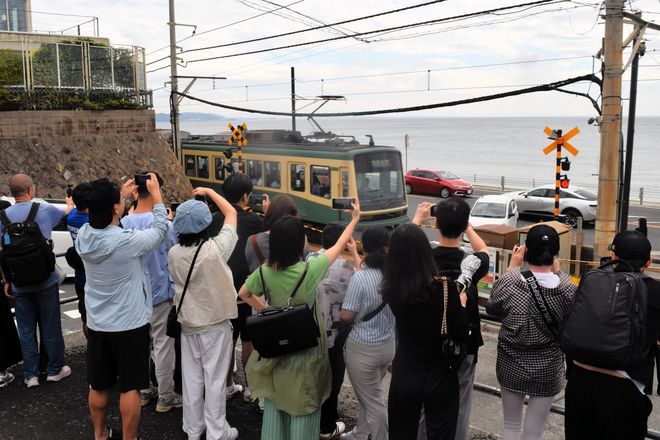
In an effort to curb years of tourism-related chaos, Kamakura City in Kanagawa Prefecture has turned to artificial intelligence to manage the crowds flocking to a famous railway crossing. The site, located near the Kamakura Koko-mae Station of the Enoshima Electric Railway, has become a global pilgrimage site for fans of the anime Slam Dunk due to its striking resemblance to the series’ opening sequence.
The surge in “sacred site” tourism has led to significant “tourism pollution,” with visitors frequently blocking roadways to take photos, trespassing on private property, and parking illegally. This trend reached a critical point in August 2025, when a traffic accident involving a young boy on a bicycle occurred near the crossing, prompting local authorities to accelerate their response.
To address these issues, the city government first established a dedicated photography zone in a nearby park in September 2025, deploying multilingual staff to guide tourists. By mid-December 2025, the city launched a more tech-driven experimental program, deploying 12 smart AI cameras throughout the area to monitor foot traffic in real-time. This move reflects a growing global challenge where pop-culture landmarks struggle to balance international tourism with the safety and privacy of local residents.
The AI system operates by updating blurred images of the scene every three minutes, which are then published on the dedicated website kamakura-live.jp. The AI automatically calculates the number of people present and converts the data into easy-to-read charts. By making this information public, officials hope visitors will check the congestion levels before departing and voluntarily avoid peak hours. Kamakura’s use of AI cameras is seen as a necessary evolution in crowd management; one local resident in their 20s noted that relying solely on security guards is insufficient for handling the fluctuating patterns of tourist arrivals.
In January 2026, the city further enhanced the site by installing signage in Japanese, English, Chinese, and Korean to notify the public that the AI cameras are operational 24 hours a day. According to reports from unwire.hk, the city plans to use the collected data to analyze the specific patterns of dangerous behaviors, such as illegal parking and road obstruction. This analysis will eventually be used to optimize the deployment of security personnel and improve overall safety.
The implementation of this AI monitoring system underscores the increasing reliance on smart-city technology to mitigate the frictions caused by mass tourism in residential areas. As detailed by CMoney, the project serves as a real-world experiment in using data to influence tourist behavior and protect local infrastructure.
