
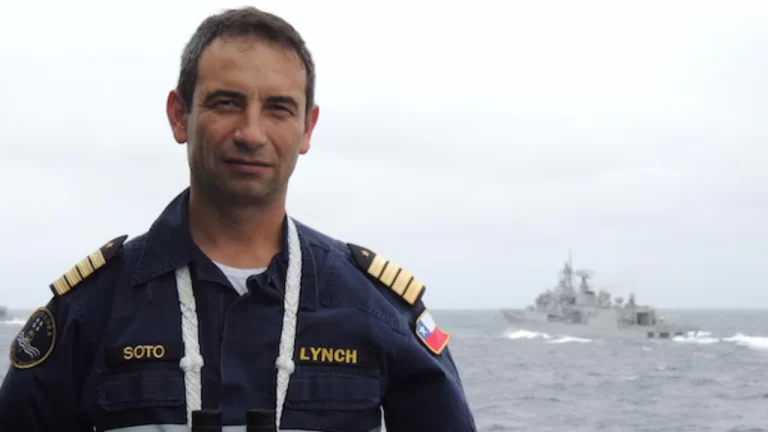
Chile’s President José Antonio Kast has established a new position within the country’s institutional framework, a move that experts say lacks legal basis and could potentially conflict with the constitution. The creation of the position, announced after the decree was signed, has raised concerns about its authority and potential impact on existing power structures.
The new role, titled “commissioner for the macrozone north,” was created by presidential decree and filled by retired Admiral Alberto Soto.
According to a statement released by the presidential office, the commissioner will serve as a “presidential authority with intersectoral coordination powers for migration control and the prosecution of transnational crimes” in the regions of Arica and Parinacota, Tarapacá and Antofagasta. The position will be linked to the Ministry of the Interior and will operate as a direct liaison with the Joint Chiefs of Staff, the Northern Joint Command, and the Border Area Headquarters.
The President’s directive also allows the commissioner to request the Army to increase troop deployment in the northern macrozone.
However, sources within the defense sector and law enforcement view the presidential decision as “a bold move,” given the commissioner’s limited formal authority. The commissioner lacks administrative powers or direct command over troops or police forces, meaning their influence relies on a de facto hierarchy established by the President’s political authority.
Former naval officer and vice president of the Athenalab think tank, Richard Kouyoumdjian, who knows Soto personally, explained the scope of the commissioner’s mission, stating, “Those who do not understand this are not understanding that Alberto’s source of authority is the President himself. When Alberto Soto speaks, the President speaks.”
Legal Doubts and Conflict with Institutional Norms
Concerns were immediately raised within the defense community. Sources from military institutes, the Armed Forces, and law enforcement agencies agree that the powers outlined by the President “clash directly with current legality.”
A key issue centers on the chain of command. According to experts, constitutional authority over the Armed Forces rests with the President, the Ministry of Defense, and the commanders-in-chief of the armed forces, meaning a presidential commissioner would not have the authority to exercise administrative control or influence operational decisions.
Another problem relates to coordination between the Armed Forces and the police. For this to occur formally, a State of Constitutional Exception decree is required, a scenario in which coordination already has a legally defined figure: the head of National Defense.
That position, must be held by an active-duty military officer, while Soto is retired – effectively a civilian.
Adding to the concerns is the fact that police coordination does not fall under the purview of the Ministry of the Interior – where the new commissioner will be based – but rather the Ministry of Public Security.
Doubts extend beyond the legal realm, with observers noting that several of the announced functions are already assigned to existing authorities, potentially leading to institutional overlap. Sources indicate that if the decree, which has not yet been published in the Official Gazette, is formulated as described, it will be challenged by the Comptroller General.
The President’s Perspective
Beyond the legal objections, some observers believe the true weight of the commissioner’s position lies in their direct relationship with the President.
Richard Kouyoumdjian, vice president of Athenalab, acknowledges that criticisms regarding the lack of direct command over the Carabineros (police), the Investigative Police (PDI), or the Armed Forces are correct from an institutional standpoint.
However, he argues that Soto is fully aware of these limitations and that the appointment is driven more by political considerations.
According to Kouyoumdjian, the President chose “an admiral who is particularly energetic, with a great command presence, who is well known in the north, because he was Chief in the Fourth Naval Zone for three years, based in the city of Iquique, and was very popular in that area.”
He also describes Soto as someone “recognized for his intellectual capacity,” with a direct line to the President.
he believes the designation is highly specific: “the designation of Alberto is with name and surname. We see a specific designation for Alberto, he is the President’s personal delegate.”
A High-Impact Border Plan
The creation of the position is part of the “Border Shield” plan, a program presented by Kast during the presidential campaign to close clandestine border crossings in the north.
The proposal includes three-meter-deep trenches in high-traffic migration areas and five-meter-high fences or walls, similar to those used in Israel and Hungary, equipped with motion sensors and drone surveillance.
The plan also includes electrified perimeter fences, watchtowers, thermal radars, and autonomous drones with facial recognition cameras, infrared sensors, and thermal sensors operating 24 hours a day.
The government considers controlling the northern border a strategic priority.
As he stated on his X account, in a video recorded in the Colchane wetland, the new government “will prioritize regaining the security of the macrozone north, starting with controlling irregular immigration and its implications for organized and transnational crime.”
The executive branch has also announced the deployment of physical infrastructure on the border.
Defense Minister Fernando Barros indicated that “the President gave instructions to the commander-in-chief of the Army to take certain concrete measures in the physical and technological realm, and also to reinforce the contingent, and we expect those measures to be in operation next week and the President will be able to give the start.”
Interior Minister Claudio Alvarado added that part of the plan includes trenches and that “next week, starting Monday or Tuesday, we will see work in that direction. The goal is for that border, which today is completely porous to irregular entry, to gradually close.”
Duplication and Confusion
Lawyer Andrés Cruz, director of the Observatory on Criminal Policy and Public Security at the University of Concepción, describes the initiative as “punitive populism,” a phenomenon he clarifies has also been observed in previous governments.
In his view, the creation of the position “will involve a duplication or confusion regarding the powers of different bodies, since we already have presidential delegates who could assume that role in the respective areas.”
He also warns that “we have a Ministry of Security that could perfectly assign officials to carry out that work,” questioning the need to create new structures when institutional capabilities already exist.
A more nuanced perspective is offered by Pablo Urquízar, former security coordinator in the southern macrozone during Sebastián Piñera’s second term.
However, he warns that its success will depend on “having clear and delimited powers with the Armed Forces and Public Order and Security Forces, and not ending up duplicating functions that already correspond to the Ministries of the Interior, Defense, or Security.”
