
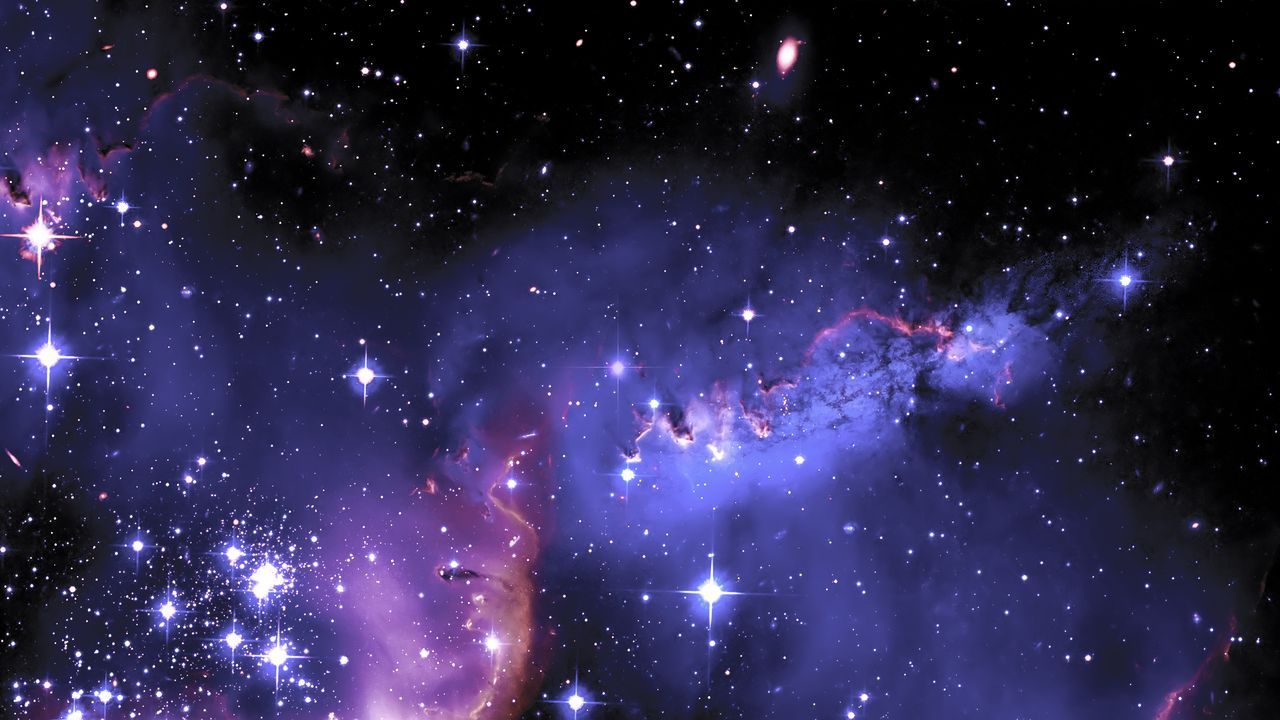
REGALADE, the Most Extensive Galaxy Catalog for Modern Astronomy, is Released
A new, unprecedented catalog of galaxies, named REGALADE (Revised Galaxy List for the Advanced Detector Era), has been unveiled by an international team of scientists. The catalog encompasses the entire sky and contains nearly 80 million galaxies, marking a significant advancement for astronomical research.
The project, led by researchers at the Institute of Cosmos Sciences of the University of Barcelona (ICCUB) and the Institute of Space Studies of Catalonia (IEEC), was published on February 20, 2026, in the journal Astronomy & Astrophysics. This comprehensive resource promises to enable researchers to explore cosmic events with a level of precision previously unattainable.
According to researchers, REGALADE combines data from large-scale studies and refines it using data from the European Space Agency’s Gaia mission to eliminate stars that were incorrectly identified as galaxies. This addresses a critical gap in existing catalogs, which were incomplete beyond approximately 300 million light-years.
The catalog’s release is particularly timely as astronomers increasingly rely on detailed galactic maps to pinpoint the locations of transient events like supernovas or the mergers of black holes and neutron stars. Knowing the host galaxy is crucial for determining the distance and characteristics of these events.
Hugo Tranin, an investigator at ICCUB, spearheaded the study, with contributions from Nadia Blagorodnova, Marco Antonio Gómez Muñoz, and Maxime Wavasseur, also from ICCUB-IEEC. The development of REGALADE signals a growing trend toward larger, more accurate datasets in astronomy, fueled by advances in observational technology and data processing.
More information about REGALADE is available at the University of Barcelona and the IEEC.
REGALADE: el mayor catálogo de galaxias del universo cercano revoluciona la astronomía y la búsqueda de eventos cósmicos. Un equipo internacional de científicos ha publicado este catálogo sin precedentes que abarca todo el cielo y reúne cerca de 80 millones de galaxias. 🌌✨https://t.co/w000YzNib4
— Ciencia del Cope (@CienciaDelCope) February 22, 2026
