
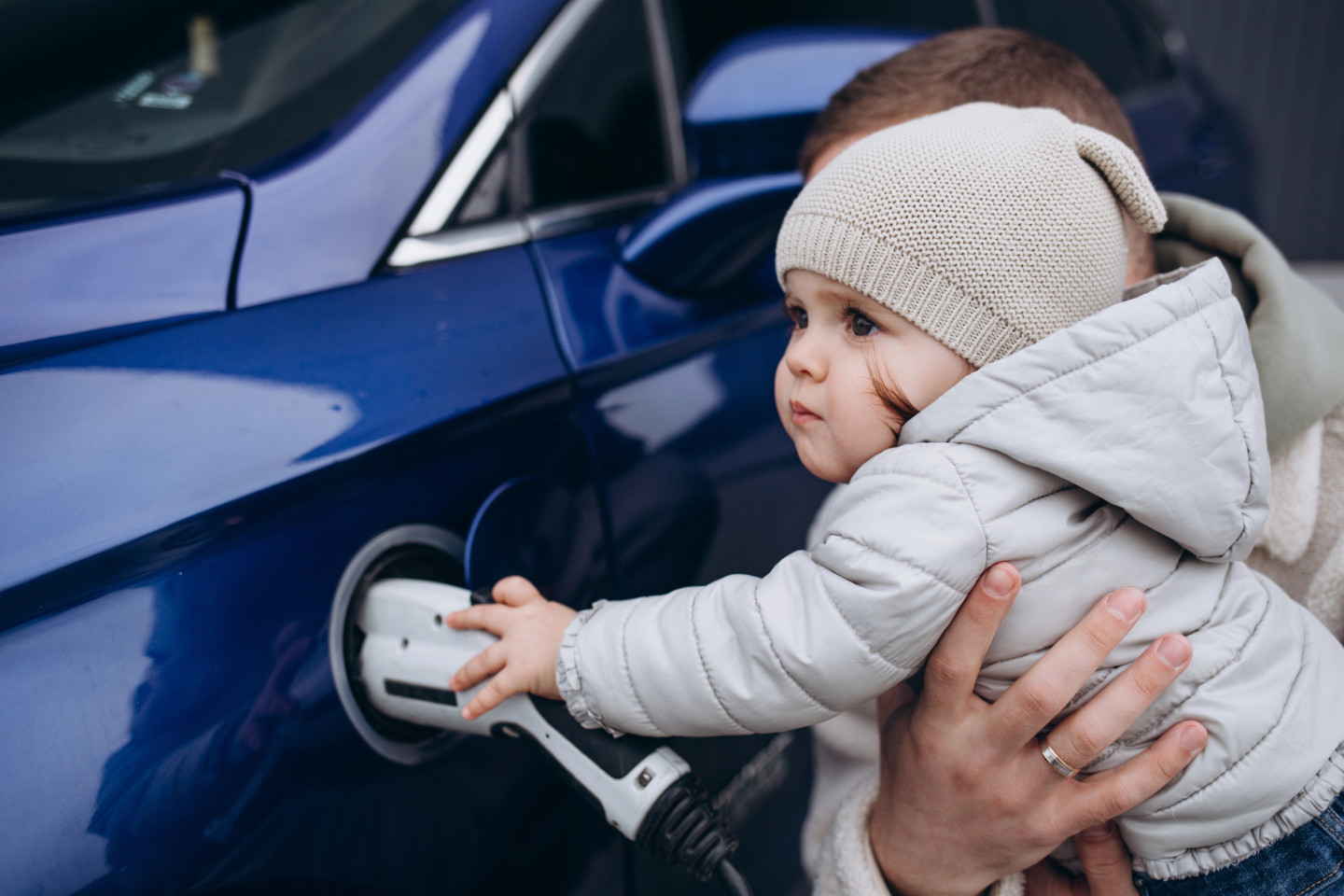
Latvia saw a 7.4% increase in births in January 2026, with 946 newborns recorded – 65 more than in January 2025, according to data released by the Central Statistical Bureau. The news was met with positive reactions on social media, with commenters expressing delight at the increase.
While the total number of births, 946, remains relatively small, the year-over-year increase has prompted discussion about government priorities and resource allocation. The rise in births comes as the country re-evaluates its financial support programs for families and environmentally conscious purchases.
Beginning January 1, 2026, the state benefit for a newborn child increased to 600 euros, up from 421.17 euros. Simultaneously, the state subsidy for a new electric vehicle was reduced from 4,500 euros to 4,000 euros (and to 3,000 euros for a used electric vehicle). The revised electric vehicle incentive program has a total budget of 40 million euros, enough to support the purchase of approximately 10,000 new or 13,300 used electric vehicles.
The figures for both new births and electric vehicle subsidies are strikingly similar, leading to questions about the government’s priorities. The financial support for each electric vehicle – 4,000 euros – significantly outweighs the support provided for each newborn – 600 euros. This disparity raises concerns about what behaviors the state is choosing to incentivize.
Critics suggest the imbalance demonstrates a clear preference for encouraging the purchase of electric vehicles over supporting families. There appears to be little concern within government circles about this perceived misalignment. According to observers, promoting childbirth is seen as “outdated” by the current political climate. Electric vehicles, even though, are considered stylish, modern, and progressive.
Owning an electric vehicle is seen as elevating one’s social status, distinguishing the owner from those perceived as contributing to air pollution with older vehicles. Some question why the state should subsidize this display of status, suggesting those who can afford an electric vehicle should do so without relying on public funds. The situation highlights a broader debate about the allocation of public resources.
While discussing demographics isn’t necessarily taboo in Latvia, it’s not a topic readily embraced in intellectual circles. It’s considered a sensitive subject prone to missteps, and therefore often avoided.
Despite the hesitancy to discuss population trends, the increase in births has been positively received by the public. It’s unlikely a similar level of enthusiasm would greet news of a 7% increase in electric vehicle sales, as the economic benefits of those purchases are less clear.
Latvia does not manufacture electric vehicles, nor does it significantly participate in the production of their components, at least not publicly. A substantial portion of these vehicles are imported from China, where their production is subsidized by the Chinese government.
Economic analyses routinely assess the contribution of each economically active person to the national economy, quantifying their value. This calculation is not intended to be demeaning, but rather to recognize each citizen as a vital component of the economic system. In this framework, each newborn represents a potential asset whose value grows with each year, with acquired knowledge and skills, unlike an electric vehicle.
Do politicians fail to recognize the stark disparity in value between a newborn and an electric vehicle? Do they not perceive the absurdity of this prioritization? Some suggest politicians are catering to specific voter groups who are passionate about transitioning from fossil fuels to electricity, for whom this issue is paramount. While Here’s understandable, it’s unclear why other parties accept this situation as normal, especially given that their voters might prefer the electric vehicle subsidies be redirected to support new parents instead of funding purchases of Chinese-made cars.
Some argue the situation is dictated by EU policy, with the majority of electric vehicle subsidies coming from EU funds. While some are willing to champion cleaner air, the source of the funds and a marginally cleaner atmosphere do not negate the message being sent to society: a newborn child is perceived as eight times less valuable than a foreign-made electric vehicle purchased in Latvia. Until this perception fundamentally changes, a demographic turnaround will be difficult to achieve.
