
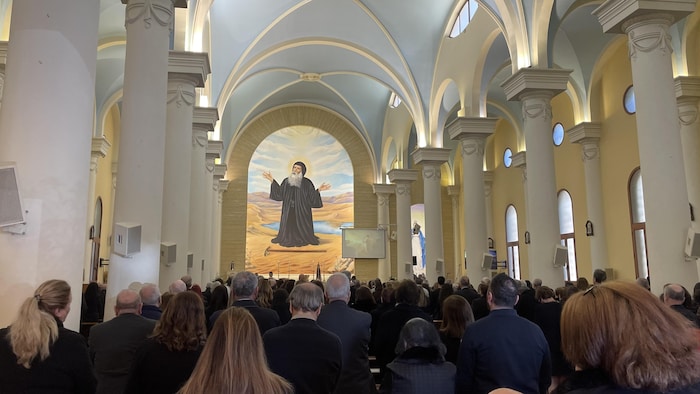
JDEIDEH, Lebanon — Residents of the Lebanese village of Alma Al-Chaeb have been forced to evacuate their homes under the threat of Israeli strikes, marking a new escalation in tensions along the Israel-Lebanon border. The displacement of the village’s approximately 80 inhabitants comes amid a broader pattern of escalating conflict and warnings from Israel regarding Hezbollah’s presence in southern Lebanon.
The exodus from Alma Al-Chaeb followed the death of 70-year-old Sami Ghafari, who was killed by an Israeli drone strike whereas tending to his garden. “It was a courageous man,” said Chadi Sayyah, the village mayor. “A drone came and reduced him to pieces before my eyes. He was about forty meters from me.”
The situation underscores the growing instability in the region, as clashes between Israel and Hezbollah intensify. The development highlights the vulnerability of civilian populations caught in the crossfire.
Evacuees from the village of Alma Al-Chaeb attend a mass in tribute to one of their own, killed in an Israeli strike, on March 10, 2026.
Photo : Radio-Canada / Rania Massoud
Souad Ghafari, a relative of the deceased, described the shock and grief felt by the community. A primary school teacher, she left Alma Al-Chaeb with an initial convoy of around 20 cars two days prior. “It’s not uncomplicated for me to abandon my village, where I grew up and lived my whole life,” she said.
“It’s not easy for me to abandon my village, where I grew up and lived my whole life.”
Her concern now extends to her 28 students, aged 6 to 9, who were also evacuated with their families to Beirut. “I don’t grasp how we’re going to continue their education,” she lamented. “We may have to give lessons online, even though I know it’s not ideal, but we may not have a choice right now.”
She added, with a sigh, “I feel like this is going to be a long one.”
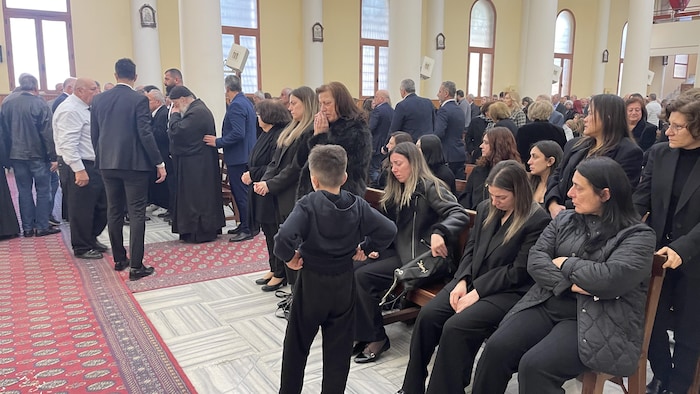
Relatives of Sami Ghafari, killed a few days ago by an Israeli drone, mourn his death in a church in Jdeideh, north of Beirut.
Photo : Radio-Canada / Rania Massoud
A Truce in Tatters
The current escalation began in November 2024, when Hezbollah opened a front with Israel in support of its Palestinian ally, Hamas, in the Gaza Strip. A truce was reached two months later, but both sides largely ignored it, with Israel continuing sporadic strikes against targets it claimed were linked to Hezbollah, and Hezbollah refusing to disarm.
That fragile truce effectively collapsed last week following a Hezbollah attack in retaliation for the Israeli-American war against Iran, its patron.
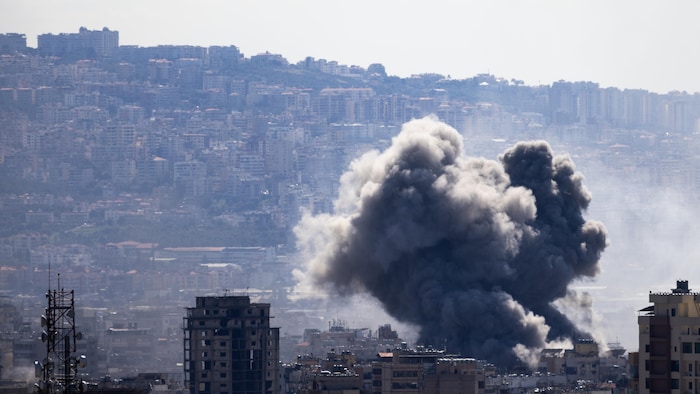
Smoke rises following an Israeli strike targeting the southern suburbs of Beirut, Lebanon.
Photo : Getty Images / Daniel Carde
Since then, Israel has intensified its strikes against Lebanon and launched a military incursion into the south of the country, aiming to create a “buffer zone” along its border. Dozens of localities have been called upon to evacuate, including Alma Al-Chaeb.
“We didn’t want to abandon,” said the village mayor, “but there was no one who could guarantee our safety if we decided to stay.”
“I was the last to leave. I went around to all the houses to make sure we hadn’t left anyone behind.”
“There was an elderly woman who wanted to stay in her home, but I took her by force, telling her we didn’t want to lose her,” he said, visibly emotional.
“When I closed everything up, I turned around and said goodbye to our village. I don’t know if I’ll ever see it again.”
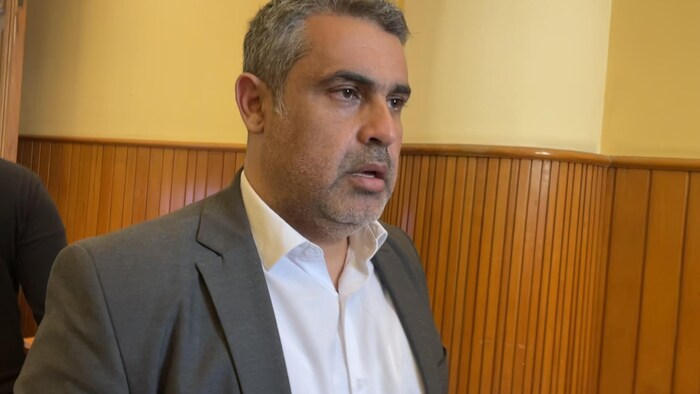
The mayor of Alma Al-Chaeb, Chadi Sayyah
Photo : Radio-Canada / Rania Massoud
“It’s Really Hard to See Ruined the Place Where I Grew Up”
Escorted by armored vehicles of the UN peacekeeping force (UNIFIL) to the capital, Beirut, the residents of Alma Al-Chaeb arrived directly at the church in Jdeideh to mourn the death of Sami, but also to grieve the loss of their village.
Sarah Zourob, who spent her entire childhood there, was waiting for them. She, too, doesn’t know if she’ll ever be able to return. “Honestly, I’ve been crying since yesterday,” she said. “It’s really hard to see ruined the place where I grew up.”
“I was supposed to get married soon and I dreamed of one day being able to take my children to my hometown, but I think that won’t be possible. It’s really sad to see people leave; it’s like a part of your heart goes with them.”
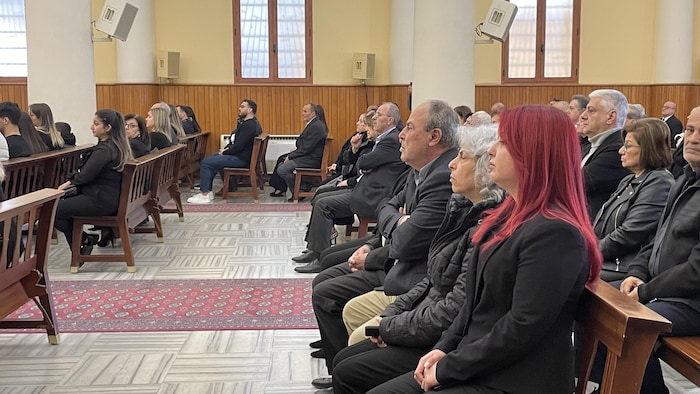
Sarah Zourob attends a mass in tribute to Sami Ghafari in a church in Jdeideh, on March 10, 2026.
Photo : Radio-Canada / Rania Massoud
Like all residents of Alma Al-Chaeb interviewed by Radio-Canada, Sarah Zourob denies any Hezbollah presence in her village. “It’s propaganda,” she insisted.
Mayor Chadi Sayyah prefers not to talk about politics. “I just want peace,” he said.
Angry but feeling helpless, he said he would have stayed in his home if not for the Israeli threats.
“I didn’t leave willingly. They forced me to leave. They put me in an impossible choice: die or leave.”
He expressed concern for other border villages. “I hope they don’t all suffer the same fate as us!”
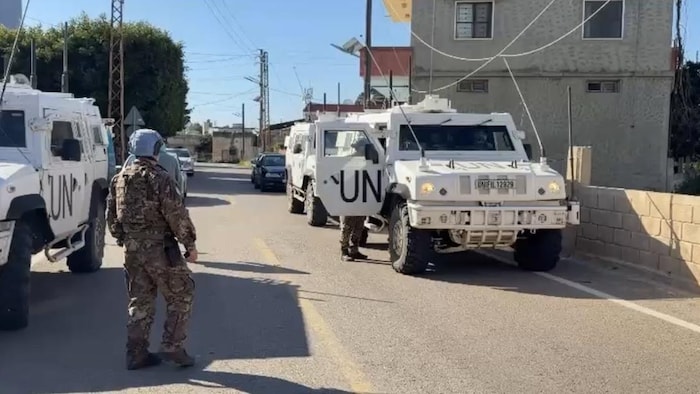
A screenshot of a video showing UNIFIL armored vehicles shortly before escorting the evacuation convoys from Alma Al-Chaeb, on March 10, 2026.
Photo : Screenshot
One Village Stands Firm
Approximately 20 kilometers from Alma Al-Chaeb, the village of Rmeich, another Christian village situated close to Israel, is refusing to yield. Its roughly 6,500 residents are defying the Israeli evacuation order.
“We don’t even know where to move if we wanted to leave,” said Father Najib Amil, the village priest. “Who has the means to accommodate us? We are far too numerous!”
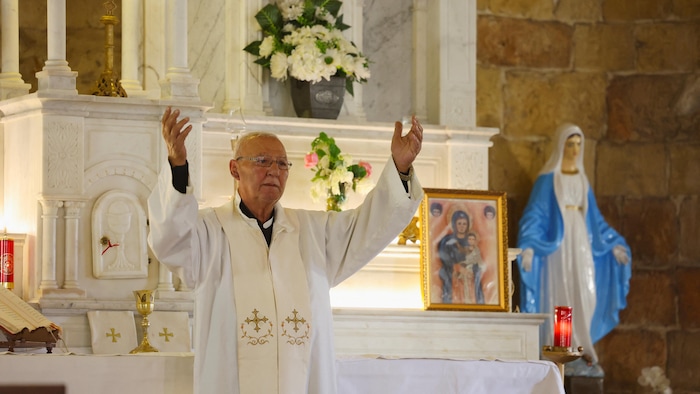
The priest of the village of Rmeich, Father Najib Amil, celebrating mass at Saint George’s Church, on November 12, 2025.
Photo : Reuters / Aziz Taher
He asserts that, “by the grace of God, we have everything we require to survive.” “We cultivate our land for food and manage to power ourselves with solar panels,” the priest added.
“We decided to stay no matter what. What can they [the Israelis] do? Drive us out by force? We won’t leave. We won’t leave!”
“It’s true Notice bombings all around us, every day,” he acknowledged. “It’s true we are afraid and jump every time there’s a strike, but we put our trust in God. We must be patient; we have no choice.”
