
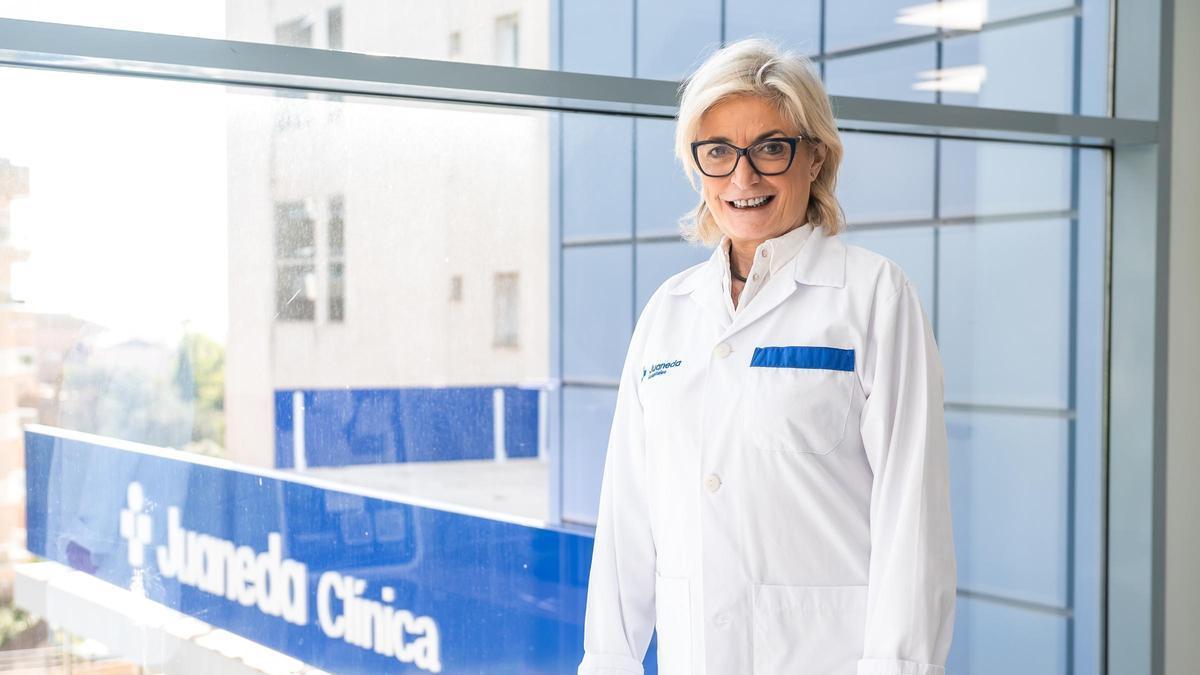
Juaneda Hospitales is now offering a new laser body remodeling service, utilizing lipolaser technology to target stubborn fat deposits. This minimally invasive procedure offers a less aggressive alternative to traditional liposuction, potentially leading to a faster and more comfortable recovery for patients seeking to reshape their bodies.
Dr. Concepció Andreu, a plastic surgeon at Clínica Juaneda, specializes in this technique. She explains that lipolaser is particularly effective for addressing localized fat that resists reduction through diet and exercise, often due to genetic predisposition, hormonal factors, pregnancy, menopause, or other circumstances. This advancement in cosmetic surgery provides a targeted solution for individuals seeking to refine their body contours.
Lipolaser: Cutting-Edge Technology
“Lipolaser is a cutting-edge technology in Plastic and Aesthetic Surgery that allows for minimally invasive interventions and is less aggressive than traditional liposuction procedures,” explains Dr. Andreu. “This is a significant advantage for the patient, who will experience a much-improved experience.”
The procedure is indicated for treating localized fat accumulations that patients struggle to eliminate despite maintaining a healthy diet and exercise routine. These areas are often linked to genetic factors, hormonal imbalances, or life events like pregnancy or menopause, but are not necessarily related to overall weight.
This minimally invasive technique utilizes laser energy to break down fat cells, dissolving them and facilitating their removal from the body. Unlike conventional liposuction, which physically extracts fat without liquefying it, lipolaser also stimulates collagen and elastin production, helping to tighten the skin and prevent sagging.
Targeting Localized Fat
These stubborn fat deposits commonly appear on the abdomen, back, thighs, and buttocks in women. “With aesthetic surgery for body contouring, using lipolaser, the entire silhouette can be redefined,” emphasizes Dr. Andreu.
In men, the location of these fat deposits differs, typically appearing on the abdomen, sides, and sometimes the chest—often due to genetic factors or weight fluctuations—a cosmetic concern for many men that can be significantly improved with these procedures.
However, Dr. Andreu stresses that body remodeling surgery is not intended for weight loss. “This is a treatment for reshaping, not for slimming, which addresses areas of localized fat and is not related to being overweight. A person can be at a healthy weight and still have localized fat deposits.”
Minimally Invasive Procedure
During the initial consultation, “it’s important to clarify the patient’s expectations, assess their skin type and quality, and determine if they have experienced previous weight loss or gain. We also necessitate to check for any thyroid or estrogen-related issues. A standard pre-operative evaluation is then conducted. The procedure itself is performed under deep sedation in an operating room.”
“The advantage of performing this intervention with a laser is that it’s a minimally invasive procedure. The lipolaser first treats the fat, emulsifying it and making its extraction much easier. This leads to a more comfortable and lighter post-operative experience and a faster return to normal activities,” Dr. Andreu highlights.
“Using lipolaser for localized fat extraction—she adds—creates fewer bruises than conventional liposuction since it extracts emulsified fat. There are no sutures required. Post-operative pain is considerably less. The days of relative, but not absolute, rest depend on the treated areas.”
The procedure begins with a laser pass, “which does not cause burns or pain.” This pass converts the fat into an emulsion. Then “it is extracted, and the skin in the area is reshaped to achieve a good body contour result. The incisions made are very small and do not require sutures.”
The post-operative recovery is not a negative experience: “A compression garment must be worn for about four weeks, 24 hours a day for the first week (removed only for showering). For the other three weeks, it is worn only during the day. The post-operative care also includes lymphatic drainage massages.”
This drainage, “which is very necessary and not aggressive, is actually a pleasant sensation, begins the week following surgery. This will help reduce fluid retention and edema and ensure a faster recovery and more visible results. From then on, weight fluctuations will need to be monitored.”
