
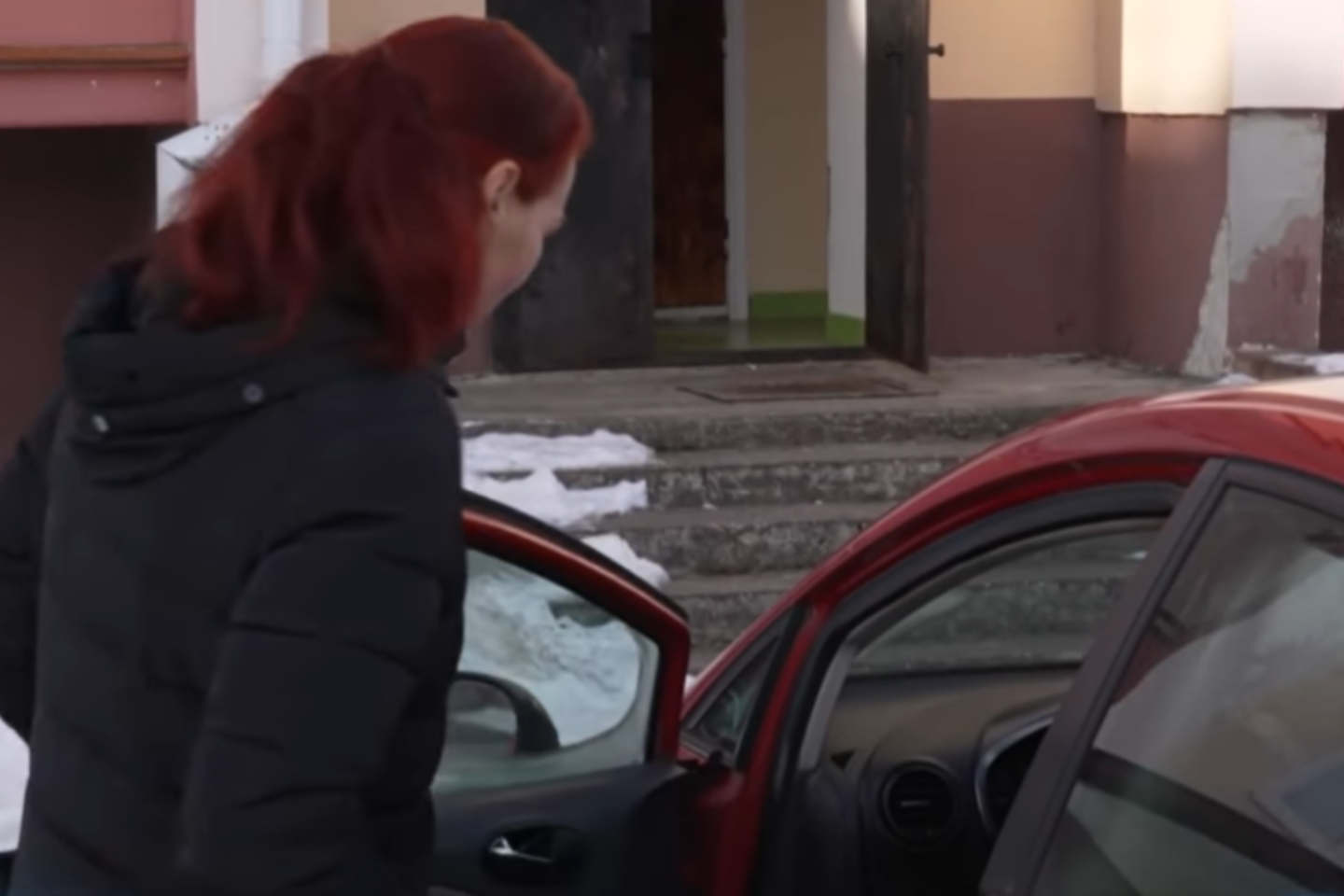
A Lithuanian woman who recently relocated to Belarus claims historical memory is being suppressed in her former home country, alleging punishment for commemorating Victory Day and a rewriting of history in schools.
Belarusian state media is using the woman’s account as evidence that Lithuania restricts freedom of expression and the preservation of historical traditions.
“Just over a year and a half ago, Ina Ušakova lived in Lithuania – a country that adheres to European standards and values,” began a report from Belarusian state television channel Belarus1.
Today, she and her family consider Belarus their second homeland. The decision to move, according to the report, was driven by personal beliefs, approaches to raising children, and attitudes toward historical memory.”
In an interview with Belarusian journalists, Ušakova asserted she faced oppression in Lithuania, without providing specific evidence.
Born and raised in Lithuania, Ušakova reportedly settled with her three children in the town of Tarnova, in the Lida district of Belarus, according to the report.
Ušakova told the Belarusian interviewer that Lithuania does not foster “traditional values.” She expressed particular concern over what she described as a prohibition on commemorating the “Great Patriotic War” – the Eastern Front of World War II. “May 9th is not celebrated,” she said. “I remember when my grandfather’s brother was being buried – his medals were carried on a pillow. But now, you can’t even put a carnation down.”
“You’ll see containers with the inscription ‘trash for carnations.’ Everything has been demolished, nothing remains of the Soviet era. The entire Green Bridge in Sotinė was lined with Soviet monuments, and they are also gone. History has practically disappeared, everything has been rewritten,” she claimed.
Ušakova stated she received a 300 euro fine for posting a photo of a St. George’s ribbon on social media.
She added that Lithuania does not value “eternal values,” and that “gay parades are held with joy” in place of May 9th celebrations.
Ušakova also alleged that schools in Lithuania do not recognize students as either girls or boys, leaving the decision up to the children themselves. This, she said, was deeply upsetting.
“My friend even sent me a link saying that some schools are even building toilets ‘without gender’ – supposedly for those who haven’t decided on it,” she claimed.
