
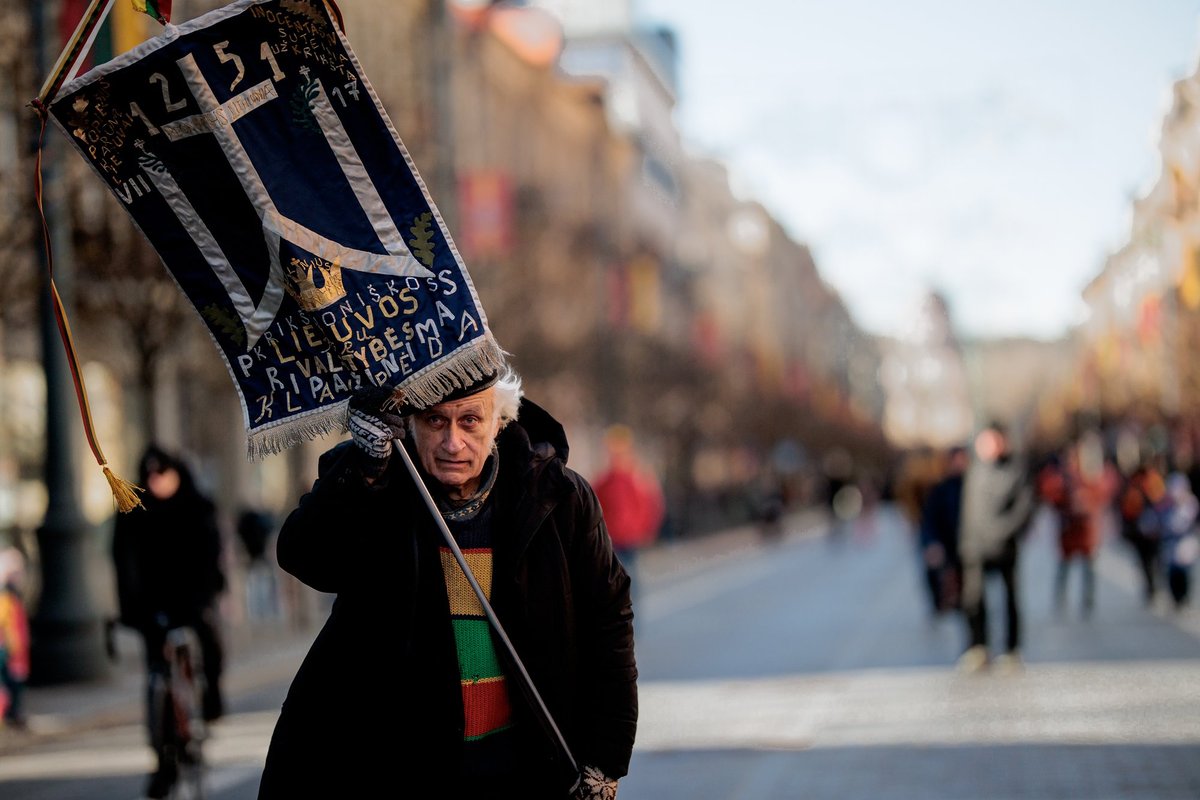
Estonia Led the Way
As Lithuania marked its historic declaration of independence from the Soviet Union, questions arose about the factors that enabled its bold move. Historian Marius Ėmužis commented on whether it was courage alone, or other circumstances, but noted that, as is often the case, Estonia took the initial lead in the restoration of independence. “They began various rumblings as early as 1988. Similar processes then unfolded in other Baltic countries,” he said.
However, according to the historian, the restoration of Lithuania’s independence gained significant momentum from developments across the entire Soviet Union. Primarily, this included Mikhail Gorbachev’s initiated glasnost, or openness reform, and perestroika, known in Lithuanian as restructuring: “Glasnost was primarily aimed at acknowledging censorship and liberating speech, while perestroika, perhaps to a greater extent, focused on a restructuring of thought, but was largely an economic program,” Ėmužis explained.
Lithuanians often remember the rally near the Adam Mickiewicz Monument in Vilnius, but a similar event took place in Riga, the Latvian capital, a year earlier, he added. “They founded their Helsinki Group at that time, although we had one in Soviet Lithuania even earlier. However, those perestroika impulses emerged in Latvia in 1986. Then, as I mentioned, the rally took place near the Adam Mickiewicz Monument in Lithuania, and similar movements occurred in Estonia. So, events gradually spurred each other on. Of course, it’s important to understand that Sąjūdis was a movement supporting restructuring.”
However, the historian said that the restoration of Lithuania’s independence was significantly aided by processes unfolding throughout the Soviet Union.
An Influx of Information Broke Through the Occupiers’ Dam
According to Ėmužis, people began to speak more freely about Soviet repressions. In other words, about things that had previously been kept silent or were strictly forbidden to discuss. “This can be compared to a crack in a dam that grew larger and larger until a devastating torrent could break through. So, Gorbachev’s reforms initiated this process. It’s possible that until then, some people didn’t know what happened in 1940, or what happened after the war, but there were very few such people, mostly the younger generation.
Older people knew this perfectly well, but some chose not to speak (ideologically) or to speak in a semi-positive way, while others were afraid to do so. However, when people began to talk more openly about everything, not only did national sentiment revive – as Professor Gailienė put it, ‘What have they done to us?’ – but there was also a sense that the injustice done in 1940 needed to be rectified,” he explained.
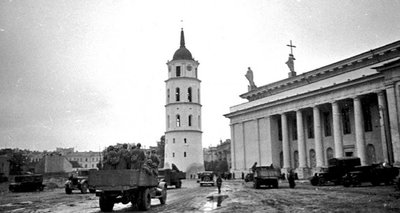
He noted that the period also saw a renewed romanticization of the interwar period, which inevitably led to the idea of restoring the state. “If things are bad now, if Soviet crimes have been committed, if the economy is lagging behind, why should we suffer here? Why can’t we restore the state that was forcibly abolished and live better?”
“I believe that’s how that vision took shape. From there, we can talk about how to restore the state and what that state should be. In the course of 1989 and early 1990, a very slight group opposed the restoration of an independent state. Such people existed, but they represented a very small percentage of society (‘Jedinstvo,’ platformists, etc.). Essentially, everyone agreed that the state should be restored, but not everyone agreed on how,” Ėmužis said.
Lithuanian Communist Party Had No Choice
According to the historian, the Lithuanian Communist Party was left with little option. “Essentially, the Soviet republics had restricted, partial autonomy. Perhaps not political, but more economic, allowing them to manage those issues more independently. However, this did not prove successful in the long run.
The term sovereignty began to be used in 1988-1989. That’s why I said that Estonians were leaders in some areas, as they raised the issue of economic sovereignty. Also, legal sovereignty, that Estonian laws are above some Soviet decisions or laws. They wanted greater autonomy due to economic planning. There was similar talk in Lithuania, perhaps more from the Communist Party, but things quickly changed when Sąjūdis strongly advocated for Lithuania’s independence from the constituent congress in October 1988. Already on February 16, 1989, this resonated loudly. Gradually, events began to push each other forward. Of course, it’s important to understand that Sąjūdis was a movement supporting restructuring.”
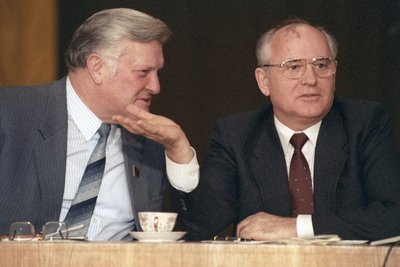
Ėmužis recalled that Lithuanian communists could clearly see the precedent in Poland, which occurred in June 1988. “In Poland that year, elections were held, although they were not entirely free. The communists reserved a portion of the seats for themselves. However, all other seats that were allowed to be occupied by competing political movements were taken by Solidarity. So, our communists saw this and also changed their rhetoric regarding the pursuit of independence.”
the most difficult questions remained: when to restore independence and what that independence should look like. On the first question, there was talk of restoring pre-war Lithuania and withdrawing from the Soviet Union. There were those who spoke about this. It was also possible to talk about some kind of communist-socialist Lithuania, but not within the Soviet Union, or perhaps within a renewed Union, as Gorbachev also saw this possibility. However, the latter became more prominent after March 11, 1990, when it became clear that Lithuanians had withdrawn.”
A key question remained: when to declare independence – immediately after the elections, when the newly formed Supreme Council would convene, or wait a while longer, negotiate. With Sąjūdis winning the February 24, 1990, elections by a significant margin, and Vytautas Landsbergis being elected Chairman of the Supreme Council, the first and second questions were resolved,” said Ėmužis.
Lithuania Restored on the Basis of Restitution
He noted that the decision was made to restore Lithuania on the basis of restitution. In other words, the statehood abolished in 1940 would be restored. “We had not joined anywhere, so we did not need to withdraw from anywhere. There was no communist Lithuania, but the one that existed before 1940.
Another thing is that it was decided to declare independence without delay. Sąjūdis ran in the elections with a clear declaration that it wanted independence. Moscow was well aware of this even before the election results. It was assumed that it might take measures to restrict this aspiration.
For example, it could have dissolved the Supreme Council or declared the election results illegitimate. Moscow was scheduled to hold a Congress of People’s Deputies after March 11, where unfavorable decisions could have been made. The March 11 session was so long, and the declaration of independence did not take place until 10:44 PM. We could say it was even a night session,” Ėmužis observed.
In the historian’s opinion, the most important decision was to choose the path of restitution and not delay the restoration of independence. “Preparatory perform for this began knowing the election results, but not yet knowing who the Chairman of the Supreme Council would be and how things would unfold. However, these preparatory works were underway from the end of February elections to March 11: documents were being prepared on what the Declaration of Independence would look like, what needed to be adopted, as various problems arose, etc.,” he said.
March 11 – A Complex Process, Not a One-Day Event
Ėmužis said that, in general, March 11 can be seen as a complex process, not a one-day event. “We sometimes hear the words that March 11 was a miracle. However, this depends on what we call a miracle: if We see an event that happens very quickly and unexpectedly, then March 11 was certainly not such a miracle. It required weeks of preparation, and this step had been maturing since the beginning of Sąjūdis. If we were to talk about the legal framework or backbone of this decision, it had been maturing for about 10 days. Of course, if we consider this a very positive thing, then this day was indeed a miracle.
So, over those ten days, it was necessary to resolve the dilemma that the Supreme Council was an organ of the occupying power, not a Seimas. It could be argued that the Supreme Council originated from the People’s Seimas. In August 1944, that People’s Seimas was renamed the Supreme Council, but it was still an occupying body. It would have been very strange if the occupying body, the Supreme Council, had declared independence from the occupier. Of course, it could be said that a mandate was given to declare independence, but there was a desire to do everything precisely legally, so that there would be no grounds for criticism later,” Ėmužis explained.
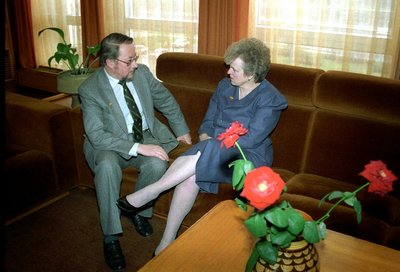
He noted that propagandists would later eagerly have seized on any possible inconsistencies and used them for their own purposes. The March 11 declaration consisted of a package of five documents. “We often focus on the Act of Independence, but it wasn’t even the first. First, a declaration on the authority of deputies was adopted, explaining the source of their powers. That is, the Lithuanian independence declaration originates from the February 16, 1918 Act, then the resolution of the Constituent Seimas of May 15, 1920, which ratified and confirmed the February 16 Act, that this was done by the nation’s elected Seimas. It should be remembered that the Council of Lithuania, which declared independence in 1918, was elected at the Vilnius Conference, but not universally. Then the 1922 Constitution was mentioned, etc. This declaration showed that the restoration of Lithuania’s independence did not come out of nowhere.
The second document was on the name and coat of arms of the state: the Lithuanian Soviet Socialist Republic (LSSR) was renamed the Republic of Lithuania. Vytis was confirmed as the coat of arms. This was done to distance itself from the Soviet Socialist Republic, to show that it was not declaring independence, but doing so in the name of the Republic of Lithuania.
The third document was the Act on the Restoration of the Independent State of Lithuania. The fourth document briefly restored the validity of the 1938 Constitution of Lithuania. This was the last valid Constitution of the LR, but it was authoritarian and would not have been very suitable for building a modern state. Although Latvia now has the 1922 Constitution with certain amendments. So, Lithuania briefly restored the 1938 Constitution to show that our state originates from the interwar state.
The fifth document was already such that the validity of the Constitution was suspended and the Temporary Basic Law was adopted. The entire day of March 11 unfolded, and before that there were elections of the Chairman of the Supreme Council, candidates expressed their visions of the state. That’s why I say that March 11 was not a miracle, but a long-prepared, well-planned action,” he concluded.
