
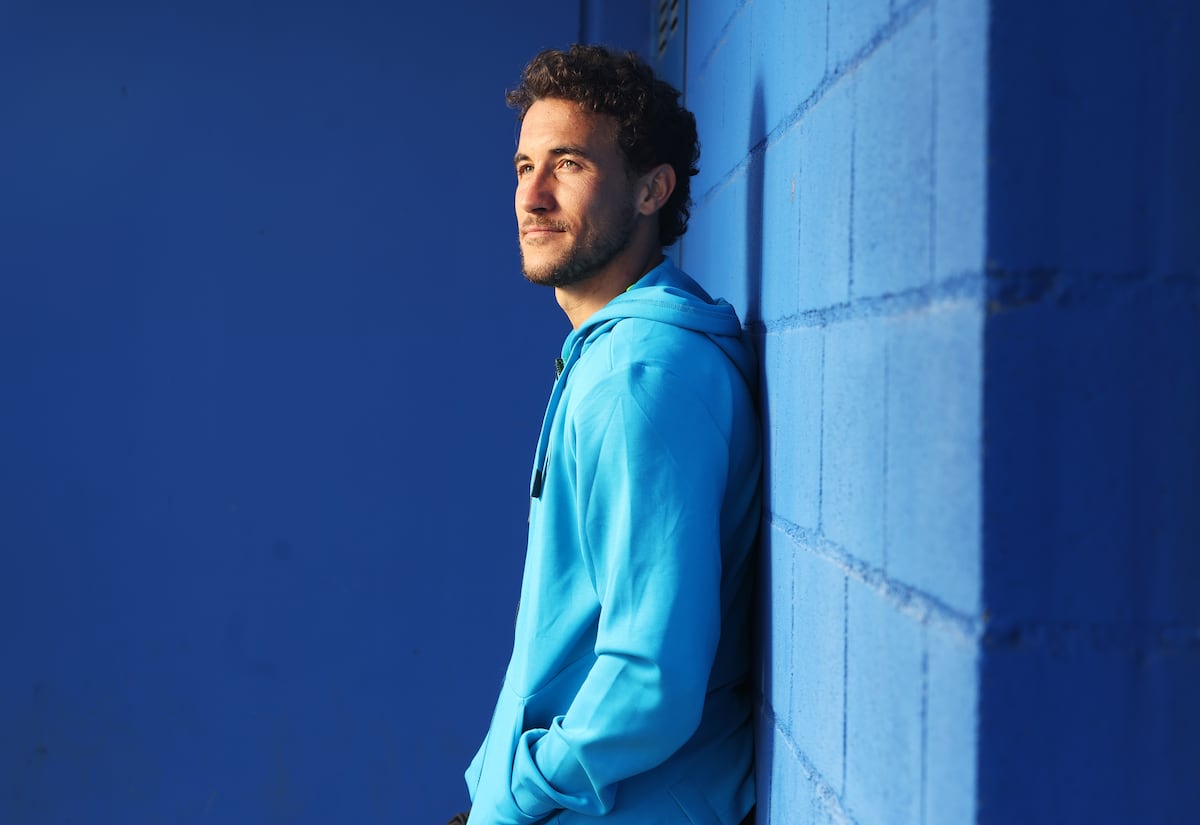
Luis Milla, 31, didn’t reach La Liga until he was almost 26, joining Granada after facing numerous rejections and grinding it out with Rayo B, Guijuelo, Fuenlabrada and Tenerife. Now, he’s a key player for Getafe, who visit a Real Madrid side on Monday, February 23, 2026, that will be without Mbappé, Jude Bellingham, Asensio, Dean Huijsen, Militão and Ceballos. “One can’t go to the Bernabéu and just sit back and defend all the time. We need to make them uncomfortable,” Milla stated.
Question. Is it something of a miracle that Getafe has remained in La Liga for so long?
Answer. It’s a testament to hard work. I wouldn’t call it a miracle. We’ve had difficult years, with some unusual situations, but there’s a lot of effort behind it. This season, we’ve experienced everything, and there’s still plenty to come. That’s just our reality.
Q. Do you feel the football world recognizes your team’s efforts?
A. It’s a delicate subject. Some people appreciate the way we compete and remain reliable in almost any stadium. I’ve had moments in my career where I went to games feeling underprepared to win. That feeling is awful. And in recent years, with the manager and all the criticism, I believe we’ve been able to overcome those challenges.
Q. There’s a growing sentiment that La Liga’s overall quality has declined.
A. It’s possible. When other leagues have more money and the best players move to teams that aren’t necessarily dominant in those leagues, it says a lot. I can’t comment on the reasons because I don’t fully understand them. You also read that things might be inflated in the Premier League. LaLiga is working to ensure clubs don’t suffer like they used to. In terms of quality, if the best players have left, it’s possible it has dropped a little. But a few years ago, people were talking about the Premier League reaching Champions League semifinals, only to be eliminated by Real Madrid.
It’s possible that La Liga has dropped a little in level.
Q. Did you become a midfielder because of your father [also Luis Milla]?
A. He probably had something to do with it, and I’m playing more in his position now. I used to play further forward when I was younger, but gradually I’ve transitioned into this role.
Q. It took you time to develop physically.
A. I received a lot of rejections because of that. I always say that my career unfolded as it was meant to. Nowadays, football is very physically demanding, but the coach will choose a player who can make a pass and understand the game. Of course, you also need those basic qualities that anyone on the street can offer.
Q. Running.
A. Absolutely. You need the passion to enjoy defending, making tackles, and pushing yourself to exhaustion. That has to come from within. The manager asks for very little, but those basics are essential. From there, everything else flows more naturally. I’ve always enjoyed it. People might have thought Luis wouldn’t fit in under Bordalás because of his style, but anyone can succeed.
You see many players with talent, but they disappear after three games. They lack consistency and mentality. They don’t adapt to what’s required at any given moment.
Q. What did those rejections teach you?
A. I faced some tough rejections when I was young and a little older. It felt like it would be very difficult to make it, but look, they were part of my growth. Why wouldn’t I fight for it?
Q. In your physical development, Marcos Llorente served as an example for you.
A. He was one of the first to work with someone outside the team, or at least to talk about it. I’ve known him since I was 13, and I’ve looked to him to take that next step. People think he doesn’t go out, that he only eats certain things, but he’s a true enthusiast with a wonderful balance in his daily life. And he prioritizes his health, which is a great example.
Q. For a time, it was thought that the midfield would be dominated by physical players. But that hasn’t quite happened.
A. We’ve gone through many eras. In the time of Xavi and Iniesta, it was the smaller players who played well. Now you have to be very well-rounded and adapt to what’s required. You don’t have possession of the ball or be defending for the entire 90 minutes. That’s where each player improves, not being confined to a single style or the three things you have to do. It’s about thinking and understanding football, knowing what the team needs, and being complete.
Q. Do you have to understand football to play it?
A. Without a doubt. I’m at an age where I’ve been in many teams, and my feeling is that football was understood more in the past. You see many players with talent, but they disappear after three games. They lack consistency and mentality. They don’t adapt to what’s required at any given moment, to understanding the game and what the team needs. That’s why I’m very proud that in my career, with many coaches, I’ve been able to help. That’s related to becoming more complete every day.
Q. How have you come to understand the game? Just by playing it?
A. I’ve watched a lot of football. I’ve asked coaches why they asked us to do certain things. I’ve taken an interest. I try to help the coaching staff and my teammates because you don’t go onto the field thinking only about yourself. Football has many facets and thousands of moments in a match. With an understanding of the game, you’re much closer to succeeding.
Q. Do you see many teammates who don’t understand it?
A. It’s not that they don’t understand, but many catch your attention at a given moment and then they lack other qualities. You can say, ‘how beautiful Barcelona plays.’ But if they didn’t have someone like Raphinha making 25 runs into space, it wouldn’t be that Barcelona. Notice many aspects that make something work.
You can say: ‘how beautiful Barcelona plays.’ But if they didn’t have a Raphinha making 25 runs, it wouldn’t be that Barcelona.
Q. What do you inquire Bordalás about?
A. We talk a lot about the basics we need every day, about competing, knowing where to position yourself, what I was saying about Raphinha… Players need to understand that many times we have to make movements that aren’t for ourselves, but for others.
Q. What has he brought to you individually?
A. He arrived when I wasn’t at my best personally and professionally. He makes you appreciate the day-to-day, the profession, understanding that this goes by very quickly. For some time now, I’ve come with a huge desire every day to learn and improve my teammates.
Q. Do you have a coaching career in mind?
A. Maybe. I don’t know if I’ll burn myself out too quickly, you have to gain involved in many things.
