
Mars May Have Supported Life Longer Than Previously Thought
New evidence suggests that Mars may have harbored habitable conditions for a significantly longer period than scientists initially believed, thanks to the presence of underground water. The discovery offers fresh insights into the planet’s potential to have once supported microbial life and informs ongoing efforts to search for signs of past organisms.
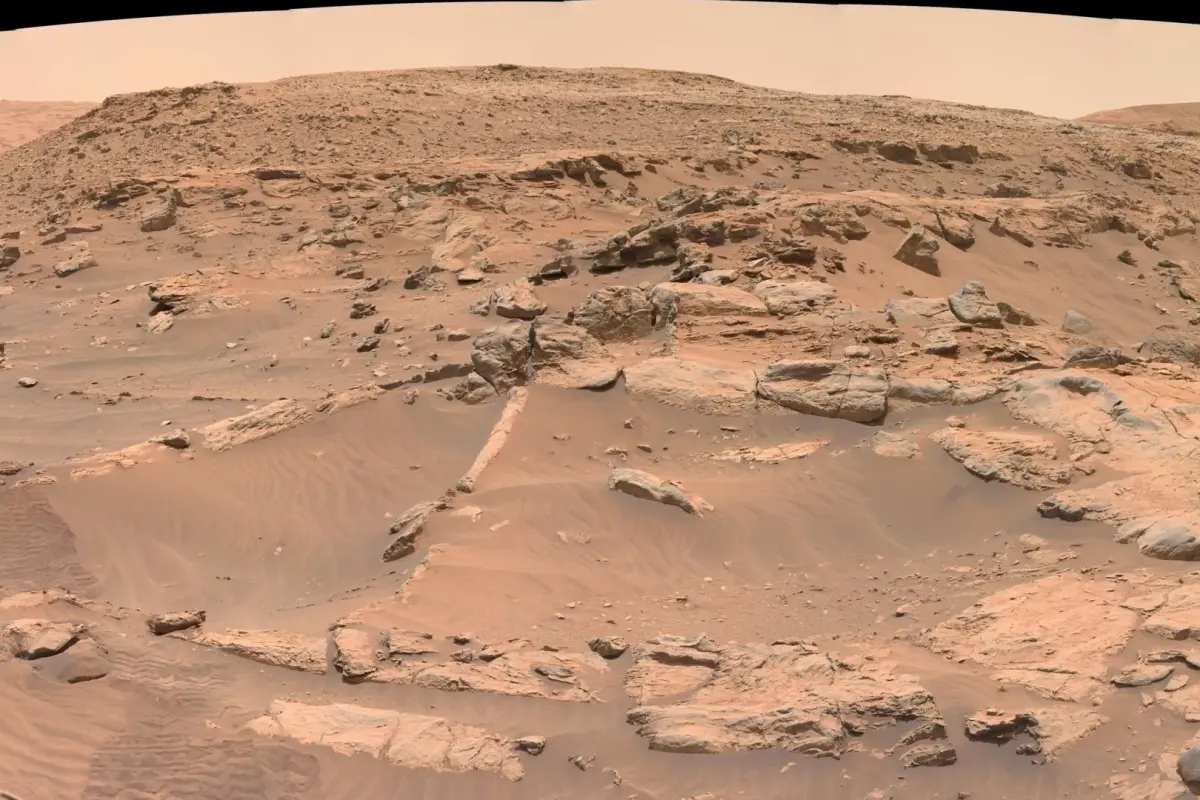
Researchers from New York University Abu Dhabi (NYUAD) uncovered the findings while studying ancient sand dunes within Gale Crater, an area currently being explored by NASA’s Curiosity rover. The research, published in the Journal of Geophysical Research – Planets, indicates these dunes gradually transformed into rock billions of years ago through interaction with subsurface water.
The investigation was led by Dimitra Atri, Principal Investigator of NYUAD’s Space Exploration Laboratory, and research assistant Vignesh Krishnamoorthy. To understand the Martian environment, the team compared data collected by the Curiosity rover with similar rock formations found in the deserts of the United Arab Emirates, which formed under comparable conditions on Earth.
Analysis revealed that water originating from a nearby Martian mountain seeped into the dunes through small fractures. As this water moved upwards, it left behind minerals, including gypsum – a mineral commonly found in Earth’s desert environments. These minerals are particularly significant because they have the ability to trap and preserve traces of organic material, making them valuable targets for future missions seeking evidence of ancient life.
“Our findings show that Mars didn’t simply go from wet to dry,” said Atri. “Even after its lakes and rivers disappeared, small amounts of water continued to move underground, creating protected environments that could have supported microscopic life.”
This discovery provides new insight into the evolution of Mars over billions of years and reinforces the idea that subsurface environments may be among the most promising places to search for evidence of past life on the planet. NASA’s Curiosity rover is currently investigating unusual, spiderweb-like ridges on Mars that may further illuminate the planet’s watery history, according to a March 14, 2026 report from NASA’s Jet Propulsion Laboratory. These “boxwork” formations are believed to have formed as groundwater flowed through cracks in the rock, leaving behind mineral deposits.
Researchers at NYU Abu Dhabi previously compared the UAE’s desert landscape to Martian terrain, adjusting the timeline for potential Martian habitability from over 3.7 billion years ago to potentially eons of habitation. The team’s work highlights the importance of studying Earth analogues to better understand the geological processes that shaped Mars.
The findings underscore the potential for long-term habitability even after Mars’ surface became inhospitable, offering a renewed focus for future exploration and the search for extraterrestrial life. (*)
Simak breaking news dan berita pilihan TIMES Indonesia langsung dari WhatsApp-mu!
Klik 👉 Channel TIMES Indonesia
Pastikan WhatsApp kamu sudah terpasang.
