
DHA
Oluşturulma Tarihi: Şubat 08, 2026 17:59
Scientists Discover Significant Water Content in 4.48 Billion-Year-Old Martian Rock, ‘Black Beauty’
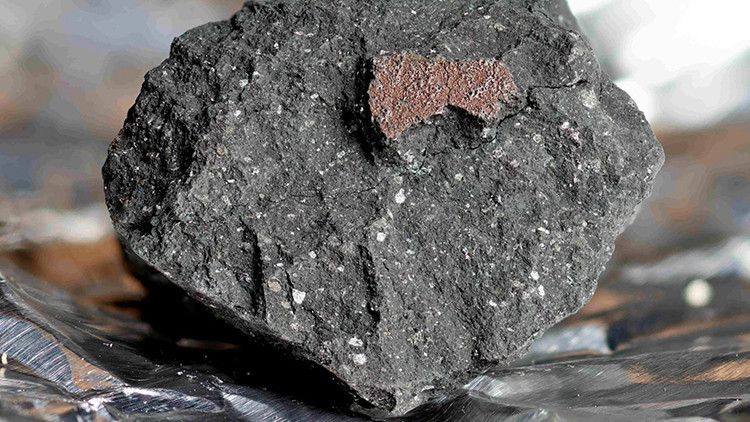
Researchers have detected substantial amounts of hydrogen and water components locked within a 4.48-billion-year-old Martian rock known as ‘Black Beauty’ (NWA 7034), using advanced scanning technologies. The findings offer new insights into the Red Planet’s potentially water-rich past and demonstrate the power of non-destructive analysis techniques.
A team led by Estrid Naver from the Technical University of Denmark successfully imaged the interior of the ‘Black Beauty’ meteorite without causing damage, utilizing two cutting-edge technologies: ‘X-ray CT’ and ‘Neutron CT’. This approach is particularly significant as it allows scientists to study precious extraterrestrial samples without compromising their integrity – a crucial step for future planetary science.
The analysis revealed the presence of small rock particles identified as ‘H-Fe-ox’ (hydrogen-rich iron oxyhydroxide) within the meteorite. Despite constituting only 0.4% of the sample’s volume, these areas contain nearly 11% of the total water content of the stone. This discovery suggests that Mars may have held more widespread and potentially liquid water than previously thought. The ability to pinpoint water content at this level of detail is a major advancement in our understanding of Martian geology.
According to reports, the team intends to apply this non-contact scanning method to samples planned for return to Earth from Mars in future missions. The meteorite, approximately 4.48 billion years old, is considered one of the oldest known Martian materials, originating from a large impact on Mars. Prior research required the meteorite to be cut, crushed, or dissolved for analysis. This new method preserves the sample for further study and comparison with data gathered by rovers like Perseverance, which has already found evidence of water in the Jezero Crater.
The ‘Black Beauty’ meteorite contains approximately 6000 ppm of water, a surprisingly high amount for the currently arid planet. This finding reinforces the growing body of evidence suggesting a wetter, more habitable early Mars.
