
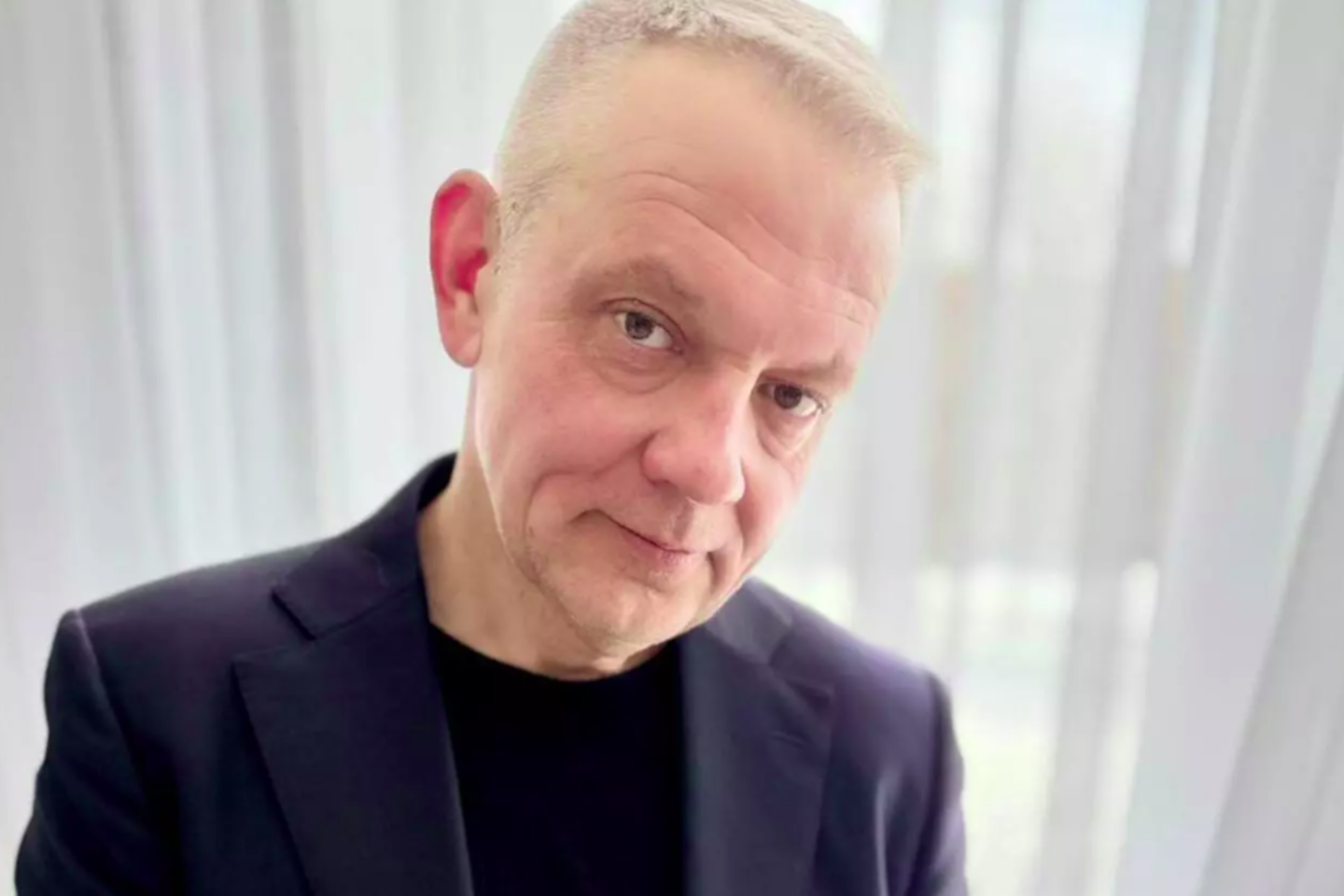
A recently released autobiography by Eligijus Masiulis, a former Lithuanian politician convicted of corruption, alleges that current Lithuanian President Gitanas Nausėda requested his assistance in securing a job for his nephew. The claim has been vehemently denied by the President’s office.
According to the book, while serving as Minister of Transport, Masiulis received a request from Nausėda, who was then an advisor at SEB bank, to help his relative find employment. The alleged incident has sparked controversy in Lithuania, prompting a swift response from the presidential administration.
“What we have is a lie. That is all the President can say about the creative work of a former politician convicted of corruption and serving a sentence,” a spokesperson for the President stated in a comment to Delfi, a Lithuanian news outlet. The statement firmly rejects Masiulis’s account.
Masiulis, responding to the denial, offered a rhetorical comment to TV3, stating, “Perhaps there wasn’t a nephew, just as there isn’t a fence around the President’s house anymore.” He indicated that he anticipated such a reaction from those mentioned in the book.
The book, titled “White Collar Fasteners,” has already seen strong sales, with the initial print run of 1,000 copies nearly sold out. A second printing of another 1,000 copies is currently underway, and the author suggests a third edition may be necessary to meet demand.
“Since this is my debut as an author and I entered completely unknown territory, we started cautiously – with a print run of one thousand copies,” Masiulis explained. “It was difficult to understand whether the book would be read and whether people would like it.”
He continued, “When the book was released, it received a lot of media attention, people learned about it, and many wanted to buy it. It became clear after the first week that the initial print run would not be enough, so I contacted the printing house for a second print run. It is currently being printed – another 1,000 copies.”
Masiulis added that he doesn’t rule out the possibility of a third print run, stating his goal is to ensure the book is available to anyone who wants to read it.
The book is currently available in select bookstores across Lithuania and on various online platforms. Masiulis noted that he has also received inquiries from Lithuanians living abroad, including those in the United States, the United Kingdom, Germany, Iceland, and even Asian countries.
“The book has taken on a life of its own, and I am very happy that it has resonated with people,” he said.
Regarding the public reaction to the allegations in the book, Masiulis stated that it was natural for a high-ranking official mentioned in a potentially unfavorable context to deny the claims. He added that he had anticipated such a response.
He also expressed pleasant surprise at positive feedback from prominent figures, citing a review from economist Aušra Maldeikienė. Masiulis also noted receiving numerous private messages on social media offering congratulations and support, with readers commenting on the book’s readability and informative content.
He acknowledged that some criticism exists, with some readers suggesting the book lacks specific names or sufficient detail about the case or his own involvement. “That’s normal. As many people, so many opinions,” he said.
Masiulis plans to hold a book presentation in Klaipėda, Lithuania, in late March, given the book’s connection to his time and youth in the city. Details are still being finalized.
Looking ahead, Masiulis hinted at the possibility of a second book, potentially focusing on the stories and experiences of inmates. He has even considered a title: “Striped Collar Fasteners.” However, he emphasized his desire to properly promote “White Collar Fasteners” before embarking on a new project.
A Snippet from the Book: Calls – of All Kinds
In the broadest sense, people’s calls can be divided into two parts: calls from a human demand and calls from human kindness.
No, don’t get me wrong – calls from a human need are also necessary. Through them, human connections are formed. When Notice too many of them, it becomes annoying. But calls solve people’s problems and thus human connections are formed.
Calls from a human need are common in the political life of our country. Especially many people receive them if they hold any responsible positions or have powers temporarily granted to them. In other words, due to life circumstances, they have become important people for a while.
The number of calls from a human need depends on the important person’s ability to help. The greater the important person’s powers, the proportionally greater the number of calls from a human need. […]
And often it happens that they are modest, publicly say that they are humble servants of Lithuania, but in reality they are important people who can solve the problems or concerns of other people.
In the political agenda, there are many cases when important people from a human need call other important people. I received a call from a human need from bank advisor Gitanas Nausėda.
I couldn’t say that we knew each other closely. Yes, we occasionally met and exchanged a few words during the filming of some television show.
True, once we were both invited to a private dinner at the Seimas hotel. We were invited to have a delicious dinner, drink wine and have an interesting conversation about the affairs of the world and Lithuania by a. A. Gabrielius Žemkalnis-Landsbergis, the brother of Professor Landsbergis.
He was a very interesting and humorous man. Having lived in Australia for many years, he was a great patriot of Lithuania, but he also knew how to cleverly mock the stereotypes of our state and society.
After this dinner, a lot of time had passed when Gitanas Nausėda called. We started the conversation about current state affairs, discussed political and economic news. Then we moved on to the topic dictated by human need. […]
