
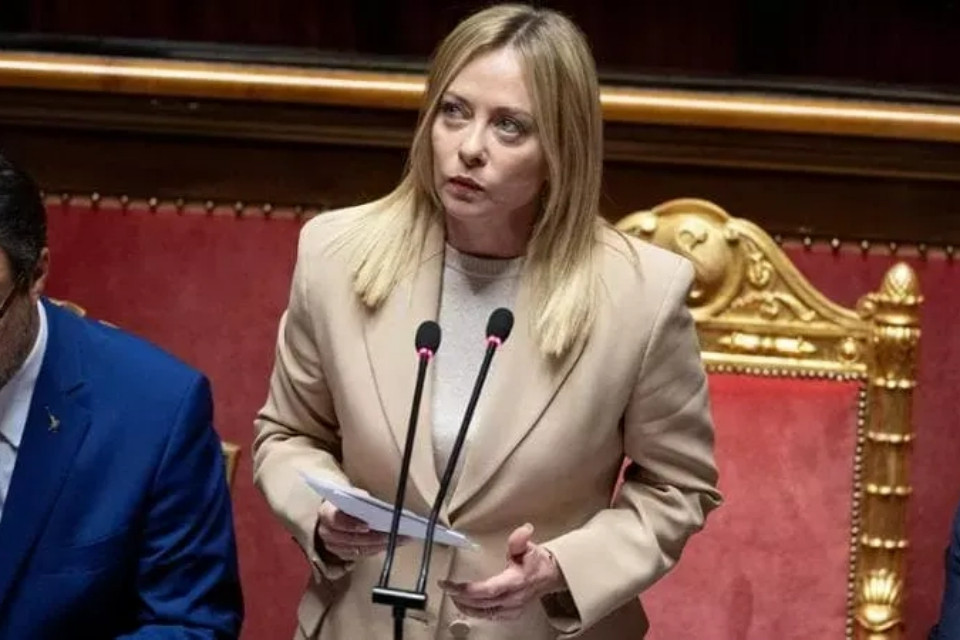
Italian Prime Minister Giorgia Meloni addressed Parliament on Monday, March 11, 2026, to discuss the escalating crisis in Iran and outline the government’s position ahead of the upcoming European Council meeting on March 19-20. The address comes after opposition parties expressed dissatisfaction with previous briefings from ministers Tajani and Crosetto and criticism that Meloni had prioritized media appearances over parliamentary debate.
Meloni opened her remarks by appealing for unity and urging lawmakers to avoid “polarizations” and “simplifications.” “There is no government complicit in the decisions of others, nor is it isolated in Europe, nor is it to blame for the economic consequences,” she stated. “The Italian government, despite itself, must face one of the most complex turning points in recent history. And we would prefer not to do so alone.”
The Prime Minister emphasized that the current international crisis, which includes the actions taken by the U.S. And Israel against Iran, stems from Russia’s aggression in Ukraine. Yet, she also acknowledged the threats posed to global order by the Iranian regime. Despite this context, Meloni was firm in stating, “Italy is not taking part and does not intend to seize part in the conflict.”
Rome, Meloni continued, was not involved in negotiations with Iran and therefore “does not have the elements to confirm, but also not to deny, the assessments of the United States regarding Iran’s unwillingness to reach a final agreement” on uranium enrichment. She characterized the situation as a choice between “lousy options.”
The government’s response, according to Meloni, will focus on three key areas: diplomatic efforts to resume negotiations – contingent on Iran halting its attacks on Gulf countries; pressure to protect civilians, with strong condemnation of the recent deaths of children in a school in Minab, Iran; and military support for nations in the Gulf region. She noted that the government is aligned with the United Kingdom, Germany, and France on these points.
Addressing concerns about the use of U.S. Military bases in Italy, Meloni responded to opposition inquiries by stating that Italy follows the same rules as other European Union countries, including Spain, and that no requests have been made to date. She also expressed condolences for the death of Father Pierre in Lebanon.
Despite her call for unity, tensions arose when Meloni discussed the European Council meeting and the issue of migration. She defended the government’s policies and criticized what she described as judicial decisions to release migrants facing serious criminal charges, including drug trafficking, sexual assault, and violence against minors. She argued these decisions lacked justification under Italian and European law, and “not even common sense.” This sparked protests from opposition benches.
Meloni reaffirmed Italy’s support for Ukraine, dismissing what she called “Moscow’s propaganda” and highlighting the importance of a latest loan guaranteed by the EU budget. She acknowledged concerns raised by Hungary and Slovakia regarding oil supplies through the Druzhba pipeline, suggesting a political solution is needed, and indicated Italy is prepared to assist in mediation. The issue underscores the challenges of maintaining EU unity on key foreign policy matters.
On the energy front, Meloni reiterated Italy’s priority of suspending ETS, the “tax” on emissions for energy-intensive companies, and noted agreement with Germany, though many EU countries remain skeptical. Italy will also push for accelerated plans for rearmament and security at the upcoming European Council, though it remains uncertain whether Rome will be able to spend in derogation of the Stability Pact.
As the debate unfolded in the Senate, details of resolutions to be voted on emerged. Although the majority presented a unified text, the opposition parties failed to reach a consensus, resulting in separate documents addressing the Middle East, Ukraine, and energy policy. However, the Democratic Party and the Five Star Movement aligned on opposing the authorization of U.S. Military bases in Italy for attacks against Iran, stating, “Do not authorize the use of bases granted to the U.S. Armed forces on Italian territory for military attacks against Iran and, in any case, do not provide any type of military support for a war that violates international law and that the international community must stop before It’s too late.”
Senator Francesco Boccia of the Democratic Party labeled Meloni “Pontius Pilate,” while Matteo Renzi, leader of Italia Viva, offered a more ironic critique, referencing tax policies in the recent budget law and challenging the governing coalition on local government issues. Carlo Calenda, leader of Action, asked Meloni to choose between former President Trump and the EU, to which she responded by describing her efforts to mitigate the impact of the U.S. Ally. “What the West is – we do not decide that,” she said. The relationship between the majority and Action remains constructive, even on the resolutions.
