
A potential resurgence of a bacterial infection following an outbreak linked to a nightclub event is raising concerns among health officials in the United Kingdom. While the peak of the initial wave of infections appears to have passed, new cases remain possible, according to Paul Hunter, a professor of medicine at the University of East Anglia, speaking on March 20, 2026.
The first cases in the outbreak were traced to a weekend gathering at Club Chemistry in Canterbury, a university town. Approximately 2,000 young people attended the club between March 5 and March 7, after which several individuals became seriously ill. Tragically, two attendees, ages 18 and 21, died.
While the largest outbreak is likely over, medical experts are unable to definitively say whether infected young people have spread the bacteria beyond Kent. Though, they consider the likelihood of clusters of infections occurring outside the region to be low. “Hopefully, antibiotics and vaccination will prevent further spread,” Hunter said.
The cause of the rapid spread of the meningococcal bacteria remains unclear to medical experts. One potential factor being investigated is the leverage of vapes among young people, as vaping can damage the throat and potentially facilitate bacterial entry. Sharing vapes may also contribute to transmission. It’s confirmed that the outbreak is caused by meningococcal type B.
Long Lines
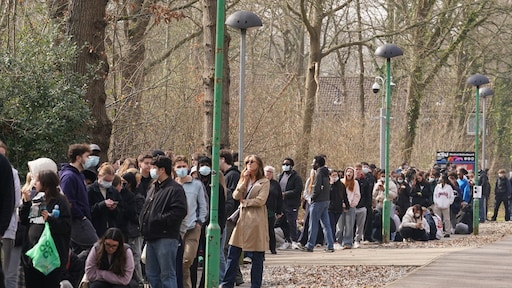
Three additional clinics opened on March 20, 2026, to provide MenB vaccines to young people. Demand was so high on March 19, 2026, that hundreds of people were turned away. Long lines have formed again this morning as young people wait for the vaccine.
Thousands of young people in Kent have already been prescribed preventative antibiotics, and 10,000 have received the MenB vaccine. Health authorities have ordered an additional 5,000 doses.
British students are shocked by the outbreak:
The family of the deceased teenager is calling for a broader vaccination program. Forty members of Parliament have also written to Minister of Health Wes Streeting, requesting that the MenB vaccine be made available to all British young people.
Serious Concerns
Concerns are growing among young people and their parents throughout the country, not just in Kent. Pharmacies offering the MenB vaccine privately are experiencing shortages, and individuals are being placed on waiting lists.
The meningitis B vaccine was added to the British vaccination program for infants in 2015. Individuals born before 2015 would not have received the vaccine as a standard part of their childhood immunizations.
How Contagious Is It?
According to the European Centre for Disease Prevention and Control (ECDC), clusters of infections often occur in crowded settings. While patients can transmit the disease to others after infection, the spread is not as rapid as with respiratory infections like coronavirus.
The cases in Great Britain involve meningococcal type B. This type is also present in the Netherlands, with 121 cases reported in 2024 by the National Institute for Public Health and the Environment (RIVM).
Symptoms include cold-like symptoms, malaise, and a flu-like feeling. Individuals can carry the bacteria in their nose or throat without becoming ill. However, if the bacteria enters the bloodstream or nervous system, it can cause meningitis or sepsis.
