
Born in Prague on May 4, 1959, Michal Pešek discovered a passion for the theater early in life. As a child, he attended a drama circle led by actress Jiřina Stránská at the People’s School of Art on Voršilská Street for eight years. In 1974, he successfully passed the talent exam for the State Conservatory in Prague. Among his classmates were Zlata Adamovská, Veronika Freimanová, and Vladimír Dlouhý. Thanks to an American uncle, he completed a study stay in the United States in 1977, furthering his acting development with training at Universal Studios in Hollywood. He even appeared in guest roles at the Činoherní klub, the Central Puppet Theatre, and the Theatre of Music while still a conservatory student.
Early Roles as Students
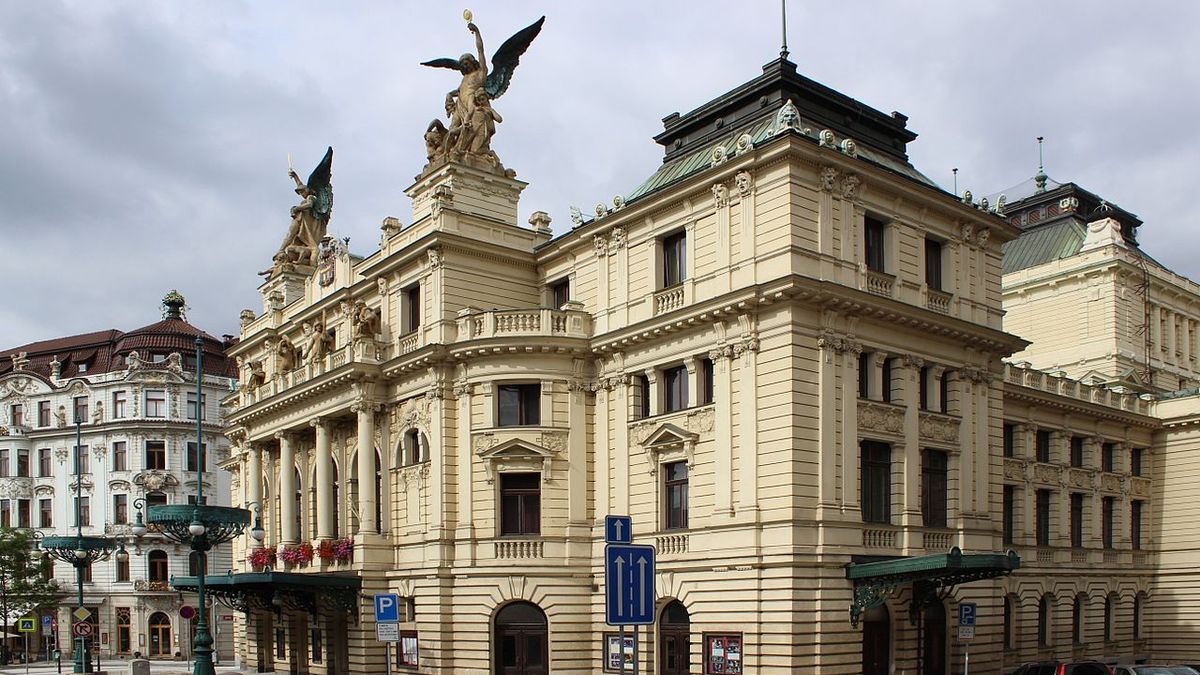
Michal Pešek launched his professional acting career at the State Theatre in Ostrava in 1980, but he only stayed for one season before returning to Prague. He then performed at the Municipal Theatres of Prague, specifically at the Divadlo ABC, and made guest appearances at the National Theatre. From 1984 to 1990, he was a member of the ensemble at the Divadlo na Vinohradech, participating in numerous productions and portraying a variety of characters. His appearance often led to roles as naive and impetuous young men.
Foto: SedlacekVojta/Wikimedia Commons/CC BY-SA 4.0
Michal Pešek
Pešek became widely known for his roles in television and film. He was still a conservatory student when he took on small roles as students in Jan Kačer’s films *Smrt mouchy* (Death of a Fly) and *Setkání v červenci* (Meeting in July) in the late 1970s and early 1980s. He played Petr, a student, in Ján Mucha’s comedy *Hop – a je tu lidoop* (Hop – and Here’s the Ape). He portrayed Rudi, the son of anti-fascist Alfred Bartl, in Kačer’s *Cukrová bouda* (The Sugar Shack). In Ludvík Ráža’s science fiction film *Něco je ve vzduchu* (Something is in the Air), he appeared as a young photographer, and in Matějka’s war drama *Svítalo celou noc* (It Was Dawn All Night), he played soldier Reiner.
A Romance with Dagmar Havlová
At the beginning of the 1980s, already a graduate, Pešek landed leading roles. Notably, he played Honza Ryzec, a carefree and lovestruck cartography institute draftsman, in Podskalský’s comedy *Křtiny* (Baptism). He shared the screen with Dagmar Havlová (then Veškrnová), who played the role of secretary Martina. A spark ignited between the two young leads, and they became a couple for a short time. “Dáša took it more seriously than Michal, perhaps. He knew how to enjoy life. He always liked to say that his loves were worth it for the fun of it,” his close friend Václav Upír Krejčí revealed to reporters years later. Havlová wasn’t Pešek’s first famous girlfriend; his first great love was Veronika Žilková, with whom he maintained a friendly relationship even after their breakup, a connection that lasted until his death.
Other significant film roles for Pešek in the 1980s included Michal Nožička, a cultural official at a spa, in Tuček’s comedy *Od vraždy jenom krok ke lži* (From Murder to a Lie is Just a Step), and Pavel Rajnoch, an idealistic teacher, in Otakar Koska’s psychological film *Už se nebojím* (I’m Not Afraid Anymore). Audiences also recognized him in smaller roles, such as the anarchist Bednář in Matějka’s historical film *Hodina života* (The Hour of Life) and the drug addict Petr Kučera in Brynkh’s crime film *Mravenci nesou smrt* (The Ants Carry Death).
Jiříček Otradovec from *Malý pitaval*
However, Michal Pešek truly gained widespread recognition through his collaboration with Czechoslovak Television. He caught attention in 1980 as student Pepík Kaplan in the series *Zkoušky z dospělosti* (Tests of Maturity). But his defining role came as the young and zealous detective Jiříček Otradovec in the series *Malý pitaval z velkého města* (Little Pitaval from the Big City). Beyond these two roles, he appeared in numerous other television productions, and many viewers will remember him from series like *Inženýrská odysea* (Engineering Odyssey), *Vlak dětství a naděje* (Train of Childhood and Hope), *Panoptikum města pražského* (Panopticum of the City of Prague), and *Rodáci* (Locals).
Following the Velvet Revolution in November 1989, Michal Pešek entered politics. In 1990, he was elected to the Prague 6 council representing the Civic Forum and left his acting engagement at the Vinohradské divadlo. However, he didn’t remain in politics for long. In 1991 and 1993, he worked as a radio host on the RTL, Golem, and Bonton stations. In the mid-1990s, he ventured into entrepreneurship, co-owning a rock club and an advertising agency. He also served as an advisor to Ivo Svoboda, the Social Democratic Minister of Finance, who was forced to resign due to a case involving the damage to creditors of the Liberta company. At the end of the millennium, after a falling out between Vladimír Železný and his American partners at TV Nova, Pešek worked as a consultant for Jan Vávra, who led CME’s remaining businesses at the time. Later, Michal Pešek focused on finance and development.
He made only rare appearances in front of the camera after the 1990s, most recently in Petr Nikolaev’s drama *…a bude hůř* (…and It Will Be Worse) in 2007. After a fifteen-year break, he was also persuaded to return to the stage, playing John Brownlow in a production of *Kachna na pomerančích* (Duck on Oranges) at the Divadlo Palace and on tour. His former love, Veronika Žilková, brought him back to the theater.
A Lover of Life’s Pleasures
Women continued to play a significant role in his life. He entered into marriage only once, marrying Hana, with whom he had son Michal and daughter Tereza. After his divorce, he had numerous other relationships. Among them was Klára Jandová, a actress twenty years his junior, who became known for her roles in the series *Rodinná pouta* (Family Ties) and *Velmi křehké vztahy* (Very Fragile Relationships). They dated for a year. He spent the final years of his life with his girlfriend Martina. Pešek truly knew how to enjoy life. Thanks to his entrepreneurial ventures, he earned a lot of money, which he readily spent. “Michal was simply a gambler. Sometimes it worked out for him, sometimes he failed. I remember him playing at the casino and winning 900,000 crowns. The owner immediately started pouring drinks for him, and I warned him: Stop and go home. He didn’t listen and lost 800,000 crowns,” recalled Krejčí, adding that money didn’t spoil Michal despite everything.
He drove Ferraris, even owning two, and when asked what the difference was between a rich man and a poor man, he replied: “There’s no difference in the quality of life, only more zeros in the account.” And when asked how much money he had, Pešek responded: “Only what I have in my wallet. The rest is always floating around in the air, and I don’t even grasp how much it is.” The Netherlands became a second home for Michal Pešek, but he regularly and gladly returned to the Czech Republic. Towards the end of his life, reports began to emerge of financial difficulties. Unfortunately, that wasn’t the only thing that afflicted him. He was diagnosed with lung cancer. He received the diagnosis just two weeks after burying his father. He fought the disease bravely for six years, combining modern treatment with alternative therapies. Just a month after chemotherapy, he managed to pass his bachelor’s degree exams at university.
He Directed His Own Funeral
The first person to learn about the illness was his friend Upír Krejčí. “They wanted to take his lungs, he refused, and so they encapsulated the tumor, and it worked. Maybe that was a mistake, though,” Krejčí recalled. The cancer eventually spread throughout his body, and Michal went to Prague for surgery. “He didn’t even tell me how it went. Only a few days later he called me, from the Netherlands,” Krejčí continued. “Friend, it’s gone… It’s started up again, no doctor in the world can do anything about it.” He then called me on October 13th and wished me a happy birthday. I was overjoyed. No matter how bad things were, he never lost his sense of humor. We were actually connected by a humorous umbilical cord. No matter the topic, we sifted and sifted until only humor remained,” Krejčí explained.
In his final days, Michal Pešek was blind. He succumbed to the insidious disease on May 7, 2012, in his native Prague. He died at home, surrounded by those who loved him, just three days after his fifty-third birthday. He departed with peace of mind and acceptance, having prepared the entire funeral scenario in advance, which then took place exactly as planned at the Strašnice Crematorium.
