
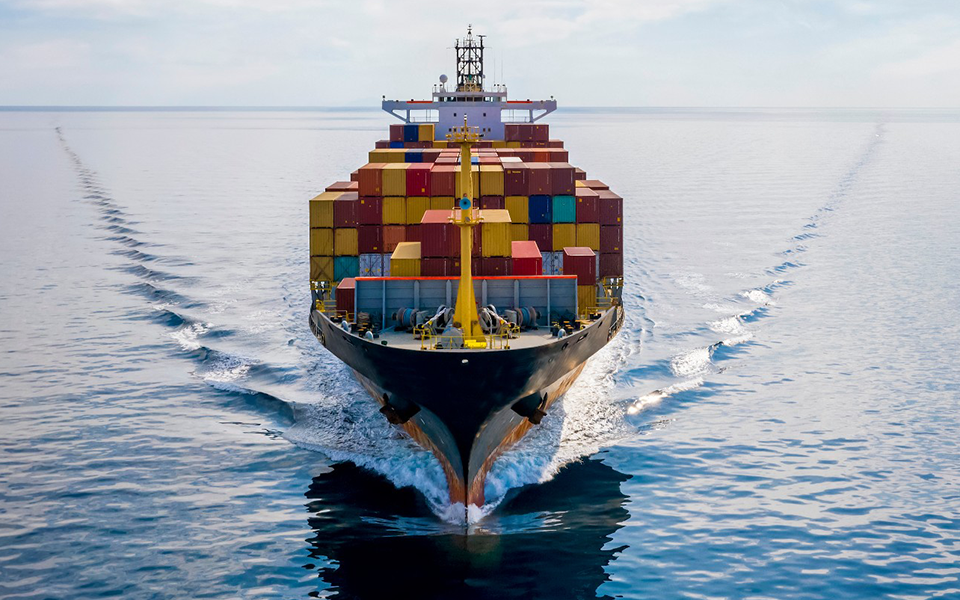
Escalating geopolitical tensions in the Middle East are significantly impacting international shipping costs, with premiums for war risk surging and disrupting trade routes, particularly for Portuguese exports.
The conflict, especially around the Strait of Ormuz, is creating economic ripples beyond rising oil and fertilizer prices. The maritime transport sector is now facing significant challenges, adding to existing supply chain pressures.
Disruptions to transit through the Strait of Ormuz and threats to navigation in the Red Sea have prompted shipping companies to either reroute vessels or hold containers in safer ports. Others are continuing their journeys while carriers and businesses attempt to adapt to the highly volatile situation.
Some Portuguese goods destined for the construction sector – including ceramics, bricks, and stone – have already been delayed or redirected. In some instances, ships have yet to unload cargo, awaiting decisions from shipping lines regarding final destinations.
Costs Increase by 300% to 400%
The financial impact was immediate. War risk surcharges introduced in the early days of the conflict have driven up maritime transport prices. “A 20-foot container now carries an additional penalty of around $2,000, while 40-foot containers are facing premiums of $3,000 – increases that can represent rises of 300% or more,” says António Martins, president of the Portuguese Association of Freight Forwarders (APAT).
This increase comes at a time when freight rates to the region were previously much lower, sometimes around $800, making the recovery of goods unviable in certain cases. “There are situations where the cost of retrieving the cargo exceeds its value,” Martins admits, raising the possibility that some companies may abandon their goods.
With the risk of attacks and a near-total blockade of the route, several companies have diverted ships and begun unloading containers at unexpected ports, leaving customers to deal with extra costs and considerable uncertainty. “In some cases, they have even resorted to a 19th-century rule allowing them to deliver cargo to the ‘nearest possible’ port, even if it is far from the final destination,” explains the Financial Times. This solution is practical for carriers but less so for those paying the bill.
Bruno Bobone, president of Grupo Pinto Basto, explains Here’s related to the structure of legislation governing container maritime transport, where lines typically avoid responsibility for cargo beyond possible transport, passing that responsibility to the owner – either the supplier or the customer. He notes that international law does not penalize companies in war zones.
The primary issue isn’t just delivery interruption, but the additional costs generated. Containers unloaded at intermediate ports are subject to storage fees, which can increase significantly depending on the length of stay.
“They either pay to preserve the containers in those ports, or they bear the cost of bringing them back,” Bobone explains. The decision is further complicated by the uncertainty surrounding the conflict’s duration: waiting may be cheaper – or more expensive.
a new transport operation to the final destination will be necessary, incurring further logistical charges. This represents a tricky-to-predict chain of additional costs.
Major shipping companies, including Mediterranean Shipping Company (MSC), Maersk, and Hapag-Lloyd, are already implementing these changes, at the customer’s expense. The Financial Times also reports that these companies have added surcharges ranging from $160 to $400 per TEU – the standard measure used in maritime transport to quantify the cargo capacity of ships and terminals – for long-distance voyages starting later this month to compensate for rising fuel prices. This is a significant issue, as approximately 90% of global goods are transported by sea, with roughly 5% passing through the Strait of Ormuz. Around 3,200 vessels are currently held in the Gulf due to strikes.
For companies engaged in international trade between Asia, Europe, and America that pass near the Gulf, António Martins says they are choosing the old route around the Cape of Good Hope. “This adds 15 to 20 days to the journey and increases logistical costs by 50%.” This poses a challenge for businesses reliant on exports.
The container crisis affects a global market worth €12 billion. Currently, around 90% of the world’s goods are transported by sea. According to OECD data, 60% of that total consists of food, appliances, and other goods, while the remaining 40% are vital raw materials for a multitude of industries.
Meanwhile, maritime transport to areas closer to the conflict’s epicenter is practically suspended, with companies adopting a cautious approach to assess the situation’s evolution.
The insurance sector is also reacting cautiously. Some companies have stopped offering coverage for the region, while others are applying maximum premiums, reflecting the increased risk. In practice, many operations are now carried out at the operators’ own risk.
Insurance costs are also a significant factor. According to the Financial Times, “premiums for ships operating in the Gulf could increase by 50%, from around $250,000 to $375,000 for a ship valued at $100 million.” Simultaneously, rising energy prices further increase pressure on transport costs.
Elsewhere in the logistics sector, the impact is also being felt. “Road transport, for example, is already seeing increases of around 10%, driven by rising fuel prices,” says António Martins.
In a context of prolonged uncertainty, the sector is preparing for weeks – or months – of strong pressure, with effects that could spread throughout the economy.
