
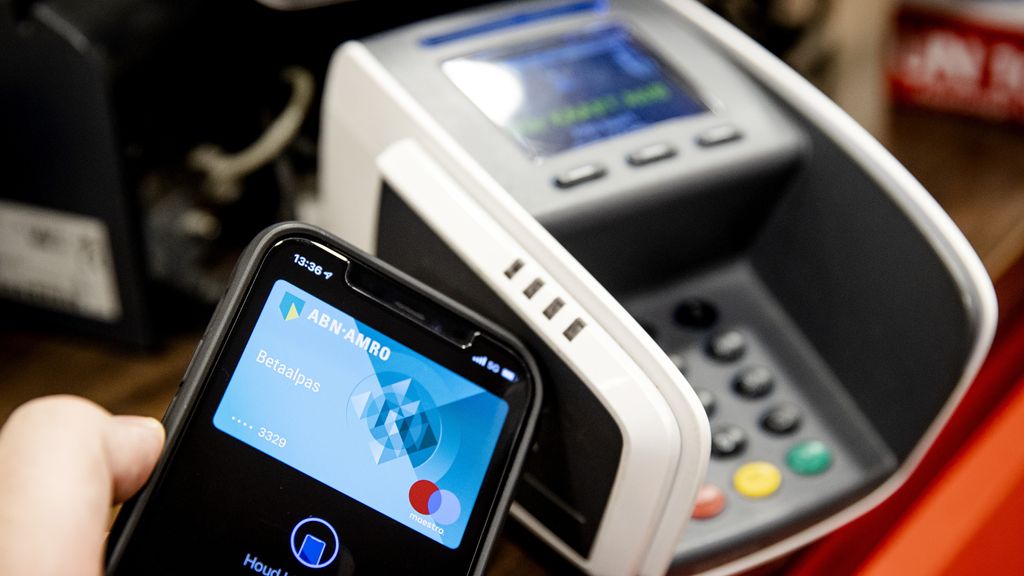
Contactless payments via mobile phone have now surpassed traditional debit card taps at the point of sale in the Netherlands. Nearly six out of ten in-store payments were made using a smartphone or smartwatch last year, according to recent figures from the Dutch Payments Association.
The introduction of contactless technology, initially allowing payments by simply holding a card near a terminal, began roughly a decade ago. Previously, customers were required to insert their card into a reader and enter a PIN.
While contactless card payments overtook the older method in 2018, the physical card itself is rapidly losing ground. In 2024, six out of ten transactions at checkout were still made with a card, while four were completed using a mobile device. That ratio flipped in 2025.
In total, Dutch cardholders made 5.83 billion payments using debit cards, smartphones, or smartwatches at Dutch points-of-sale last year, a 1.2% increase from 2024. The total value of these transactions reached €150 billion, averaging €25.79 per payment.
Contactless payments made with a smartphone or smartwatch are now the preferred method for a majority of transactions in the Netherlands, signaling a significant shift in consumer behavior. The trend reflects a broader move towards digital wallets and mobile payment solutions globally, as consumers prioritize convenience and speed.
The Dutch Payments Association resumed publishing nationwide debit card statistics this year, revealing that in 2025, nearly 6 out of 10 debit card payments were contactless. This represents a 20% increase from 2024, when just over 4 out of 10 debit card payments were contactless.
The data also showed a continued decline in the use of physical debit cards inserted into payment terminals. In 2025, less than 5% of all debit card payments involved inserting a card, down from over 6% in 2024. Consumers are more likely to use the chip-and-PIN method for larger purchases, even though tap-to-pay is available for any amount.
For transactions exceeding €50, a PIN is always required, regardless of the payment method. The average transaction amount when using a physical debit card was over €51, while tap-to-pay – whether with a card or mobile device – averaged nearly €25. At car dealerships, inserting a physical debit card resulted in an average transaction of nearly €702, compared to €94 for tap-to-pay.
Supermarkets account for more than a third of all debit card payments, while the hospitality sector represents one in seven. The PIN numbers will be published again on PIN.NL on a quarterly basis, starting this year.
