
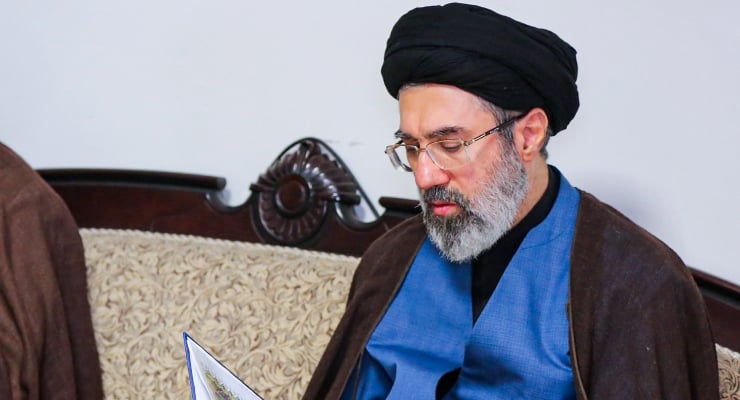
Mücteba Hamaney has been named as the new supreme leader of Iran, following the death of his father, Ali Khamenei, in a recent attack attributed to the United States and Israel. The transition of power in Tehran comes at a time of heightened geopolitical tensions in the Middle East and raises questions about the future direction of the Islamic Republic.
The decision was made by the Assembly of Experts, a body of 88 clerics responsible for selecting the country’s supreme leader, who announced that Mücteba Hamaney was chosen with an “overwhelming majority” of votes. The Assembly stated the decision followed “careful and intensive consideration” during a session held on Monday, March 9, 2026.
With this appointment, Mücteba Hamaney becomes the third supreme leader of the Islamic Republic of Iran, succeeding Ruhollah Khomeini and Ayatollah Ali Khamenei. The development underscores growing regional tensions and the potential for shifts in Iran’s domestic and foreign policies.
Trump ‘cannot stay in office long,’ Israel threatened
Ali Khamenei died on February 28th as a result of an attack launched by the U.S. And Israel.
Mücteba Hamaney was widely considered the frontrunner to succeed his father.
Former U.S. President Donald Trump previously stated, “They are wasting their time. Khamenei’s son is insignificant,” and suggested he “shouldn’t be involved in the election process.”
The Israel Defense Forces likewise issued a statement on X, in Farsi, reading, “The State of Israel will continue to monitor every successor and anyone trying to appoint a successor, and we will not hesitate to target you.”
The U.S. President further asserted that any leader chosen “will not be able to stay in office long.”
Who is Mücteba Hamaney?
Born in Mashhad, northeastern Iran, in 1969, Mücteba Hamaney is the second of Ali Khamenei’s six children.
He completed his secondary education in Tehran and briefly served in the military during the Iran-Iraq War at the age of 17.
In 1999, he went to the city of Qom, a major center of Shia theology, to complete his religious education. Prior to this time, he did not wear the traditional attire of a cleric.
He has not held any official government position, nor has he made any public speeches or given interviews. Few photographs and videos of him are available.
Despite maintaining a low profile, he has been described as a “gatekeeper” controlling access to his father and is believed to wield significant influence. Reports also suggest close ties with the Islamic Revolutionary Guard Corps.
He was referred to as “the power behind the robes” in U.S. Diplomatic correspondence published by WikiLeaks in the late 2000s.
