
/
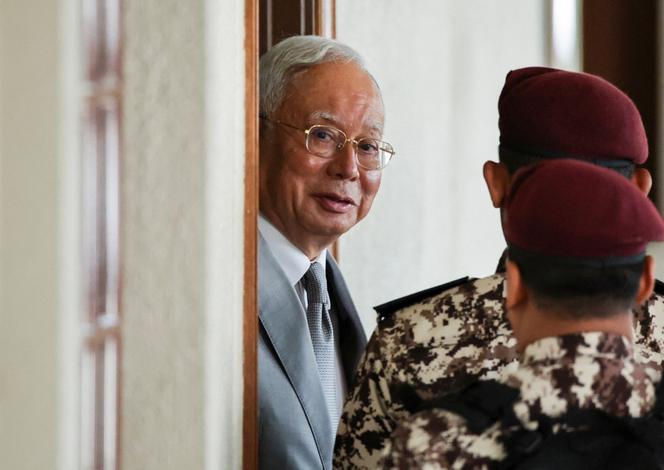
Kuala Lumpur – Former Malaysian Prime Minister Najib Razak was convicted Friday, December 26, of abuse of power in connection with the sprawling 1Malaysia Development Berhad (1MDB) corruption scandal. The conviction significantly increases the likelihood he will remain imprisoned for years to come.
The case centers on allegations that billions of dollars were misappropriated from the 1MDB fund, intended for economic development, and instead used for personal expenses. The scandal has had international repercussions, triggering investigations in the United States, Switzerland, and Singapore.
The 72-year-old, the son of one of Malaysia’s founding fathers, faced four counts of abuse of power related to alleged bribes totaling approximately 2.28 billion ringgits (roughly $554 million or €471 million) from the 1MDB fund, as well as 21 counts of money laundering.
Proceedings began around 9 a.m. local time (2 a.m. Eastern) at the High Court in Kuala Lumpur, convened in Putrajaya, Malaysia’s administrative capital.
High Court President Collin Lawrence Sequerah dismissed defense arguments that funds deposited into the former prime minister’s account originated from donations from the Middle East. “I find that the prosecution has proven beyond a reasonable doubt the guilt of the accused on the first charge,” he stated. “I therefore find the accused guilty,” the judge continued, pausing the reading of the lengthy judgment for Friday afternoon prayers. The hearing was set to resume, though the sentencing was not immediately announced.
Each charge of abuse of power carries a potential penalty of up to 20 years in prison and a fine of up to five times the amount of the bribe.
A Scandal That Has Rocked Malaysia for Years
Najib Razak, who served as prime minister from 2009 to 2018, is already serving a six-year prison sentence following a previous conviction in a separate case linked to the scandal. This latest conviction underscores the gravity of the allegations and the ongoing legal fallout from the 1MDB affair.
Razak has apologized for the 1MDB scandal that unfolded during his tenure, but maintains he was unaware of the illicit transfers from the fund, which has since been dissolved. Prosecutors, however, argued that Razak abused his positions as prime minister, finance minister, and chairman of the fund’s advisory board to transfer significant sums from the company to his personal account more than a decade ago.
The prosecution presented bank statements, testimony from more than 50 witnesses, and other incriminating documents, while refuting defense claims that businessman Jho Low – whose full name is Low Taek Jho – bore the primary responsibility for the affair. Long a close associate of Razak, Low is considered the mastermind behind the looting of the investment fund, but remains at large.
The court president emphasized Friday that “the evidence… demonstrates a relationship in which Jho Low acted as a proxy or agent for the accused with regard to the management of 1MDB affairs.” Razak’s lawyers asserted that their client was unaware that 1MDB management was working hand-in-hand with Jho Low to divert large sums of money from the fund.
Attorney Muhammad Shafee Abdullah told reporters last week that Najib Razak had “never had a fair trial” and reiterated his accusations against Jho Low.
The former leader suffered a setback Monday when his request to commute his existing sentence to house arrest was denied.
The scandal played a major role in the defeat of Najib Razak and the United Malays National Organisation, Malaysia’s oldest political party, in the 2018 elections, ending six decades of rule by the coalition.
