
NASA’s Artemis II Mission: Lunar Flyby Records, Far Side Discoveries, and Onboard Challenges
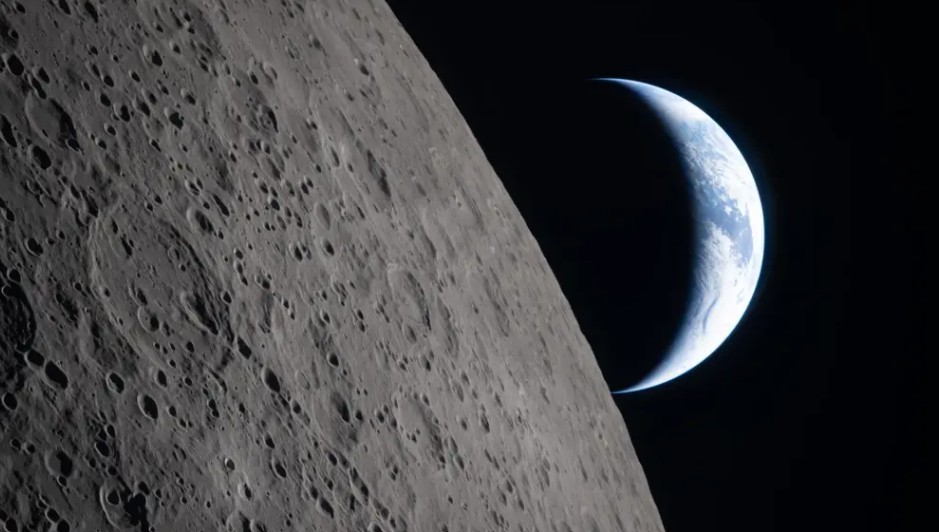
NASA’s Artemis II mission has reached a pivotal milestone in deep space exploration, with the crew successfully completing a lunar flyby and transmitting official photographs of the moon back to Earth. This mission represents a significant leap in our ability to sustain human presence beyond low Earth orbit, testing the limits of current aerospace innovation.
The journey has already seen historic achievements. During Flight Day 6, the Artemis II astronauts broke a previous Apollo-era record and witnessed a lunar eclipse, marking a high point in the mission’s trajectory. This phase of the journey provided a rare opportunity for the crew to observe the far side of the moon, a region that had never previously been seen by human eyes.
Observations from this hidden side of the lunar surface revealed a complex environment. The astronauts reported seeing meteor flashes, floating dust, and a spectrum of colors, providing new visual data on the lunar landscape. Such discoveries highlight the importance of human observation in complementing robotic reconnaissance.
However, the mission has not been without its operational hurdles. On April 8, 2026, the crew contacted the International Space Station (ISS) to report that space is limited within the Orion capsule, emphasizing the extreme physical constraints of long-duration deep space travel.
Technical glitches have also plagued the crew’s living quarters. Reports emerged regarding the Artemis 2 onboard toilet, which reportedly suffered three breakdowns, frozen urine, and a “mysterious smell.” Whereas these malfunctions presented a challenge, other reports suggest the system is actually functioning correctly, though separate issues continue to be monitored. These logistical frictions serve as critical learning points for NASA as it refines the technology required for future lunar landings and Mars missions.
