

NASA’s Artemis II Mission Reaches Lunar Orbit, Marking Historic Return to Deep Space
NASA’s Artemis II mission has reached a critical milestone in human space exploration, with its crew currently orbiting the Moon after successfully navigating the lunar far side. The mission, which launched on April 1, 2026, from Launch Complex 39B at the Kennedy Space Center, represents the first time humans have ventured toward the Moon in half a century.
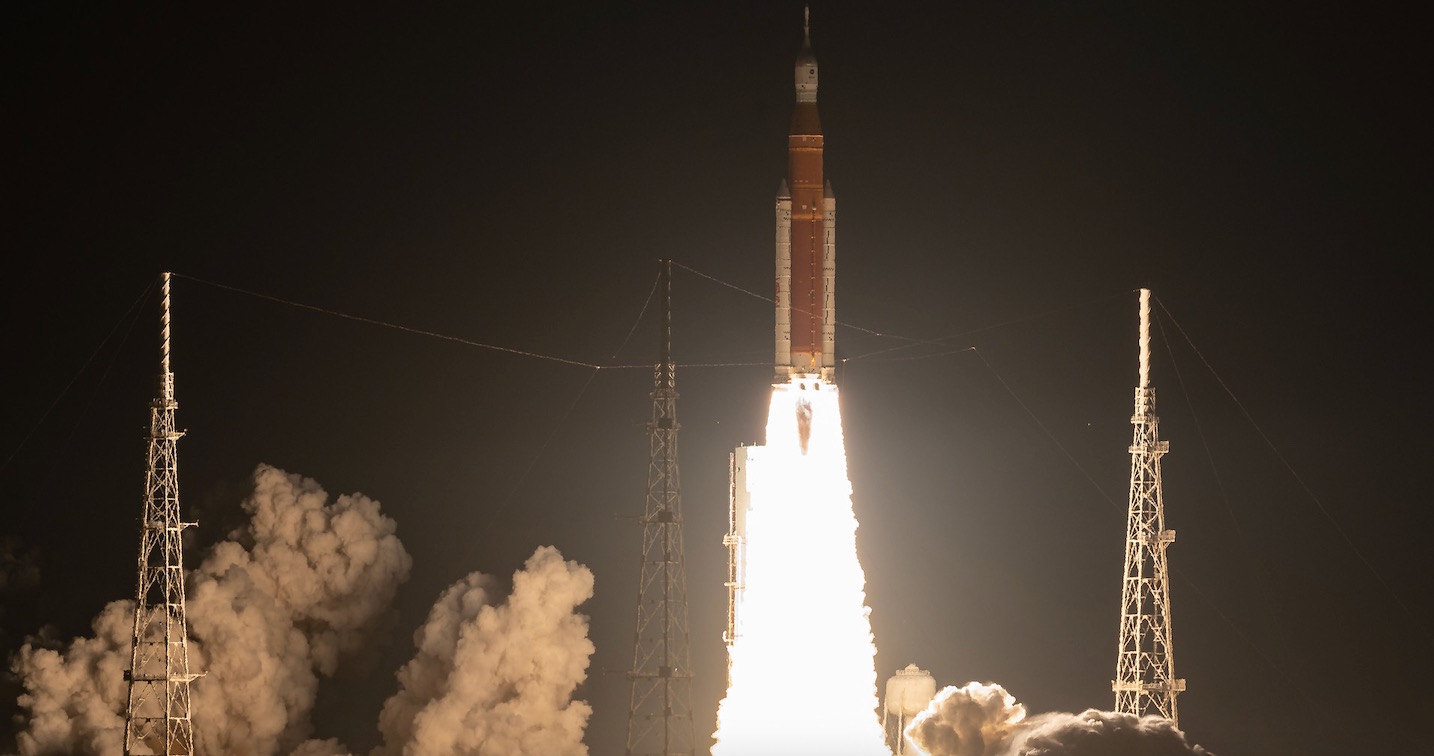
The ten-day mission is powered by the Space Launch System (SLS) rocket and the Orion spacecraft, designed to sustain a crew of four during deep-space transit. The crew—comprising NASA astronauts Reid Wiseman, Victor Glover, and Christina Koch, alongside Canadian Space Agency astronaut Jeremy Hansen—is currently executing a series of high-stakes demonstrations to validate the spacecraft’s capabilities. These efforts are essential for ensuring the safety and viability of future long-term lunar settlements and eventual crewed missions to Mars.
The mission’s progression has been marked by precise technical executions. On flight day four, the crew successfully completed a manual piloting demonstration and began preparations for the lunar flyby. This was followed on flight day five by a trajectory correction maneuver to refine their path toward the Moon, as well as a demonstration of their specialized suits.
One of the most scientifically significant portions of the journey is the flyby of the lunar far side, which is planned to reach a distance of approximately 4,700 miles. Planetary geologist Jesús Martínez-Frías has noted that the far side is “extraordinary and raises many questions,” highlighting the immense scientific potential of observing the Moon’s hidden face.
Beyond the technical achievements, the mission is situated within a broader geopolitical context. The lunar surface has become a new focal point for the space race between the United States and China. This renewed competition underscores the strategic importance of establishing a human presence on the Moon as a stepping stone for future deep-space exploration.
As the mission continues, NASA is providing updates on the Orion spacecraft and its crew. The mission is scheduled to conclude with a splashdown in the Pacific Ocean, currently planned for April 11, 2026.
