
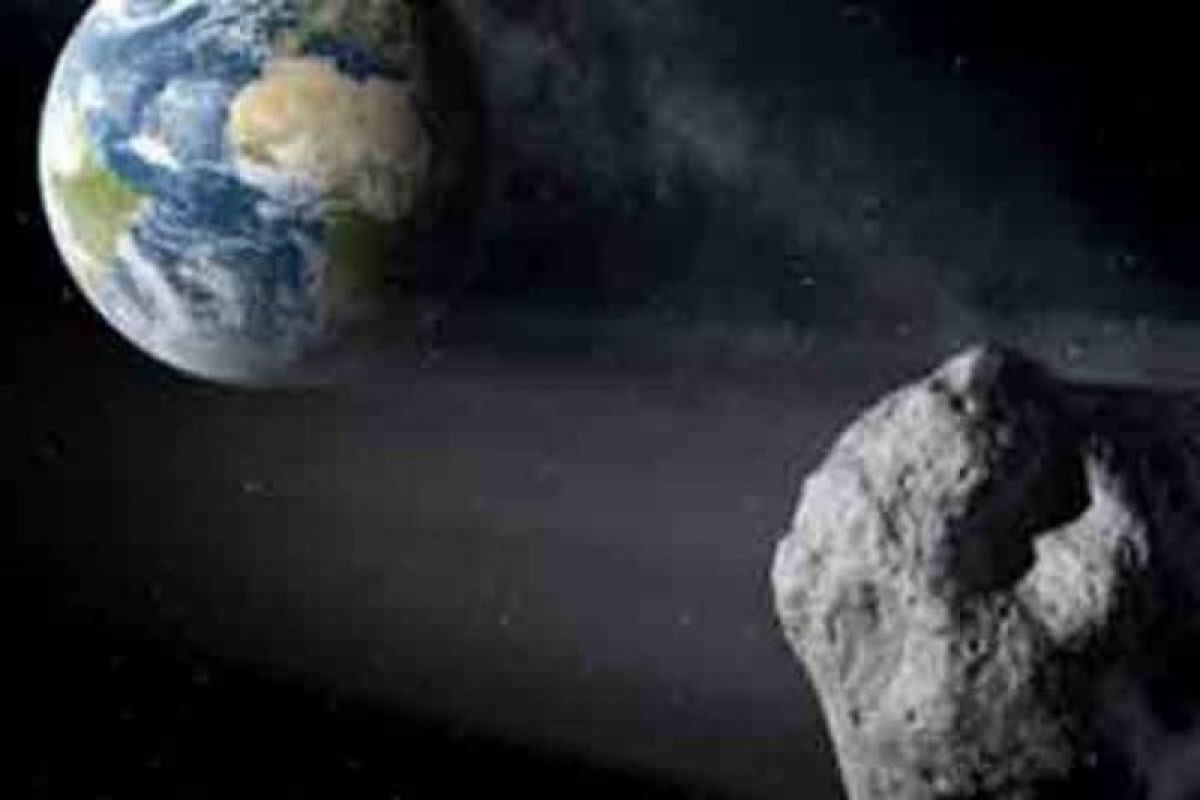
NASA’s Double Asteroid Redirection Test (DART) mission has yielded significant findings, demonstrating the ability to alter the trajectory of an asteroid. The experiment, a key test of planetary defense technology, intentionally impacted a spacecraft into an asteroid to assess whether such a method could divert a potentially Earth-threatening object. This success marks a crucial step in developing capabilities to protect the planet from future asteroid impacts – a growing concern as space exploration and observation increase.
Recent research indicates that the DART spacecraft’s collision with the asteroid Dimorphos not only altered its orbit around the larger asteroid Didymos, but also subtly influenced the overall orbit of the asteroid system around the Sun.
The findings, published in the journal Science Advances, show that while the orbital change is small, it’s sufficient to prove that human-made objects can influence the movement of celestial bodies within our solar system.
Collision Alters Asteroid System
During the mission, the DART spacecraft was intentionally collided with the smaller asteroid Dimorphos in September 2022. Dimorphos is a satellite of the larger asteroid, Didymos.
The two asteroids form a binary asteroid system, where two celestial bodies are gravitationally bound and orbit each other around a common center of mass. The impact of DART on Dimorphos created a plume of rock debris ejected into space. This ejected material carried additional momentum, providing a significant boost to the asteroid.
Scientists refer to this effect as the momentum enhancement factor. In the case of the DART impact, this factor was approximately two times greater, meaning the ejected debris doubled the force generated by the spacecraft’s collision.
Previous research showed that Dimorphos’s orbit, which previously took approximately 12 hours to circle Didymos, was shortened by around 33 minutes after the collision. However, the latest study revealed an additional impact. The collision also released substantial material from the binary asteroid system, further altering the pair’s orbit around the Sun. This change was minimal, altering the orbital period by only about 0.15 seconds from a roughly 770-day cycle.
According to lead researcher Rahil Makadia of the University of Illinois Urbana-Champaign, the change in the asteroid system’s orbital speed was approximately 11.7 microns per second, or about 1.7 inches per hour. While seemingly small, this change could have significant implications over extended periods.
“Over long timescales, small changes in an asteroid’s motion can determine whether a hazardous object will impact Earth or not,” Makadia said, as quoted by NASA.
Although Didymos was not on a collision course with Earth, and the DART mission did not alter its trajectory to be so, the experiment provides a crucial proof of concept for planetary defense strategies. The method, known as a kinetic impactor, involves colliding a spacecraft with an asteroid to change its course.
Scientists believe this method has the potential to be one of the most effective ways to prevent hazardous asteroid collisions with Earth, provided such objects are detected far enough in advance.
To confirm the impact of DART on both asteroids, researchers needed to measure Didymos’s orbit with a high degree of precision. In addition to using radar and ground-based observations, the research team utilized stellar occultation, a technique where an asteroid passes directly in front of a star, causing the star’s light to momentarily disappear.
This technique allows scientists to measure the asteroid’s speed, position, and shape with great accuracy. The observations involved dozens of volunteer astronomers from various countries who recorded 22 occultation events between October 2022 and March 2025.
As a follow-up to planetary defense efforts, NASA is also developing the Near-Earth Object Surveyor. This new generation space-based survey telescope is designed to find near-Earth objects that are difficult to detect, including dark asteroids and comets that do not reflect much light.
With improved detection capabilities, scientists hope to identify hazardous asteroids earlier, allowing technologies like DART to be used to prevent potential collisions with Earth in the future. (ars technica/E-3)
