
Researchers are collecting seawater samples from the Antarctic Peninsula in an effort to aid the search for life on icy worlds. The samples, gathered from locations mirroring the conditions of oceans found on other planets, represent a crucial step in understanding the potential for extraterrestrial life.
A study by Mariam Naseem and Marc Neveu of the University of Maryland and NASA’s Goddard Space Flight Center suggests that many icy worlds in our solar system – including Jupiter’s moon Europa and the dwarf planet Pluto – likely contain vast oceans of liquid water beneath thick layers of ice. This discovery has fueled scientific inquiry into whether these hidden oceans could harbor microbial life.
Some of these “ocean worlds” contain essential ingredients for life, including carbon, nitrogen, and chemical energy, leading scientists to question if these concealed oceans could support microorganisms. The research highlights the growing field of astrobiology and the search for habitable environments beyond Earth.
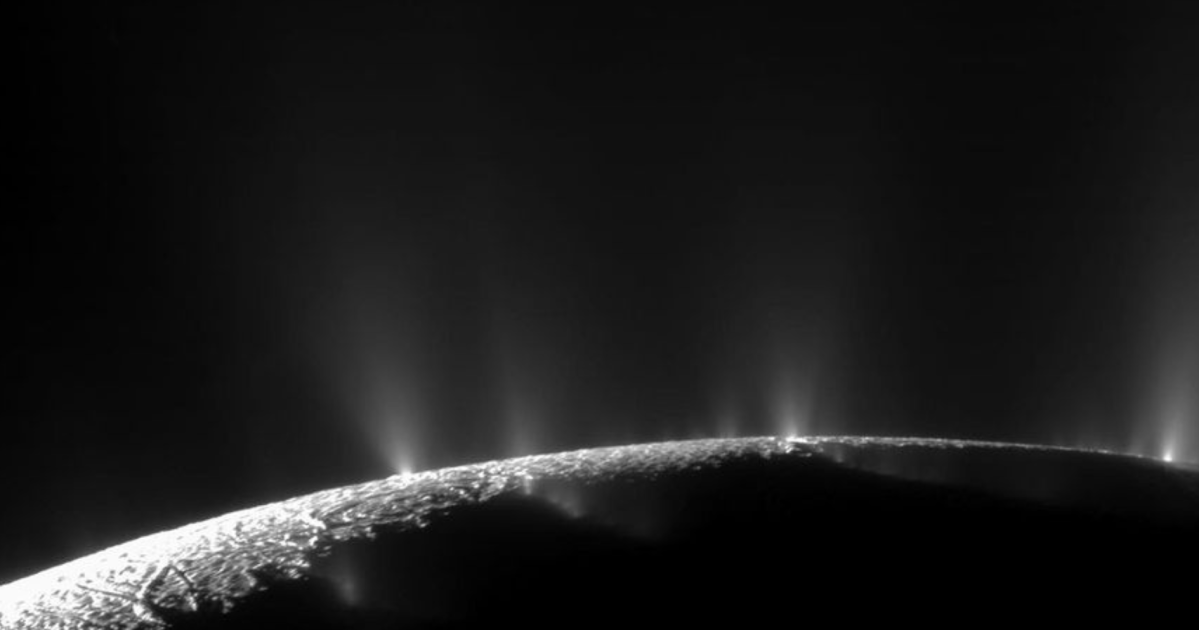
On Saturn’s moon Enceladus, subsurface water can erupt into space through a process called “cryovolcanism.” This phenomenon offers a unique opportunity for robotic spacecraft to collect samples of oceanic material without needing to drill through kilometers of ice. However, the journey from the ocean to space can alter potential biosignatures.
For example, organic molecules like amino acids can be lost or altered as liquid water rapidly freezes or vaporizes upon encountering the vacuum of space. Understanding these effects is critical for accurately interpreting data from future space missions.
To study these effects, Naseem and Neveu are utilizing a custom laboratory instrument called the Ocean World Cryovolcanism Simulator, which injects liquid water into a vacuum chamber that mimics space conditions. This allows them to observe how potential biosignatures degrade in a simulated space environment.
Further Studies
Since 2022, Naseem, Neveu, and their colleagues have been studying how solutions of organic compounds and salts change when injected into a vacuum. Building on this initial knowledge, they set out to understand the behavior of natural samples.
In nature, interactions between molecules, minerals, and particles are more complex than in laboratory-created “ocean in a tube” environments, and natural samples are likely more representative of material ejected during ocean eruptions. This complexity necessitates real-world sample collection and analysis.
Sunlight does not reach the oceans within icy worlds, limiting the development of life as we know it. However, on Earth, dark and isolated bodies of water can be found in Antarctica, such as in the Weddell Sea, which is permanently covered in ice east of the Antarctic Peninsula, and in the deep Circumpolar Current that constantly surrounds the continent.
A rare opportunity to access these remote environments arose in mid-2024 when the Explorers Club – an independent society of researchers – organized a selection of projects to be carried out aboard a research vessel equipped with scientific equipment operated by the company Ponant.
The journey from selection through preparation to sample collection was challenging. Even before boarding the ship in mid-December, the two-person team relied on the work of approximately 50 individuals who played critical roles in ensuring safety, facilitating the transport of frozen samples back to Maryland, and providing the necessary equipment for analysis.
On five occasions, the team stepped onto the sea ice, extracted samples from it, and collected water trapped within the ice or flowing through its pores, as occurs during ocean eruptions.
Key Astronomical Discoveries of 2026
Collecting samples of seawater at depths of thousands of meters – equivalent to depths of 5 to 100 kilometers in oceans with reduced gravity – involved descending a structure with sample bottles from the stern of the ship.
On December 30, the team launched the structure through an opening that spanned the width of the ship in the 15-meter-thick ice layer covering the Weddell Sea. The pressure from the surrounding ice constantly closed the opening, requiring the crew to maneuver the ship to deflect ice blocks even as maintaining alignment with the sample structure, whose cable was pulled by strong currents.
The following day, the team collected samples from the deep Circumpolar Current. Thanks to coordination with the crew, who navigated the ship in sync with the current, the collection was successful at 1,120 meters, a record depth for the vessel.
In the laboratory, the samples will be thawed and divided in half. One half will be injected into the simulator, while the other half will be analyzed directly. Both samples will be analyzed using specialized chromatography techniques to track changes in salts, amino acids, and fatty acids.
By comparing the original and simulator-injected samples, Naseem and Neveu will determine how eruption into space alters oceanic material and how these changes may affect the search for life beyond Earth.
