
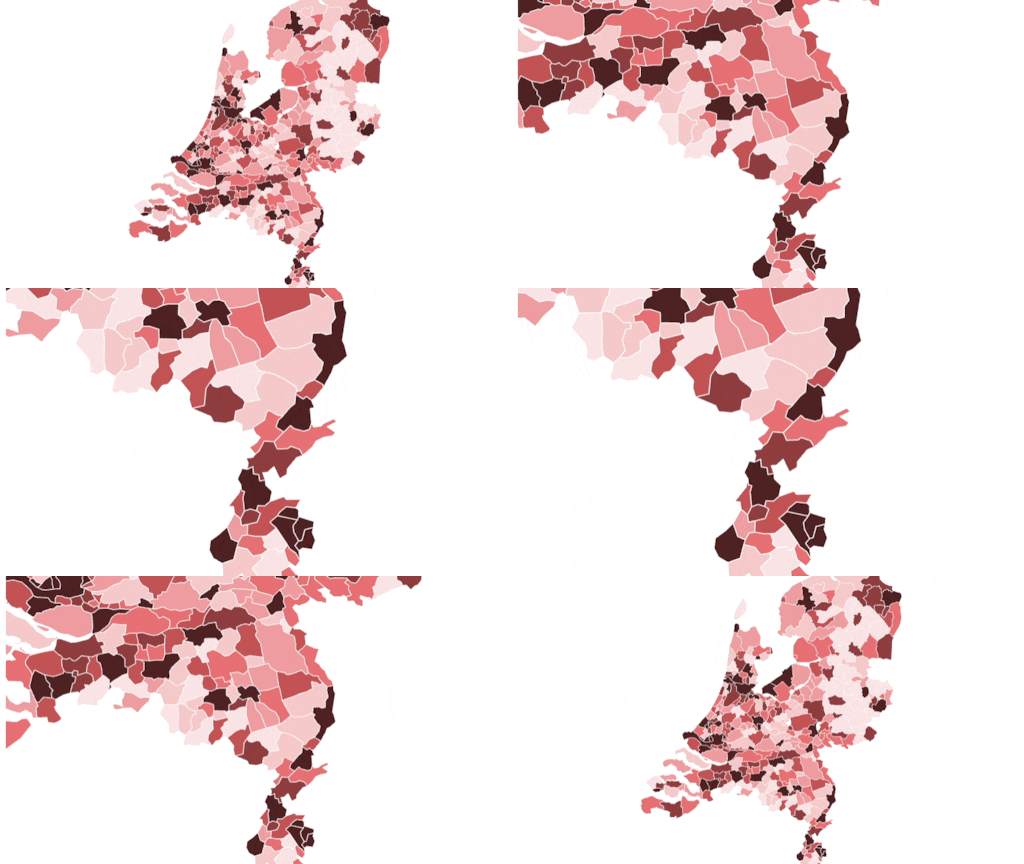
Organized crime, including drug trafficking, is increasingly impacting communities across the Netherlands, according to a fresh risk assessment map. The assessment, dubbed the “Underworld Map,” identifies areas where criminal activity is infiltrating legitimate businesses and exploiting vulnerable residents.
The map analyzes 336 municipalities, evaluating the risk of criminal undermining – a phenomenon where illicit activities like money laundering, drug distribution, and illegal labs pose a threat to public safety and the local economy. Six smaller municipalities were excluded from the assessment due to insufficient data.
Criminal Activity and Vulnerability
The Underworld Map highlights areas with both high rates of reported crime and existing vulnerabilities within businesses and communities. The data used to create the map comes from sources including the Police, the Netherlands Central Bureau of Statistics (CBS), and the Crime Reporting Anonymous hotline.
Municipalities in the provinces of Overijssel, the Achterhoek region, and Drenthe generally scored lower on the risk assessment. These areas demonstrate stronger social cohesion and fewer vulnerabilities, resulting in less reported undermining criminal activity. The social fabric in these regions is the strongest in the country.
Methodology
The Underworld Map assesses risks across fifteen different indicators to allow for comparison between municipalities. Data for these indicators was gathered from the Police, CBS, Zicht op Ondermijning, Leefbaarometer, GraydonCreditsafe and Meld Misdaad Anoniem.
Further details about the research methodology and a comprehensive accountability report are available here and here.
The release of the Underworld Map provides a detailed look at the geographic distribution of criminal risk, offering local authorities a tool to prioritize resources and address vulnerabilities. The assessment underscores the growing concern over organized crime’s impact on Dutch society, as criminals increasingly attempt to legitimize illicit funds through mainstream businesses and recruit young people into drug trafficking networks.
