
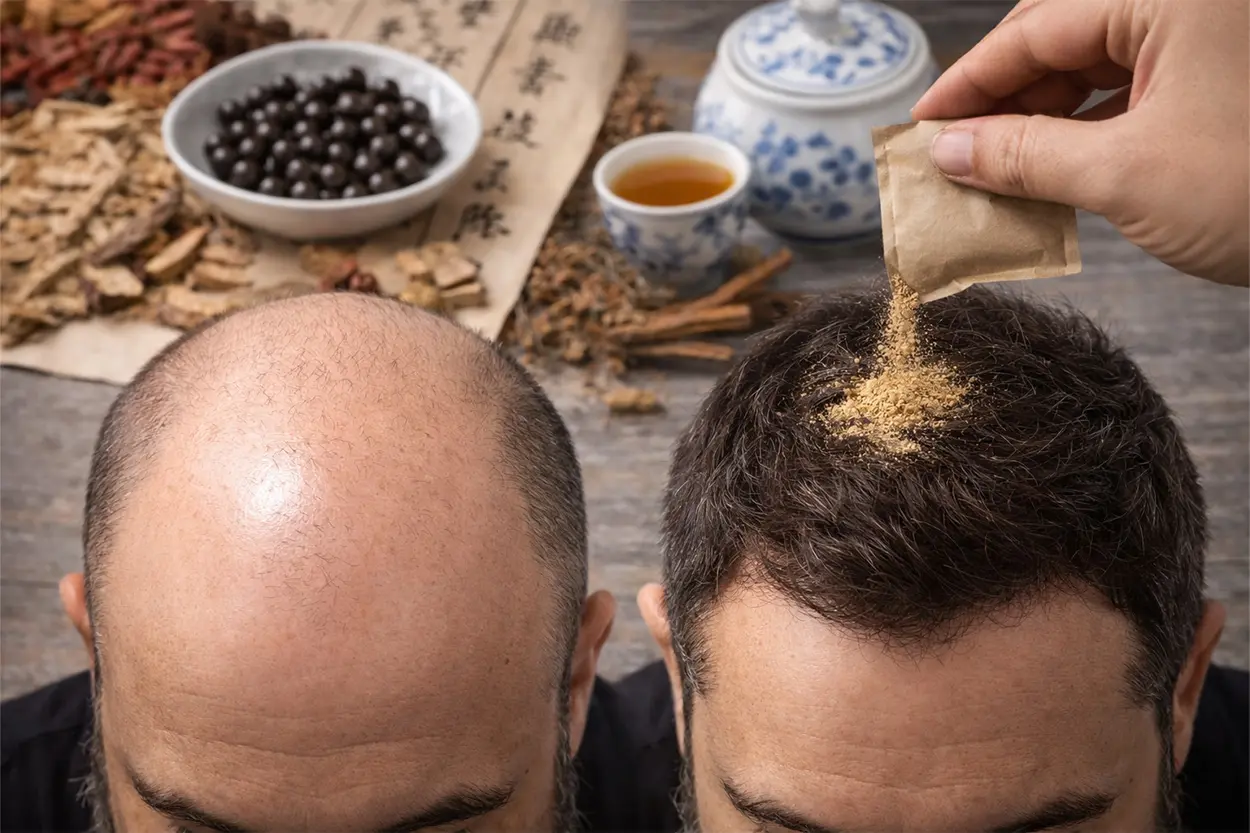
A new drug, rooted in traditional Chinese medicine, may offer a potential breakthrough in the treatment of hair loss, a condition that often impacts self-esteem and psychological well-being. While not typically a serious physical illness, hair loss can significantly affect an individual’s quality of life.
Researchers have developed a treatment based on Polygonum multiflorum, similarly known as Chinese knotweed, demonstrating promising results in regenerating hair growth. This discovery offers hope for those seeking effective solutions to combat alopecia.
A Traditional Remedy for Hair Loss
Led by researcher Han Bixian, a study published on ScienceDirect details the efficacy of Polygonum multiflorum in combating hair loss. The root has been used for over 2,000 years in traditional Chinese medicine and contains active compounds now being utilized to create a highly effective treatment.
Unlike current chemical products, this drug works naturally with the hair’s life cycle, reactivating biological signals that have diminished over time. This approach represents a potential shift in aesthetic medicine, offering a real alternative to more costly and sometimes less effective treatments.
How the New Drug Works

The drug works by “cleansing” the hair follicle and improving blood circulation to the scalp, ensuring oxygen and nutrients reach the hair roots. This process directly intervenes in the growth phase, promoting thicker and stronger hair. The findings suggest a potential alternative to more expensive and sometimes less effective treatments.
Benefits of the New Treatment

Because the treatment is derived from a natural source, it has minimal side effects, offering a safer option for many patients. This could be particularly appealing to those who avoid current drugs due to potential health concerns. The treatment is also less invasive than surgical options like hair transplants and is easily incorporated into a daily routine.
The Future of Hair Loss Treatment

Laboratories are working to make the new drug available in pharmacies worldwide. Demand is expected to be high, and further research will be needed to confirm the treatment’s real-world effectiveness. This discovery could offer a long-awaited solution for those struggling with hair loss.
