
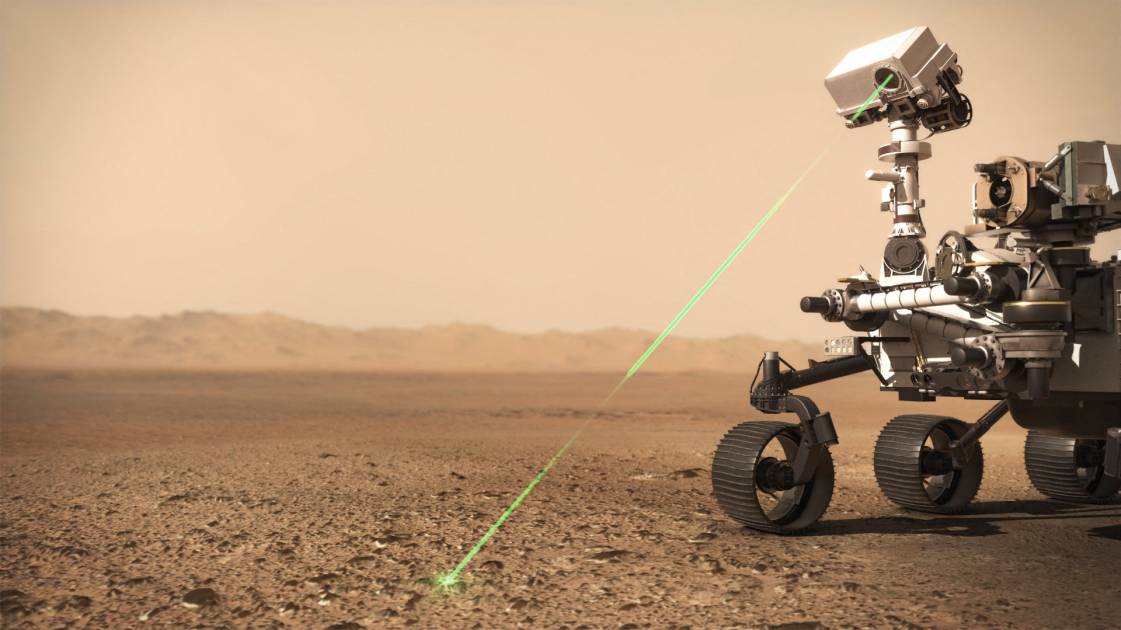
Recent, detailed images of Mars are drawing attention from scientists to a region known as Arabia Terra. The area’s designation, “Arabia Terra,” evokes cultural and religious references to the idea of “stoning,” as described in some traditional texts, and represents a vast, ancient region in the northern hemisphere of the planet.
The region has been subjected to intense “meteoritic bombardment,” with the 130-kilometer-wide Trofilo volcanic crater dominating the landscape, having endured multiple impacts. These images were captured by the European Space Agency’s Mars Express orbiter on October 12, 2024, during its 26,233rd orbit around Mars, but were only recently processed to reveal rich colors and highly detailed topographic features.
Volcanic Rocks
Scientists believe these volcanic rocks were likely sculpted by meteor impacts and then redistributed by wind and gravity – a process observed in numerous craters across the Arabia Terra peninsula. According to science writer Samantha Matheson, who holds a Bachelor of Journalism and Environmental Science from the University of New Haven in Connecticut, the images demonstrate “the continuing scientific value of reprocessing archived data and extracting new details and context from observations made months or even years ago.” Matheson describes it as “a fantastic new look at an interesting region on the Red Planet called Arabia Terra.”
Stunning Images
Science journalist and specialist Samantha Matheson, writing for Astronomy News, recently published an article titled “Stunning Image of Mars Highlights One of the Oldest, Most Cratered Regions on the Red Planet.” The article noted that the new images of Mars provide a detailed view of one of the planet’s oldest and most heavily cratered regions, showcasing terrain shaped over billions of years by impacts, volcanic activity, and erosion.
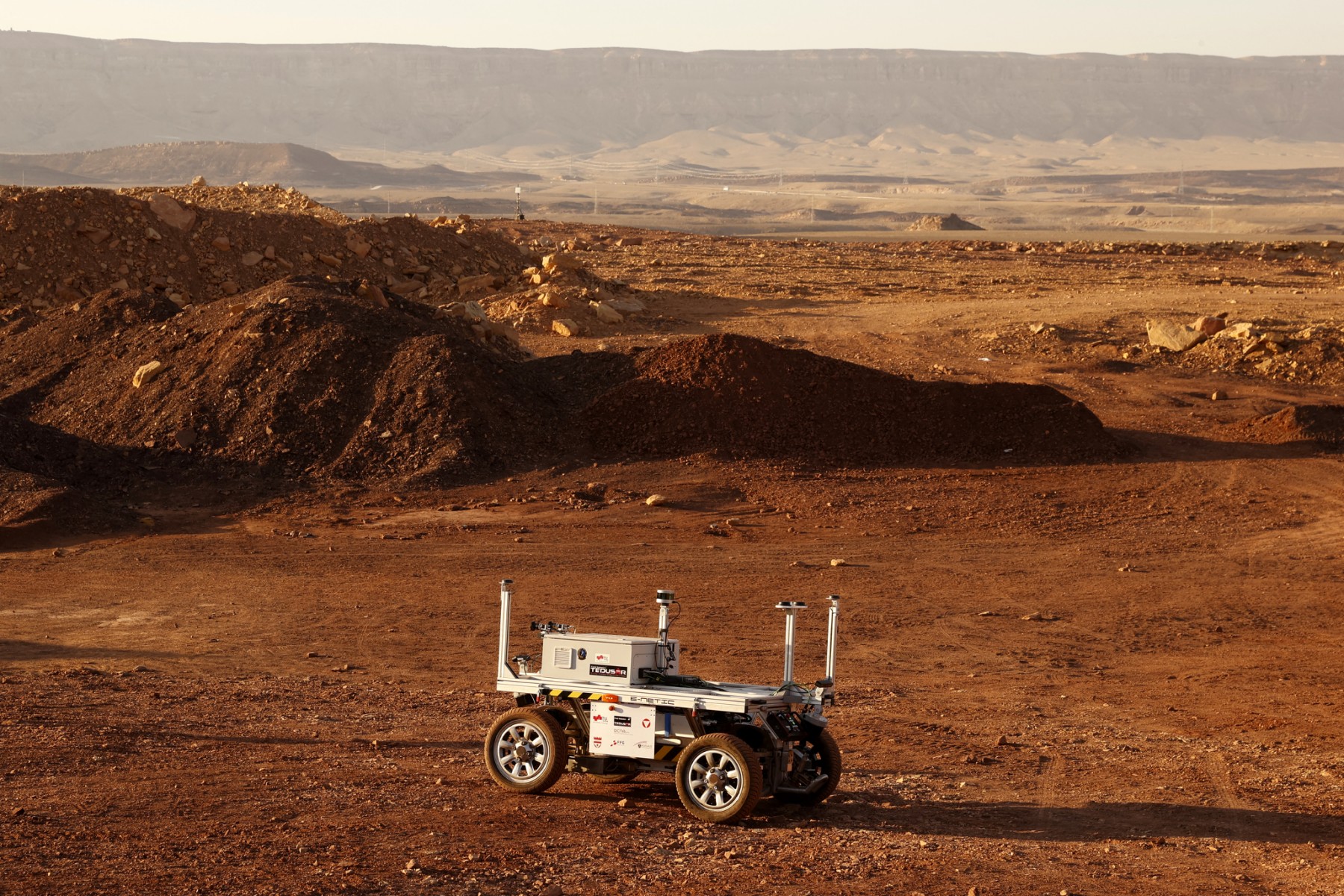
A training mission to explore Mars at a site simulating a space station in the Negev Desert (AFP)
In addition to this news, Matheson, described by a prominent American science website as enjoying traveling to new places and taking pictures when not writing or reading about science, published images of a Martian surface area covered with dense, extensive ridges and grooves that run diagonally across the image. The images reveal a rough, textured terrain in this area, contrasting with the smoother, lighter-colored surrounding plains, with an overall color scheme of light and reddish-brown hues. This description closely matches the real sands of the Arabian Peninsula on Earth.
Connecting the Images
Matheson’s article draws a precise connection between this intriguing image of Mars and other images of the Red Planet captured by NASA’s spacecraft. NASA has also released hundreds of panoramic time-lapse images of the Martian landscape. The images include a blue/gray soil scene with a sunset, and a close-up of the Curiosity rover at the bottom of the image. Matheson also notes that NASA’s Curiosity rover sent a new, stunning panoramic image from the top of Mount Sharp on Mars, as well as an image of an area called “Ceres Major,” which is the 100,000th image captured by NASA’s Mars Reconnaissance Orbiter using precise cameras, taken on October 7, 2025.
اقرأ المزيد
يحتوي هذا القسم على المقلات ذات صلة, الموضوعة في (Related Nodes field)
Matheson, alongside her scientific interest, adds a photographic perspective, stating, “For nearly 20 years, the HiRISE camera has helped scientists understand how the surface of Mars is constantly changing.” These images accompany a full-frame version of the “Arabia Terra” image captured by the Mars Express probe on October 12, 2024. The image shows that immediately to the left of the Trofilo crater, there is another large basin that appears older and more eroded, with its edge almost completely worn away. The Trofilo crater cuts through this eroded crater, suggesting that the adjacent basin formed first.
The scientific significance of this region lies not only in the precision and beauty of the image, but also in the discovery of dark, mineral-rich rocks covering almost the entire floor of the area, containing magnesium, iron, and minerals such as pyroxene and olivine.
Evidence of Water
The scientific discovery doesn’t stop at identifying important minerals for life in the Arabia Terra region of Mars. The detailed images of this area have also revealed evidence of water. Matheson points to the dark lines and spots scattered throughout the image, which likely indicate volcanic materials, although the crescent-shaped dunes define the direction of Martian winds that continue to shape its surface today. “A bright, 20-kilometer-long ridge adorned with winding terrain revealed minerals formed or altered in the presence of water,” making those dunes appear much brighter than the surrounding terrain. These features collectively illustrate “the processes that have shaped the Arabia Terra peninsula over billions of years.”
Matheson has published similar scientific articles about Mars that have been described as controversial, as she has reported on detailed scientific images confirming the presence of water and life on the Red Planet. On February 27, 2026, she wrote, “Curiosity Rover Finds Evidence Suggesting Mars’s Watery Past in Spiderweb-Like Rock Networks,” stating, “These web-like formations are believed to have been carved by ancient groundwater, providing new evidence of the Red Planet’s watery past.”
These articles, along with those from other scientists supporting the idea of colonizing nearby stars and searching for life on Mars, coincide with a heated race between private American space companies to colonize this planet with the goal of establishing sustainable human life, while those who do not support the colonization of the Moon and Mars claim that this idea is merely a mask serving private American companies that want to plunder the resources of the planets closest to us.
