
A novel ecopark project is underway in Antioquia, Colombia, aiming to revitalize tourism and celebrate the region’s rich railway history. The initiative focuses on the Nordeste area, a region deeply connected to the Antioquia Railway, which began operations in 1910 with a station in what is now Cisneros.
The town itself was later named in honor of Francisco Javier Cisneros, a Cuban engineer who spearheaded the railway project that dramatically transformed the department. Though trains no longer run on the tracks, local leaders are hoping to leverage the area’s railway heritage for economic and social development.
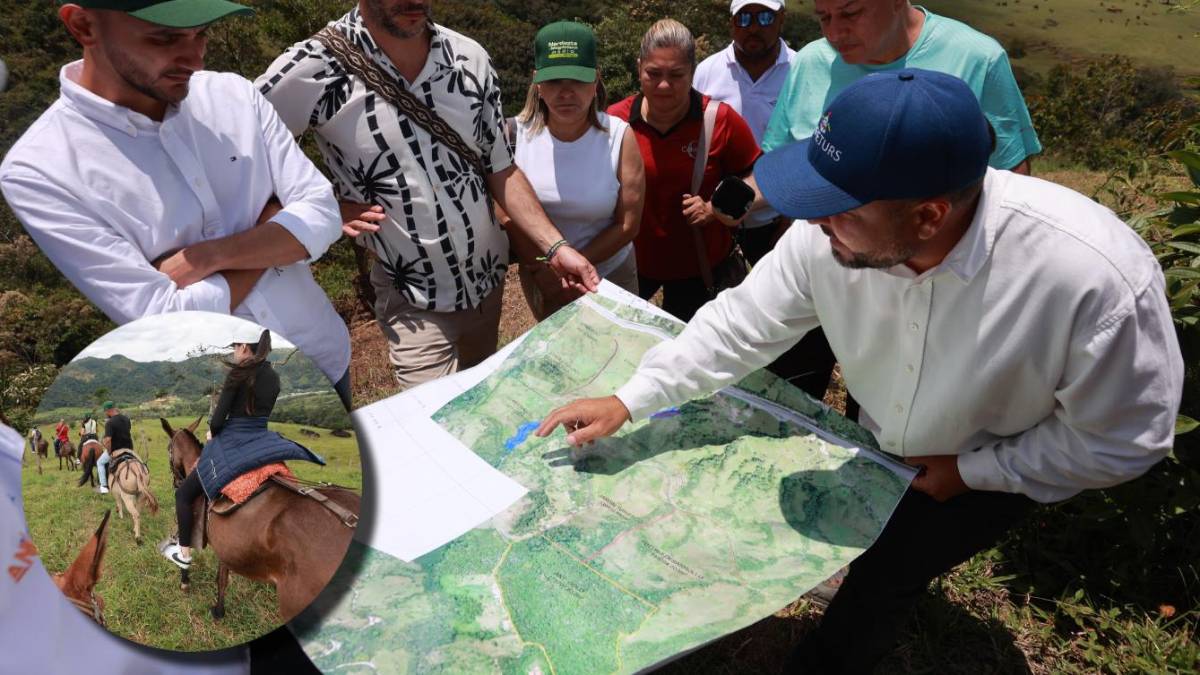
On Friday, March 20, Comfenalco hosted a meeting with journalists and partner companies, including Concesión Vías del Nus and Antioquia Gold, to unveil plans for the Ecoparque Ferroviario del Nordeste. The park will be built on a 10-hectare plot in the La Selva area, situated between the Porce and Santiago corregimientos of Santo Domingo, near Cisneros.
Attendees were given a horseback tour of the proposed site, highlighting its strategic location and proximity to the metropolitan area.
The park will feature hiking trails, birdwatching opportunities, and other tourist activities centered around the region’s railway history.
An Ambitious Project
José Molina, co-founder of Corfeturs, the Corporation for Sustainable, Railway and Tourist Development of Antioquia, is a key figure behind the project. He described the ecopark as a potential catalyst for community development and a way for tourists to learn about the department’s history and culture.
“We want that land to be a Visitor Center. We want every person who arrives there to find a range of tourism opportunities,” Molina said. “That’s where the idea of creating this Ecopark came from. We’ve formed a strategic alliance with companies like Antioquia Gold, Gramalote, Transmetano, the Chamber of Commerce of Puerto Berrío and Magdalena Medio, so the purpose is to analyze how each one can contribute to this objective.”
The Nordeste region already boasts several attractions that celebrate its railway past, including a railway museum in Cisneros’s central park and a restored station in Limón, near the entrance to the La Quiebra tunnel. However, officials believe the ecopark will further strengthen tourism in the area.
“One can now say that the Railway Ecopark is more than a dream, it’s a reality. The goal is for the railway line that crosses the region to become a backbone for visitors to travel along it and enjoy all the attractions: restaurants, streams, cultural sites and more spaces that are part of the history of the Nordeste,” explained Alejandro Quijano, technical and financial director of Vías del Nus.
A Nordeste Filled with Hope
Comfenalco is also playing a crucial role in the project, potentially managing the ecopark’s operations, pending private investment.
“We have identified a need to promote well-being based on what this Railway Ecopark would be, how? Starting from experiences generated by tourism with everything that comes from the development of the railways. It is a process that requires articulation, not only institutional with the municipalities but also with the private sector, and that is where they play a very important role,” said Juan Pablo Morales, director of Comfenalco.
Beyond the ecopark, plans are underway to establish a tourist route along five former railway stations: Cisneros, Limón, Santiago, Porce, and Botero. The project hinges on securing a usufruct agreement from Invías to utilize 24 kilometers of the existing railway line.
“This is an achievable goal in the short term, but it does not depend exclusively on us. We need the support of the National Government in the procedures so that, together with private investment, we can make the dream approach true of locomotive number eight traveling the route between Cisneros and Botero, crossing the La Quiebra tunnel,” explained Lina María Correa, mayor of Cisneros.
The new tourist route isn’t just about leisure; it’s seen as a vital component for the economic progress of local communities, offering new livelihood opportunities.
“This boost will revitalize Cisneros’s economy and reactivate our entrepreneurs and merchants. We want tourists to come to a territory located just an hour from the Aburrá Valley and that serves as a strategic connection with the Coast and Santander,” added the mayor.
While the total investment and a firm construction start date for the Ecoparque Ferroviario del Nordeste remain undefined, project leaders estimate completion could take just over a year once institutional approvals are secured.
